

Wooden High Back Settle
A wooden high back settle is a heavy seat designed to keep out draughts, combining a solid bench with a high protective back.
Wooden High Back Settle
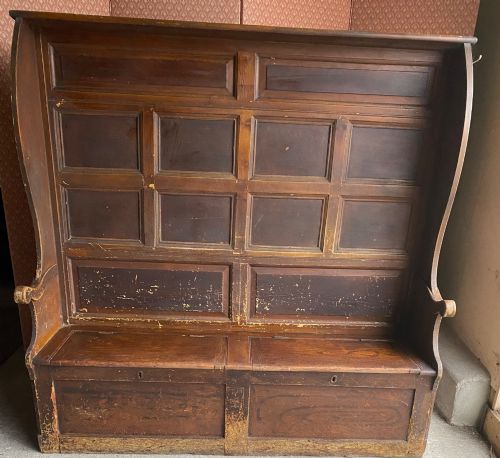
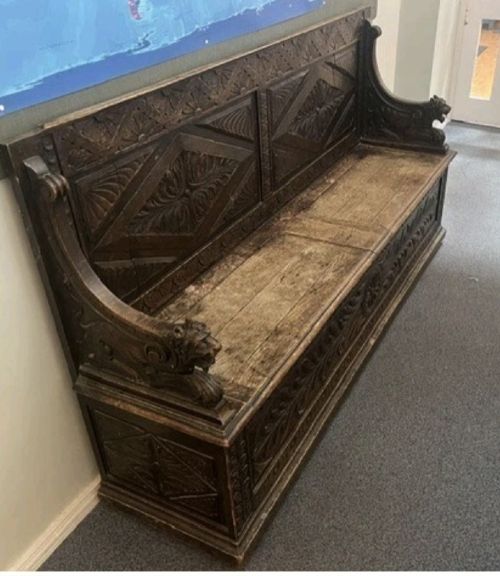
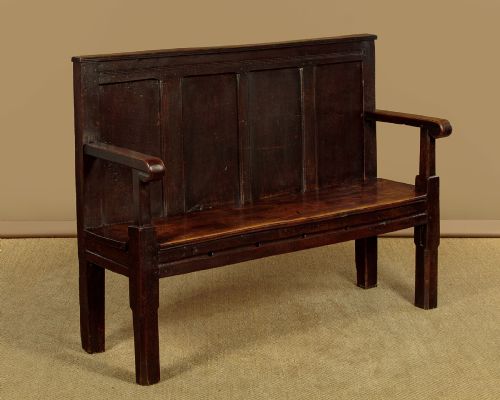
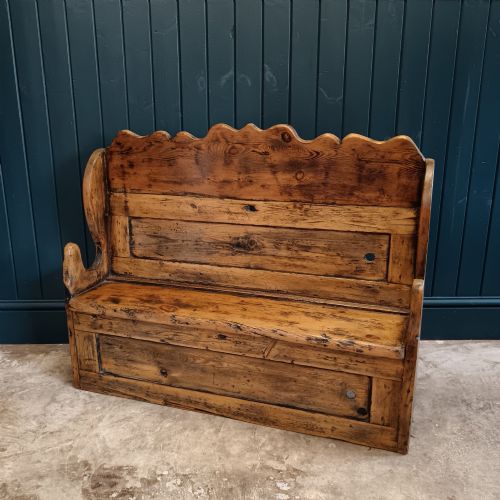
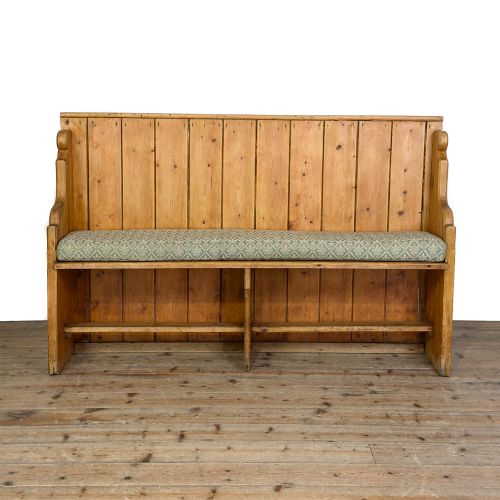
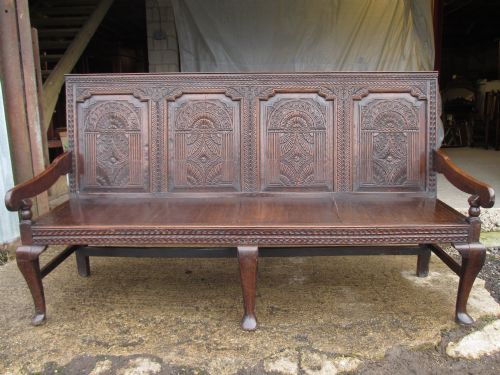
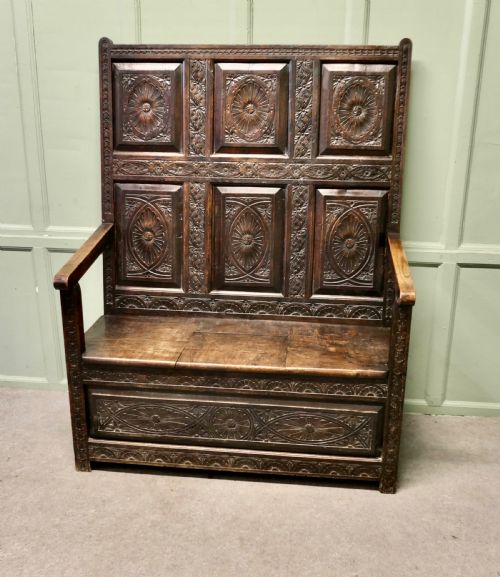
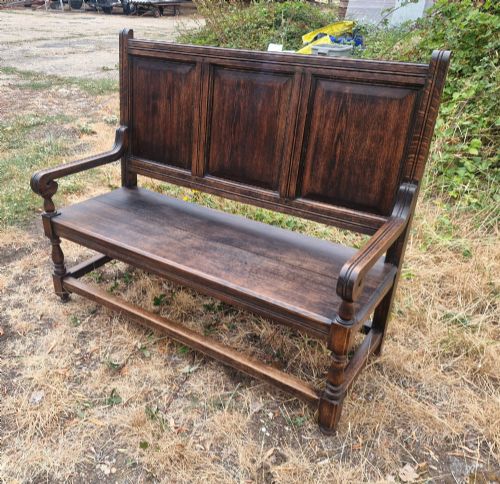
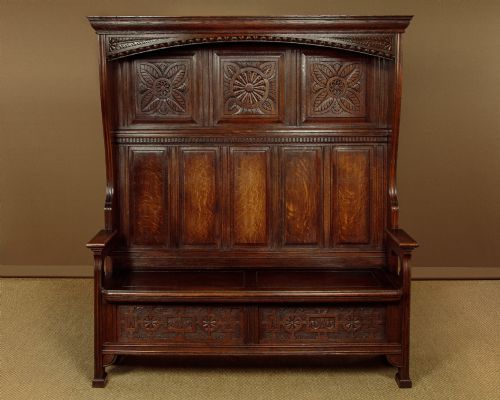
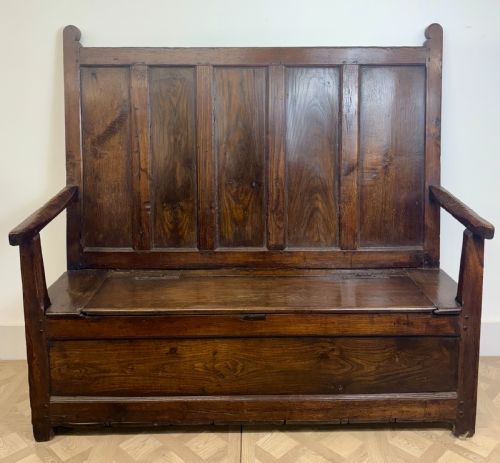
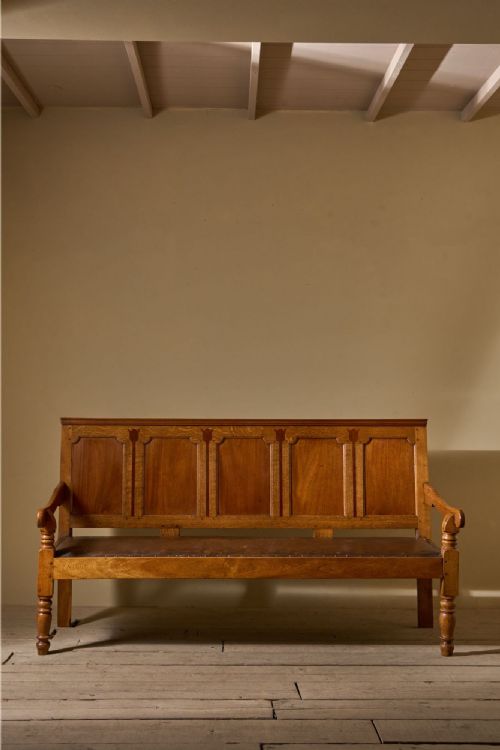
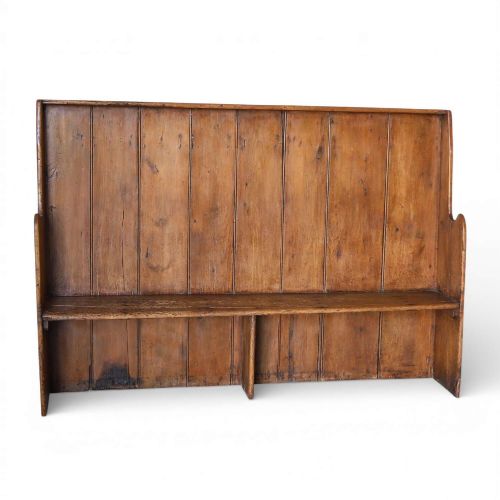
A wooden high back settle is a form of traditional seating that uses an elevated backrest to block cold air in old rooms. These pieces appear frequently from the seventeenth, eighteenth, and nineteenth centuries, often taking the form of a bench with solid wooden panels.
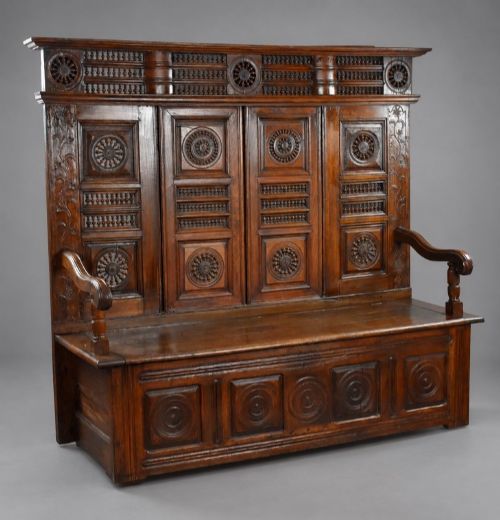
Many examples incorporate a box base beneath the seat for storage, while others stand on open legs or feature curved barrel backs designed to wrap around the user. Regional variations span English country workshops alongside French, Spanish, Italian, and Hungarian examples.
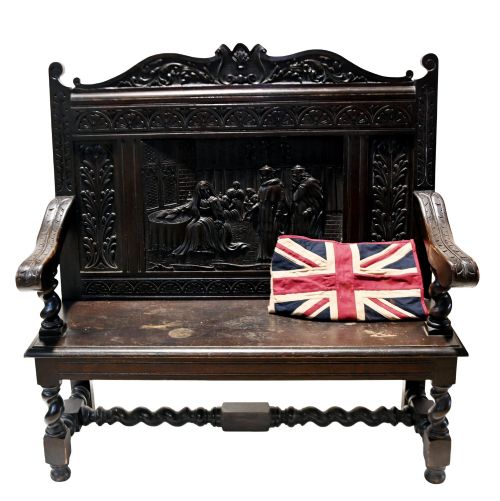
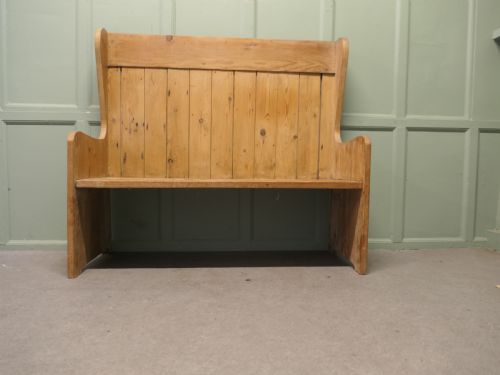
The materials reflect domestic timber supplies of each period, with oak dominating earlier pieces and pine or elm appearing frequently in nineteenth-century country variants. Buyers encounter styles ranging from plain rustic farmhouse forms to heavily carved Jacobean revival and linear Arts and Crafts designs.
What varies in quality
The integrity of the timber and the depth of the patination set individual pieces apart, as centuries of use create distinct surfaces that machine sanding destroys. Original boards, particularly wide planks forming the backrest or seat, indicate superior construction compared to later replacements.
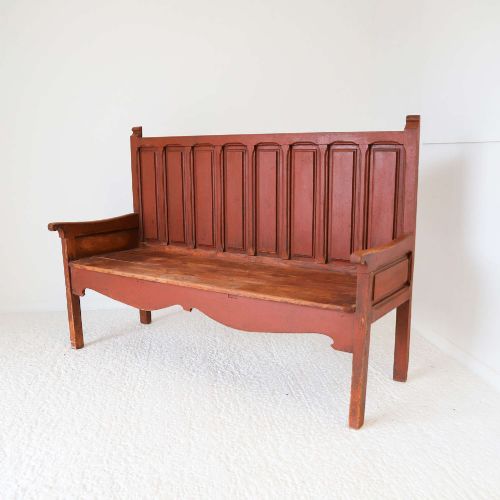
Proportion and decorative restraint dictate visual success, separating heavy regional vernacular pieces with balanced panels from later revival furniture that can appear stiff or over-carved. The presence of original storage compartments, intact box bases, and untouched structural joints preserves the historic character of the piece.
Wooden High Back Settle Retail Price Guide 2026
Typical asking prices for wooden high back settle among the pieces listed under this phrase on Sellingantiques today, from the lower quarter to the upper quarter. They describe what is for sale here now, not the wider market.
Listings feature oak, pine, elm, walnut, and iron across periods spanning the seventeenth to the twentieth centuries.
James Shoolbred & Co.·Liberty
The Wooden High Back Settle Glossary
- Box settle
- A wooden bench featuring a closed storage compartment beneath the hinged seat. This form kept blankets and household goods dry and warm near the hearth.
- Barrel back
- A curved, enclosed upper backrest that wraps around the occupant. It provides maximum shelter from cold draughts in large rooms.
- Panel back
- A backrest constructed from fitted wooden boards set within a frame. This technique allowed timber to expand and contract without splitting.
- Bacon settle
- A specific vernacular form featuring high slatted or enclosed backs used for curing and storing meat. They originate from rural domestic settings.
- Patina
- The surface sheen and colour developed by timber through age, handling, and wax polishing. It serves as an indicator of genuine period use.
Wooden High Back Settle: Frequently Asked Questions
What is a wooden high back settle used for?
These pieces functioned historically as primary seating near the fireplace or in hallways, where the tall solid back deflected cold air away from occupants. The enclosed lower box offered practical storage for household items.
Today, they suit modern hallways, kitchens, and living spaces as statement seating that introduces distinct historical character to a room.
How do I tell an 18th-century settle from a later copy?
Examination of the timber fixings, tool marks, and overall construction reveals the age of the piece. Eighteenth-century examples utilise hand-riven boards, pegged joints, and timber shrinkage patterns that modern replicas cannot replicate.
Surface patination also develops over generations of wear, showing soft edges and natural wax buildup rather than uniform commercial finishes.
Will a wooden high back settle fit in a modern hallway?
Most models feature a high, deep footprint designed to command space rather than tuck into tight corners. Measuring available clearance for both the high backrest and the opening seat lid is essential before placement.
Their solid proportions make them effective anchor furniture in large entrance spaces or open-plan dining areas.
What woods were used to make antique settles?
Oak forms the foundation of seventeenth and eighteenth-century examples due to its local availability and durability. Elm and pine appear frequently in nineteenth-century country pieces, offering different grain patterns and lighter weights.
Walnut and exotic timbers feature occasionally in higher-status continental or revival workshop pieces from later periods.