






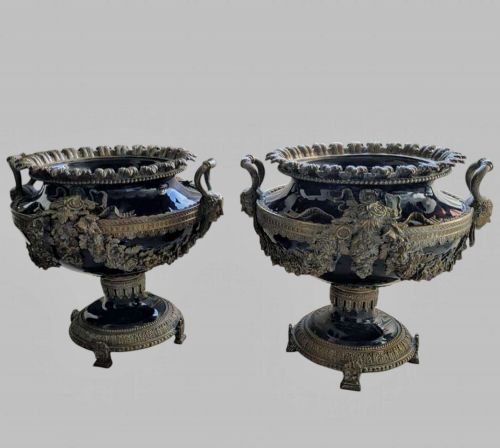
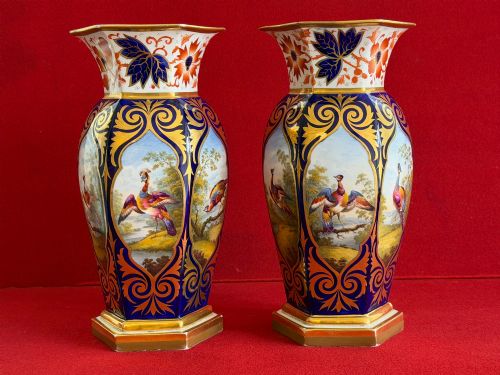
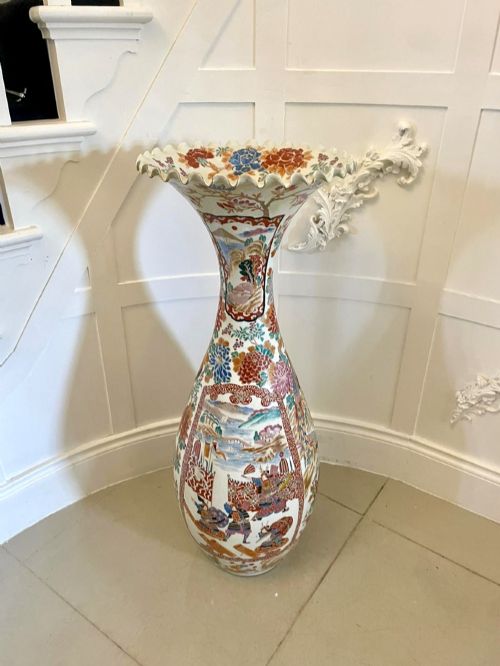
Cobalt Porcelain Urn
Cobalt porcelain urn pieces bring deep blue ceramic bodies and classic forms into rooms needing historic presence.
Cobalt Porcelain Urn
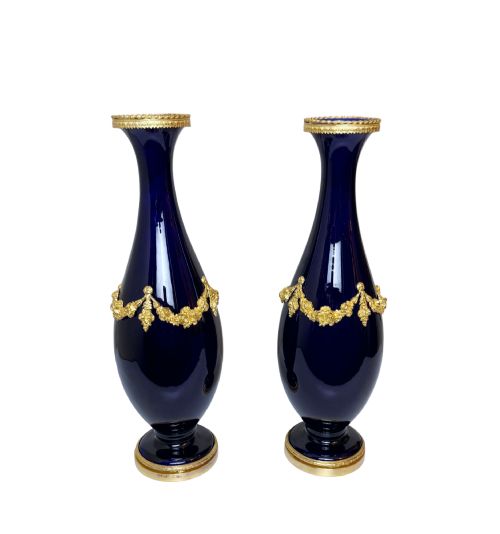
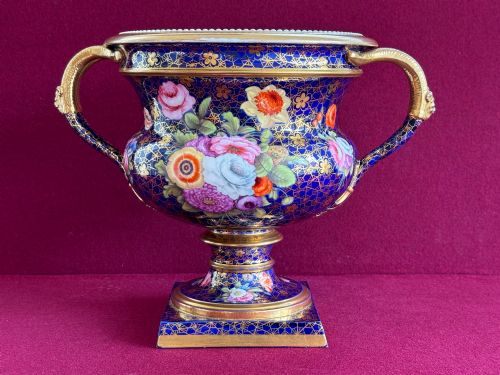
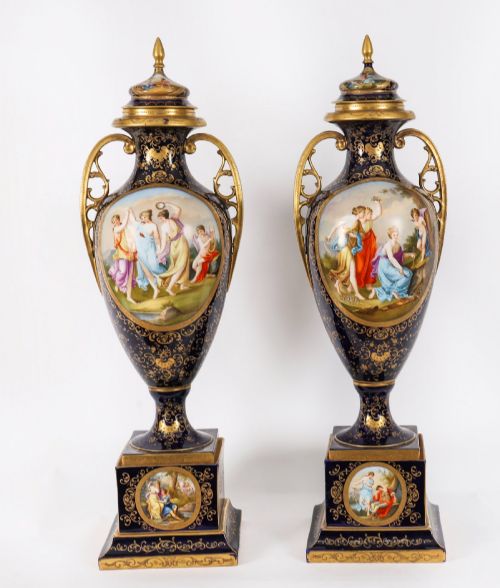
A cobalt porcelain urn draws the eye with rich blue decoration set against a white or tinted ceramic body, often shaped into classical campagna profiles or lidded jars. These vessels appear across several periods, stretching from Georgian English production to Victorian and Edwardian examples.
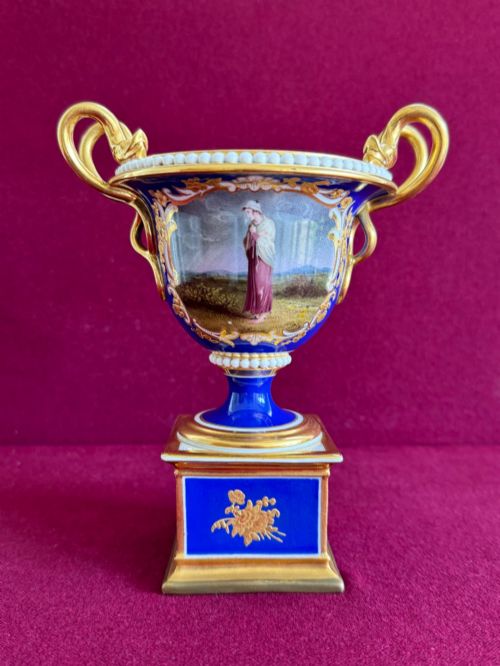
Makers utilised deep cobalt pigments beneath or over the glaze, frequently pairing the intense blue ground with gilt detailing, enamel highlights, or hand-painted scenes. Buyers meet these objects in forms ranging from monumental floor standing vases to miniature covered pieces.
The category encompasses both English porcelain manufactories and continental European workshops, alongside Japanese export wares adopting similar cobalt palettes. Finding the right piece involves noting whether the form functions as a garniture, a table lamp, or a standalone focal vessel.
Materials and production methods
The foundation rests on refined porcelain or ceramic clay shaped on the wheel or cast in moulds, then fired at high temperatures to achieve a vitrified body. Cobalt oxide provides the characteristic blue pigment applied beneath the transparent glaze before the final high-temperature kiln run.
Gilding, gold leaf, and enamel colours are added during subsequent lower-temperature enamel firings to sit on top of the glaze. Metal mounts in ormolu frequently secure the base and rim, linking ceramic bodies to neoclassical bronze work.
Cobalt Porcelain Urn Retail Price Guide 2026
Typical asking prices for cobalt porcelain urn among the pieces listed under this phrase on Sellingantiques today, from the lower quarter to the upper quarter. They describe what is for sale here now, not the wider market.
The listings record cobalt porcelain urn and vase forms spanning the 18th, 19th, and early 20th centuries across English, French, German, and Japanese origins.
Assessing quality in cobalt ceramics
Quality depends upon the clarity and depth of the cobalt pigment against the porcelain ground, alongside the precision of hand-painted enrichment or gilding. Superior examples display crisp definition in moulded handles, masks, and botanical or figural panels.
The weight of the porcelain body, the evenness of the glaze without pitting, and the integrity of any ormolu mounts dictate the standing of an individual vessel. Well-preserved painted signatures and identifiable factory patterns elevate the piece further.
Spode·Flight Barr and Barr·Worcester·Minton·Royal Crown Derby·Royal Vienna·Mason·Chamberlain Worcester·Coalport·Royal Doulton·Crown Staffordshire
The Cobalt Porcelain Urn Glossary
- Garniture
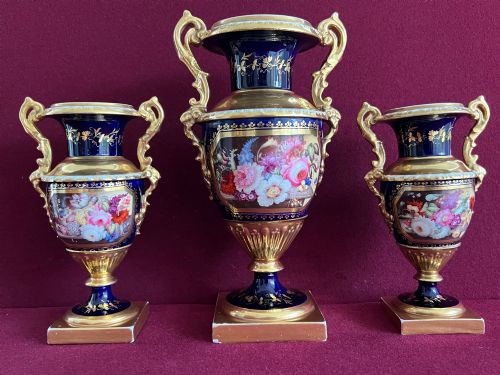
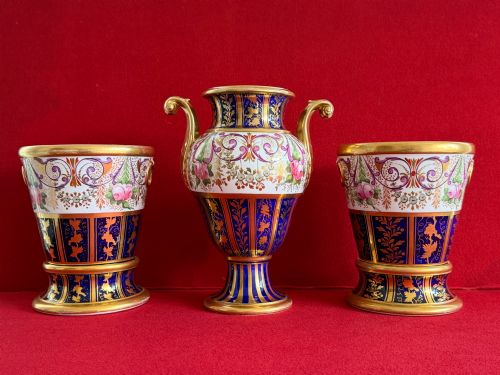
- A set of three or more matching vases or urns designed to be displayed together on a mantelpiece or sideboard. These matching sets often comprise a central taller jar flanked by smaller matching vessels.
- Campagna urn
- A classical vase shape featuring a flared bowl on a pedestal foot with small looped handles, mimicking ancient Roman stone urns. English and continental potteries frequently rendered this profile in porcelain.
- Ormolu
- Cast brass or bronze finished with a fine layer of gold amalgam, used for decorative mounts, bases, and handles on ceramic bodies. This French technique adds structural weight and metallic contrast to the blue glaze.
- Imari
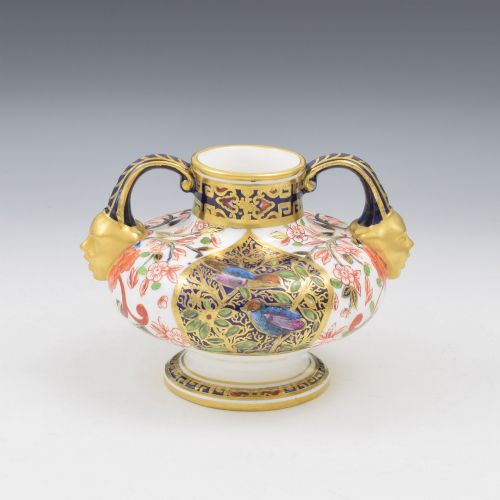
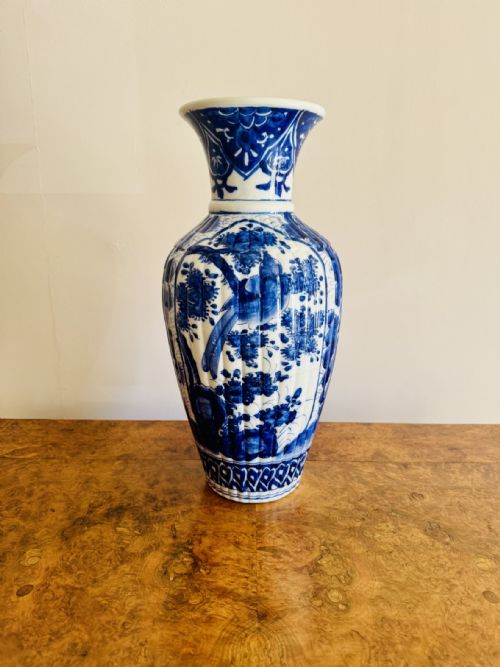
- A style of ceramic decoration originating in Japan, characterised by cobalt blue underglaze and iron red overglaze, often with added gilding. European factories frequently copied these distinct patterns.
- Glaze
- A glassy coating fused to the ceramic body through firing, sealing the porous clay and adding a glossy finish. This surface layer protects the painted cobalt decoration underneath.
Cobalt Porcelain Urn: Frequently Asked Questions
What is a cobalt porcelain urn used for?
These vessels served primarily as decorative garnitures on mantelpieces, dining room sideboards, or central entrance tables during the Georgian and Victorian periods.
Today, collectors place them as focal points in period interiors, and some nineteenth-century examples have been adapted with electrical fittings to function as table lamps.
How do I identify the period of a piece?
Dating relies on examining the factory marks stamped or painted on the base, the style of the hand-painted decoration, and the composition of the ceramic body.
English pieces often show specific pattern numbers from factories like Spode or Worcester, while continental European examples display distinct empire or neoclassical forms.
Are these urns purely English?
The listings include notable English factories alongside significant continental European production from France, Germany, and Austria.
Japanese export wares from the Meiji period also appear frequently, featuring cobalt blue imari designs that influenced European taste.
How should I care for antique porcelain?
Dust the surfaces gently with a soft, dry brush and avoid using water or cleaning solutions on gilded or enamel-painted areas.
Keep the pieces away from direct sunlight and areas with fluctuating humidity to protect both the glaze and any metal mounts.