


Cobalt Blue Temple Jars
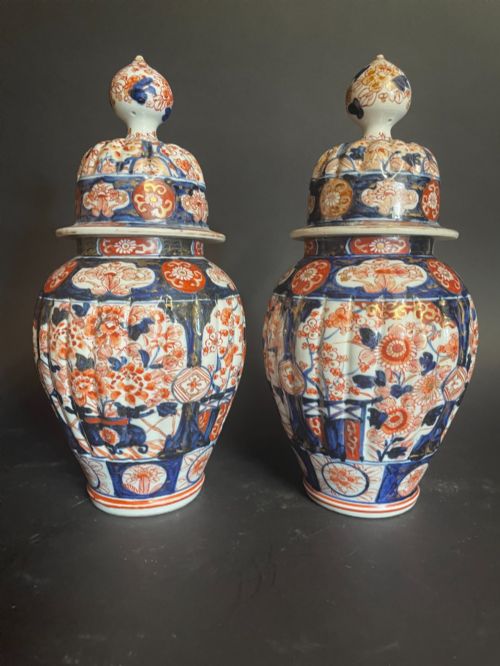
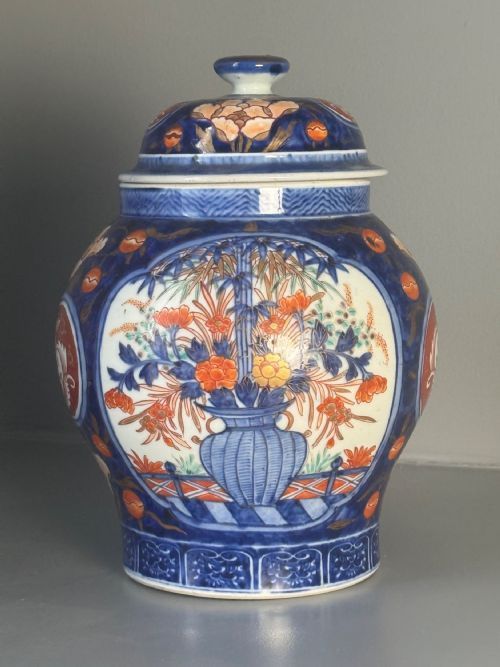
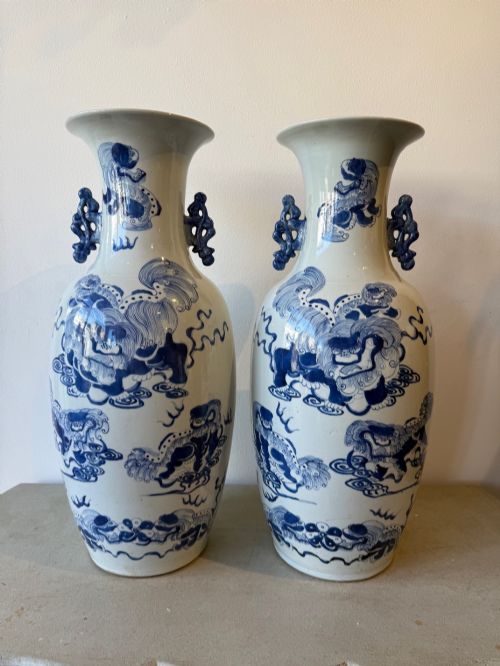
Cobalt blue temple jars bring deep richness and form to a room, ranging from grand Japanese Imari pairs to Chinese blue and white ginger vessels.
Cobalt Blue Temple Jars
Cobalt blue temple jars encompass lidded vases, ginger jars, and covered urns originating from Japanese and Chinese kilns. When you search for cobalt blue temple jars, you encounter pieces spanning from the seventeenth century through the Edwardian era, with nineteenth-century examples appearing most frequently.
How they were made
Potters shaped these pieces from fine porcelain, applying cobalt glaze beneath a clear finish to achieve the deep blue tones characteristic of the style. Artisans then utilised enamels, gold leaf, and gilt highlights over the glaze to build intricate surface patterns.
Production centres such as Arita produced robust bodies fired at high temperatures, ensuring durability. Kiln workers combined traditional hand-painting techniques with precise glazing methods to define the Chinoiserie and Imari motifs.
One towering nineteenth-century specimen stands at forty-five inches tall, requiring a dedicated wooden stand just to keep proper company.
What varies in quality
Quality rests in the depth of the cobalt pigment and the precision of the hand-painted decoration across the porcelain body. Superior examples display crisp lines in the Imari palette or blue and white designs, alongside well-proportioned covers that fit the vessel mouth correctly.
The sophistication of the gilding and enamel work separates standard production from exceptional specimens. Larger matched pairs and pieces retaining original covers demonstrate greater workshop skill and visual presence.
Samson
The Cobalt Blue Temple Jars Glossary
- Imari palette
- A traditional Japanese decorative scheme utilising cobalt blue, iron red, and gilt highlights on white porcelain. This style became widely exported and copied across Europe.
- Baluster vase
- A vessel featuring a curved, bulbous lower body that tapers towards a narrow neck and wide mouth. This classical shape provides stability for large display jars.
- Garniture
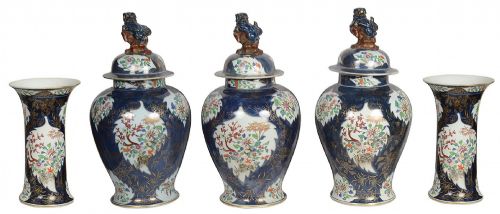
- A set of matching vases or jars designed to be displayed together on a mantelpiece or sideboard. These sets typically comprise three or five pieces of graduated sizes.
- Ginger jar
- A storage vessel featuring a broad shoulders, a short neck, and a flat-topped cover. Originally made for spices, these jars became decorative centrepieces in interiors.
- Arita
- A Japanese town renowned as the birthplace of Japanese porcelain production. Kilns in this region created many of the blue and white and Imari wares exported to the West.
Cobalt Blue Temple Jars: Frequently Asked Questions
What are cobalt blue temple jars?
Cobalt blue temple jars are ceramic vessels with fitted covers, traditionally produced in China and Japan for storage and decorative display. They feature rich blue pigments underglaze, often enhanced with enamel colours and gilt.
These pieces range from seventeenth-century Arita porcelain to nineteenth-century Imari garnitures and blue and white ginger jars. Their robust forms make them striking decorative objects in various interior settings.
How were temple jars used?
These jars originally served as practical containers for spices, tea, and ginger in Asian households before becoming luxury export items. European collectors prized them as decorative ornaments for mantelpieces and reception rooms.
Over time, some larger jars were adapted into table lamps or mounted on wooden stands to suit Western domestic interiors. Despite these alterations, their primary function remained decorative display.
How do I date an antique jar?
Dating relies on examining the characteristics of the porcelain body, the depth of the cobalt glaze, and the painting style. Seventeenth-century pieces often display distinct Arita or Kangxi period traits, while nineteenth-century items show heavier potting and denser Imari decoration.
Reference marks, such as imitation Kangxi symbols or specific Japanese kiln styles, also provide clues to the era of manufacture. Comparing the potting technique with known period examples helps narrow down the decade.
How do I style them at home?
Temple jars work well as focal points on sideboards, tables, or within open shelving units. Pairing jars of similar Imari palettes or blue and white designs creates a cohesive display.
Larger lidded vases stand effectively on the floor or on dedicated wooden bases, while smaller ginger jars suit tabletops. Mixing different centuries and forms adds depth to a room without cluttering the space.