

Cobalt Blue Staffordshire
Cobalt blue Staffordshire brings together rich mineral colour and earthy nineteenth-century ceramic forms for the collector of early pottery.
Cobalt Blue Staffordshire
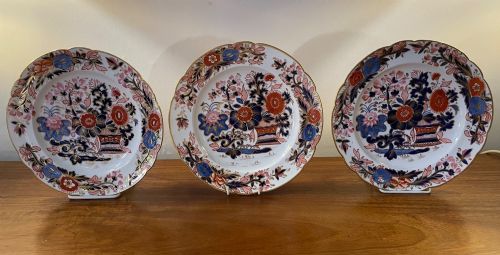
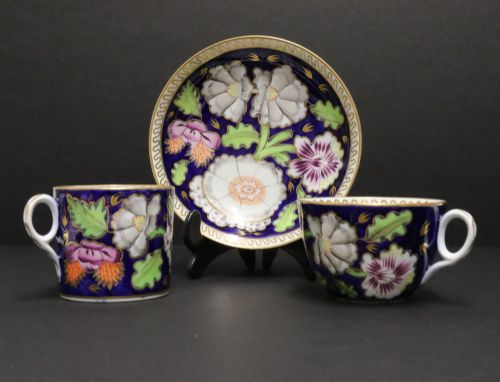
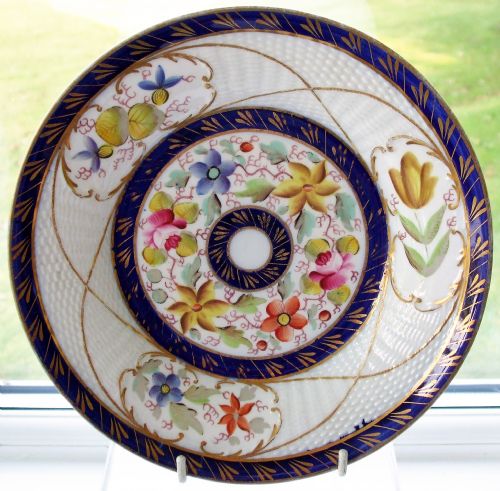
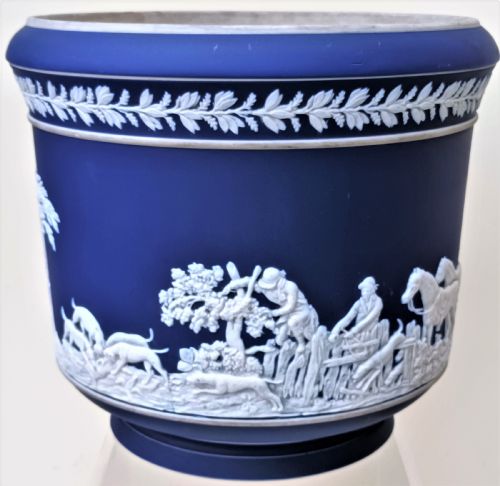
Cobalt blue Staffordshire encompasses nineteenth-century earthenware, ironstone, and porcelain items decorated in deep blue pigments. The selection here leans heavily towards decorative figures, transfer-printed platters, and tableware spanning the Georgian and Victorian eras.
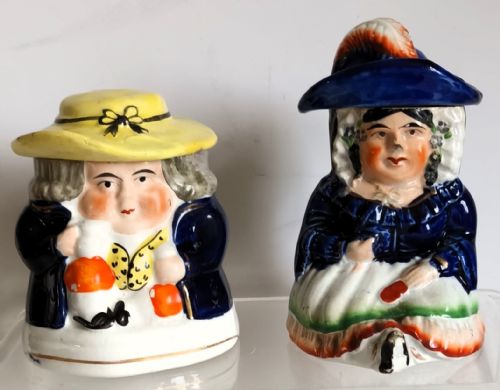
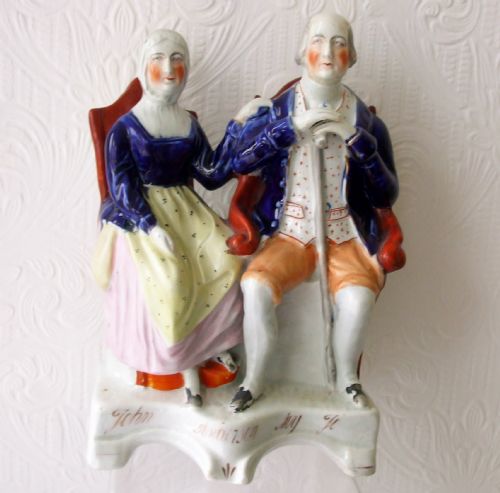
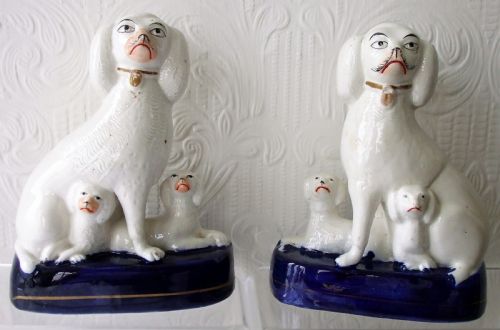
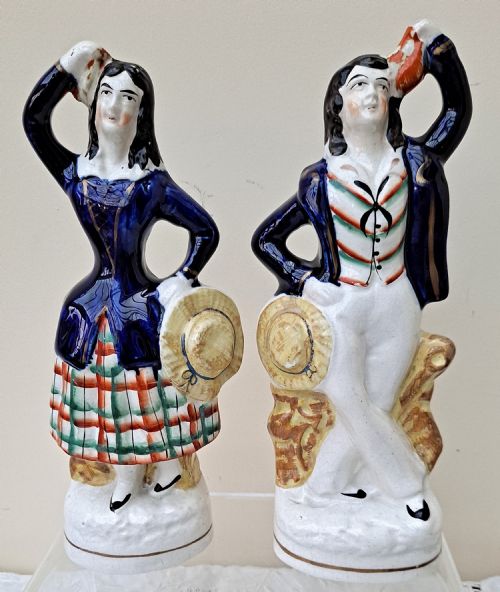
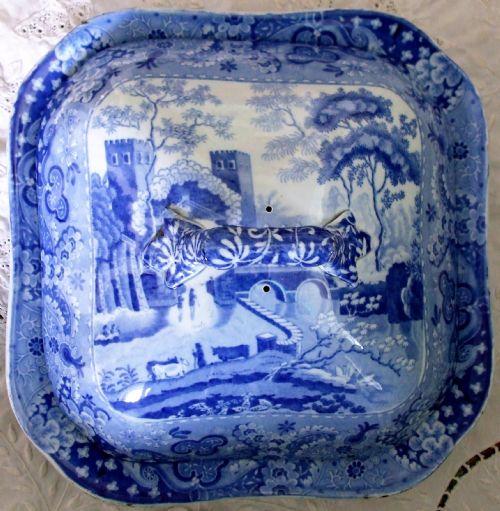
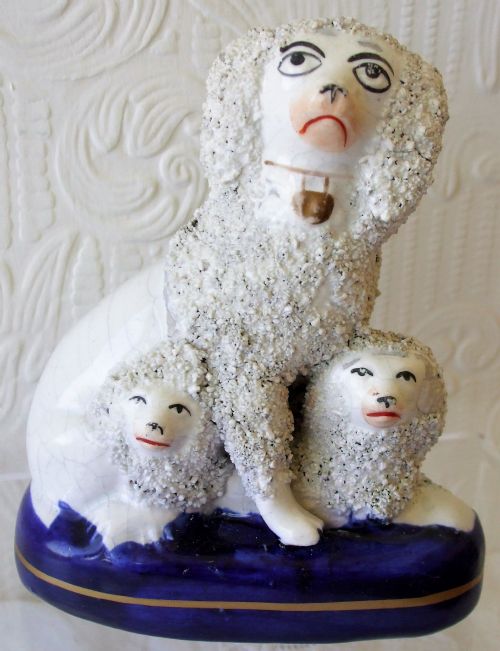
Buyers encounter utilitarian serving vessels alongside modelled portrait figures and poodles. These ceramic objects reflect the domestic interior tastes of the nineteenth century, combining utility with pictorial transfer prints and hand-painted accents.
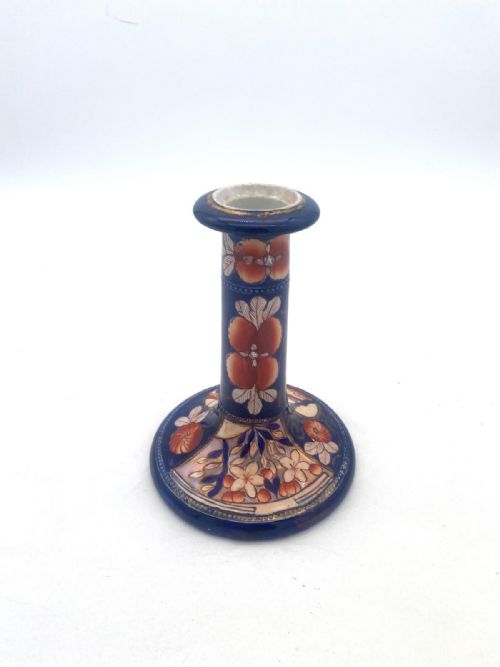
The objects originate primarily from English potteries working during the 1800s, 1850s, and 1890s. They range from large meat plates and vegetable tureens to small scent bottles and spill vases.
How they were made
Potters shaped earthenwares and ironstones using local clays before applying lead glazes to seal the porous bodies. Cobalt oxide pigments were painted by hand or transferred onto the biscuit ware via copperplate impressions.
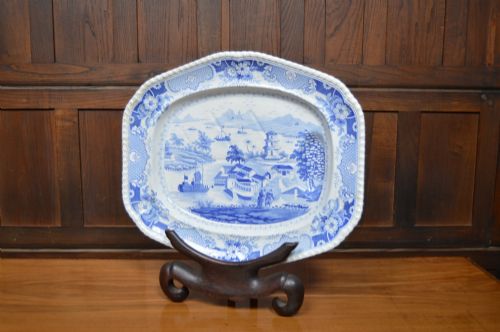
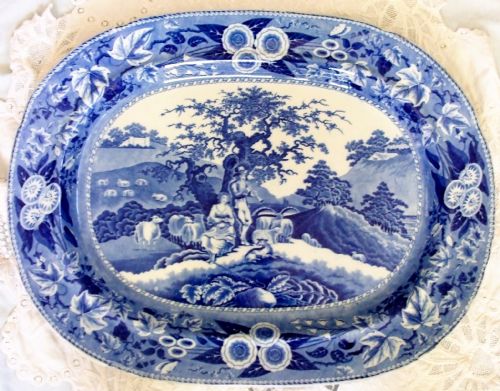
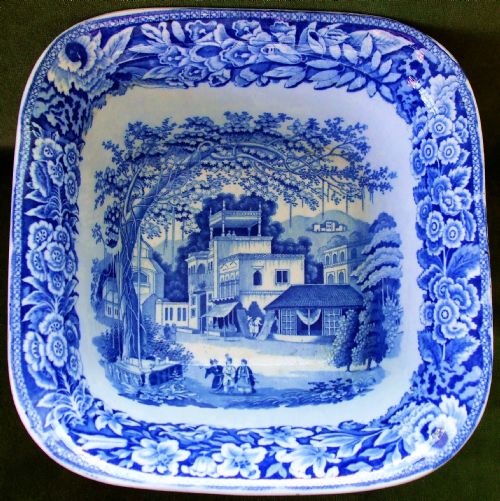
Transfer printing allowed workshops to apply intricate pictorial scenes, such as Eastern street scenes and castle patterns, directly onto chargers and dishes. Enamel highlights and gold leaf were often added over the glaze before a secondary firing.
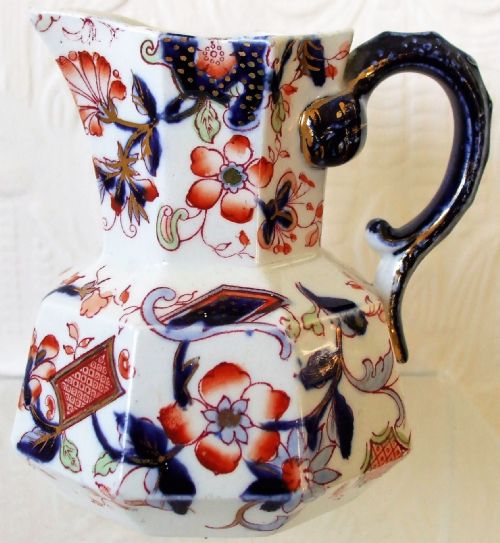
Listings feature earthenware, ironstone, and porcelain objects decorated with cobalt blue transfer printing, enamel, and gold leaf.
What varies in quality
The clarity of the transfer-printed design dictates much of the visual success on plates and platters. Sharp, well-defined blue lines without blurring or pooling separate standard domestic wares from finer cabinet pieces.
Masons Ironstone·Keeling and Co·William Adams and Sons·John Ridgway·Samuel Alcock
The Cobalt Blue Staffordshire Glossary
- Transferware
- Earthenware decorated by applying a printed design from an engraved copper plate onto paper, then transferring it to the ceramic body before glazing.
- Ironstone
- A heavy, durable type of feldspathic stoneware patented in the early nineteenth century to imitate Chinese porcelain.
- Flatback
- A Staffordshire pottery figure modelled with a finished front and a flat, unglazed or minimally decorated rear designed to stand against a wall.
- Flow blue
- A nineteenth-century transfer-printed earthenware style where the cobalt blue pigment intentionally bleeds into the surrounding white glaze during firing.
- Spill vase
- A hollow ceramic cylinder designed to hold wooden spills used for lighting fires or candles, often incorporated into figural groups.
Cobalt Blue Staffordshire: Frequently Asked Questions
How do I date cobalt blue Staffordshire?
Dating relies on stylistic markers, pottery registration marks, and the specific composition of the ceramic body. Georgian and early nineteenth-century pieces often feature distinct transfer patterns and earthenware bodies.
Victorian pieces introduce brighter enamel palettes and varied figural subjects such as portrait groups and poodles. Examining the base and glaze type helps narrow the decade of production.
Were transferware plates used daily?
Many transferware plates and platters served functional roles in nineteenth-century dining rooms. Durable ironstone and earthenware bodies withstood regular use for serving meat and vegetables.
Over time, utilitarian pieces acquired natural surface wear from cutlery and washing. Cabinet plates and decorative chargers, however, were preserved mainly for display.
What are Staffordshire flatback figures?
Flatback figures are ceramic ornaments designed specifically to sit on mantelpieces or shelves against a wall. Because viewers only saw the front, potters left the backs flat and largely unadorned.
These figures often commemorated royal events, theatrical performances, or popular animals like poodles and greyhounds. They brought colour and narrative charm to Victorian parlours.