



Cobalt Blue Salt Cellar
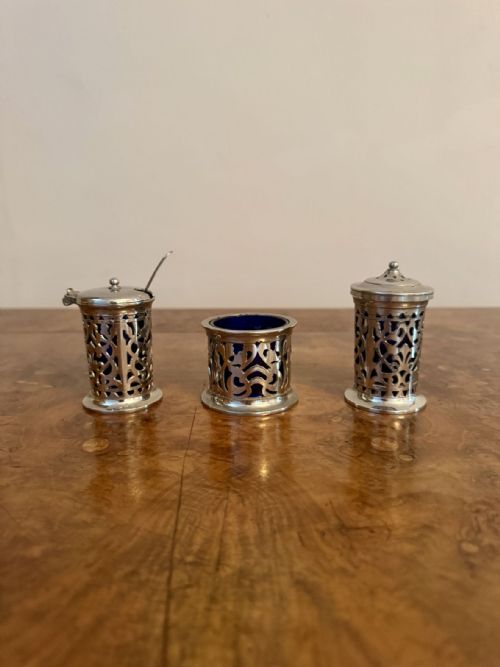
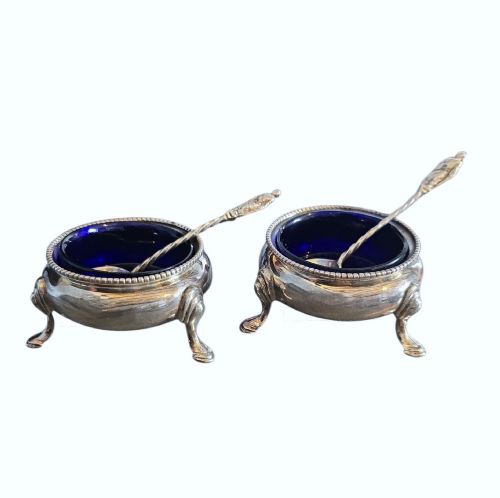
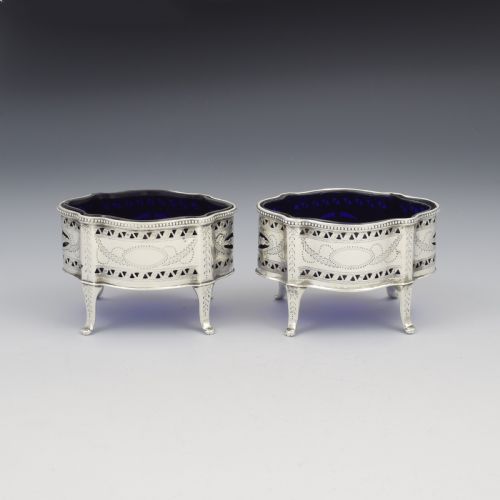
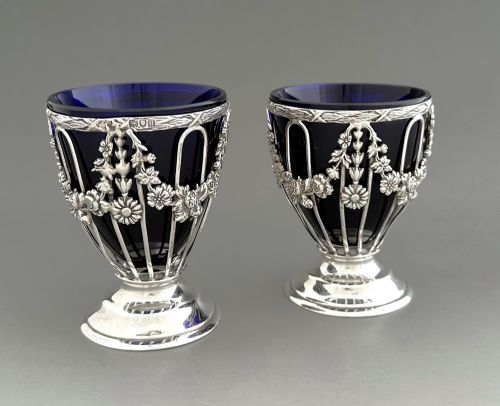
These cobalt blue salt cellar pieces bring a rich splash of dark glass to the dining table, pairing deep colour with precious metal mounts.
Cobalt Blue Salt Cellar
When you search for a cobalt blue salt cellar, you find small open vessels and fitted holders designed for dining table condiments. The pieces span periods from the eighteenth century through the Victorian and Edwardian eras into the Art Deco years.
You are most likely to meet Victorian and Edwardian examples featuring blown or moulded glass inserts held inside pierced silver, silver plated, or wirework frames. They often arrive in pairs or sets complete with matching spoons.
The form encompasses simple bowls, boat shapes, and cruet sets alongside condiment pots. Makers from past centuries relied on rich blue glass to contrast sharply with bright sterling silver and silver plate.
How they were made
The construction typically combines lead glass or cobalt glass liners with frames formed from sterling silver, silver plate, or silver wirework. Glassblowers shaped the deep blue vessels by hand or in moulds, while silversmiths pierced, soldered, and shaped the outer metal mounts.
Victorian and Georgian workshops employed techniques like wirework and serpentine piercing to create lightweight yet sturdy frames. Silk occasionally appears in related fitted boxes, though the core of the work rests entirely in glass and metal craftsmanship.
Cobalt Blue Salt Cellar Retail Price Guide 2026
Typical asking prices for cobalt blue salt cellar among the pieces listed under this phrase on Sellingantiques today, from the lower quarter to the upper quarter. They describe what is for sale here now, not the wider market.
Victorian diners trusted tiny glass tubs and silver baskets to keep table salt from eating through the mahogany.
What varies in quality
Quality rests on the crispness of the silversmith's piercing, the weight and clarity of the cobalt glass liners, and whether the components remain original to one another. Finer pieces show sharp detail in wirework and serpentine rims alongside unclouded glass.
The presence of matching original spoons and complete sets elevates an ensemble from a solitary survivor to a cohesive table service. Hallmark clarity and robust metal gauge also set superior examples apart from standard production.
Beare Falcke
The Cobalt Blue Salt Cellar Glossary
- Salt Cellar
- An open vessel used to hold loose salt on the dining table before the invention of the shaker. They frequently require a small spoon for serving.
- Liners
- The removable glass inserts, often in cobalt blue, that sit inside silver or plated frames to protect the metal from corrosive salt. They lift out easily for cleaning.
- Cruet Set
- A matched collection of condiment containers, which can include mustard pots, pepper shakers, and salt cellars housed together in a frame. They became staple dining table accessories in the Victorian period.
- Monteith
- A bowl with a scalloped or notched rim originally used for chilling wine glasses. Georgian versions occasionally appear with blue glass components.
- Wirework
- A decorative metal technique using soldered wires to create open, airy frames for glass liners. Edwardian silversmiths utilised this method extensively for table salts.
Cobalt Blue Salt Cellar: Frequently Asked Questions
How do I clean a cobalt blue salt cellar?
Lift the glass liner out of its silver frame before washing it separately in warm, soapy water to avoid damaging the metal mounts. Polish the sterling silver or silver plate gently with a soft cloth while keeping polish away from the glass.
Ensure both components are completely dry before reassembling them for display or use. Regular gentle maintenance preserves the rich colour of the glass and the shine of the silver.
Were these salt cellars used with spoons?
Open salt cellars predate modern salt shakers and required diners to pinch or spoon salt onto their plates. Many surviving sets include small mustard or salt spoons made to match the silver frames.
When spoons survive alongside the salt cellars and glass liners, the set remains closer to its original dining table presentation. Replacement spoons are common given the small size and fragile nature of these utensils.
How can I date a silver salt cellar?
British sterling silver pieces generally carry hallmarks stamped directly onto the metal, including date letters that pinpoint the exact year of assay. Examining the style of the piercing and the shape of the bowl also helps distinguish Georgian examples from Victorian or Edwardian ones.
Design shifts from plain eighteenth-century bowls to ornate Victorian serpentine mounts and geometric Art Deco forms provide clear chronological markers. Comparing the weight and construction style confirms the manufacturing period.
Are the blue glass liners removable?
The cobalt glass liners lift straight out of the silver or plated frames to allow for easy cleaning and refilling. Pierced frames and wirework baskets were specifically engineered to hold these glass inserts securely while displaying the blue colour.
Original liners fit snugly within the metal housing without rocking or binding. Finding a set with its original undamaged glass liner significantly increases its authenticity.