


Cobalt Blue Porcelain Jar
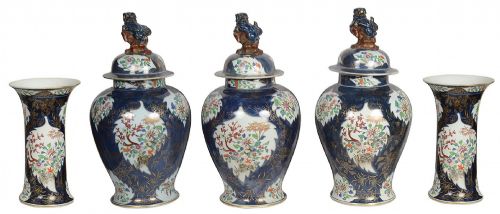
A cobalt blue porcelain jar offers a striking display of deep cobalt pigment against crisp white porcelain, catching the eye in any room.
What they are
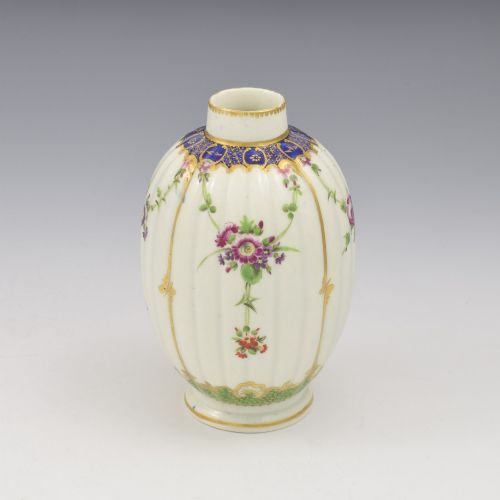
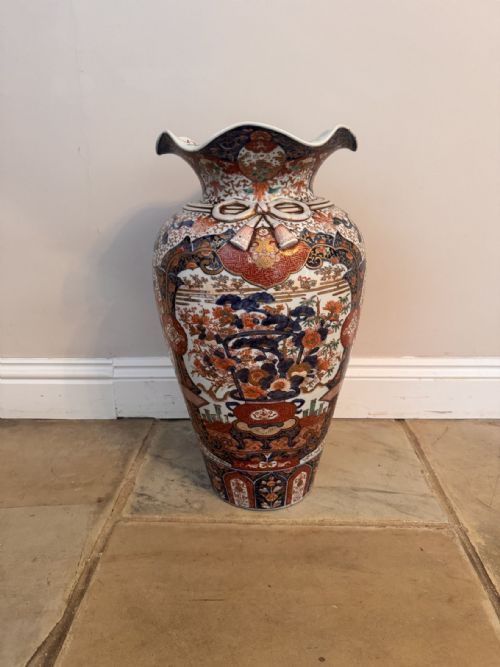
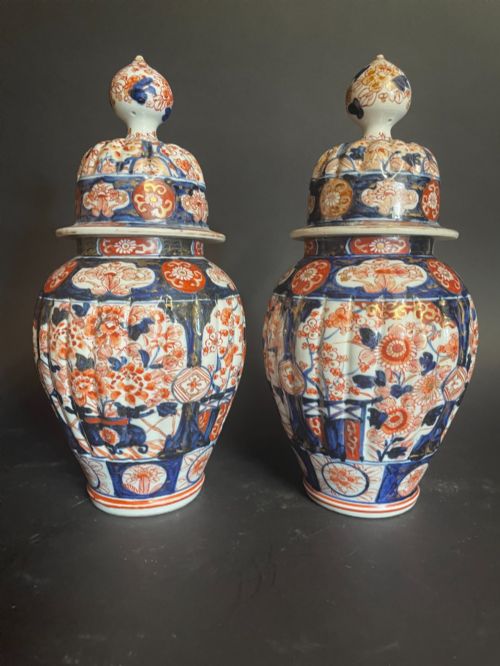
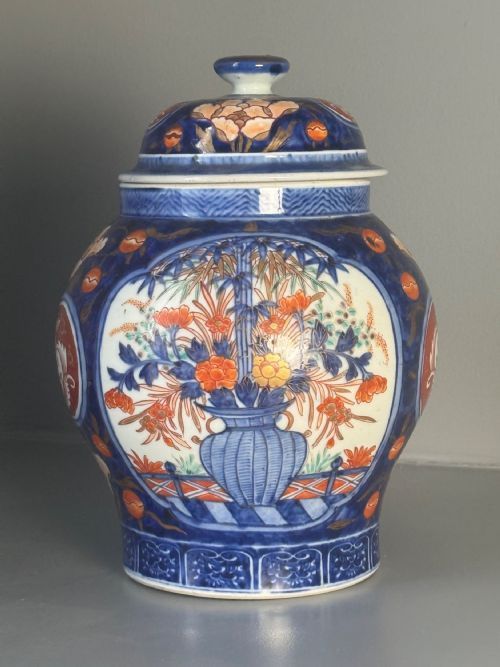
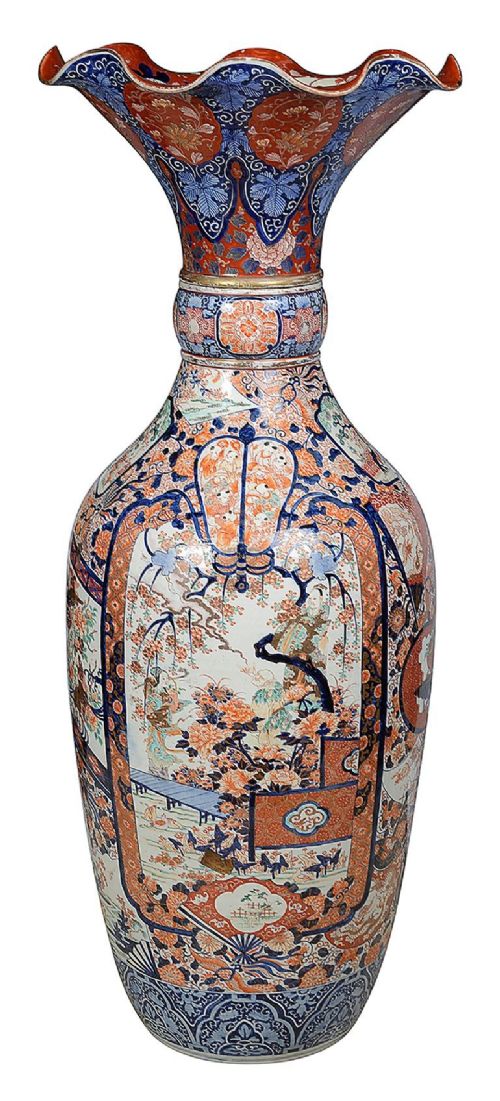
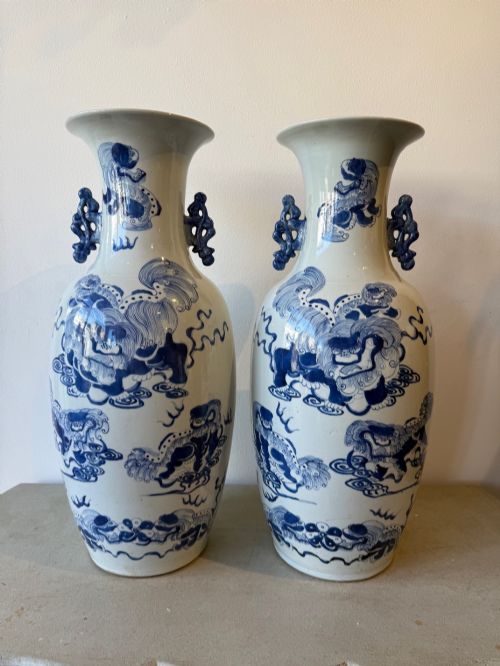
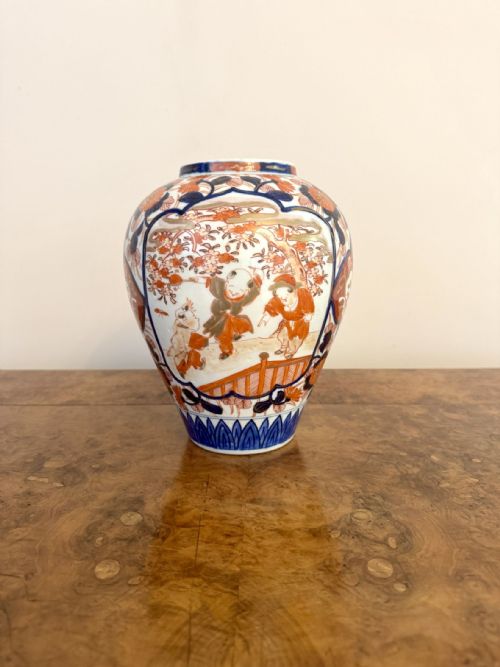
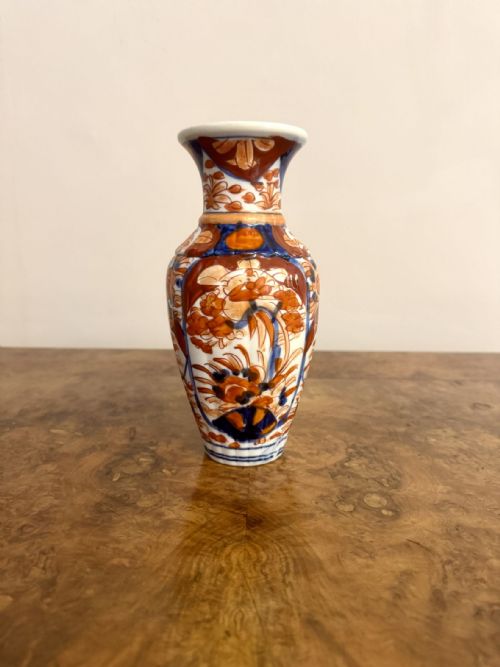
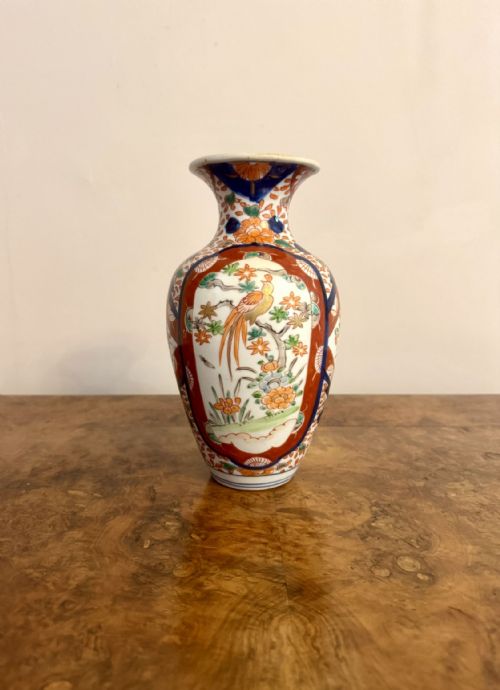
When buyers search for a cobalt blue porcelain jar, they find a selection of covered vessels originating from English and Japanese traditions. The forms range from English earthenware and porcelain creations to Japanese Imari baluster pieces.
The pieces on this page span the nineteenth century through the early twentieth century, including items from the Meiji period and the Art Deco era. Most examples function as vases and jars with matching covers, showcasing various decorative palettes.
The most likely version to meet here is a lidded Japanese Imari piece or an English earthenware vessel from the nineteen-twenties. These objects combine utilitarian origins with strong decorative presence.

How they were made
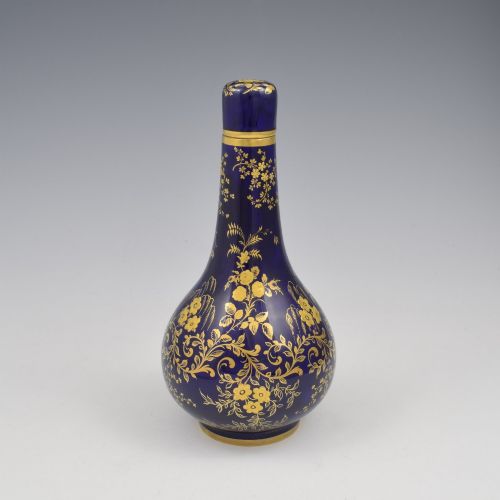
The makers formed these vessels from porcelain and earthenware, applying glaze to create a smooth, vitreous surface before decoration. Cobalt enamel provided the deep blue foundation seen across the pieces.
Artisans layered iron red enamel and gold leaf or gilt onto the glazed body to add contrasting details. Firing fixed the enamels and metallic accents into the glaze.
English pieces from the nineteen-twenties share shelf space with nineteenth-century Japanese Meiji examples, showing distinct regional approaches to glazing and enamel application.
The listings on this site feature porcelain and earthenware materials spanning the nineteenth century, the Meiji period, and nineteen-twenty.
What varies in quality
Quality rests in the crispness of the cobalt blue enamel and the precision of the gilt or iron red highlights. Stronger examples display a confident hand in the painted details across the octagonal or baluster surfaces.
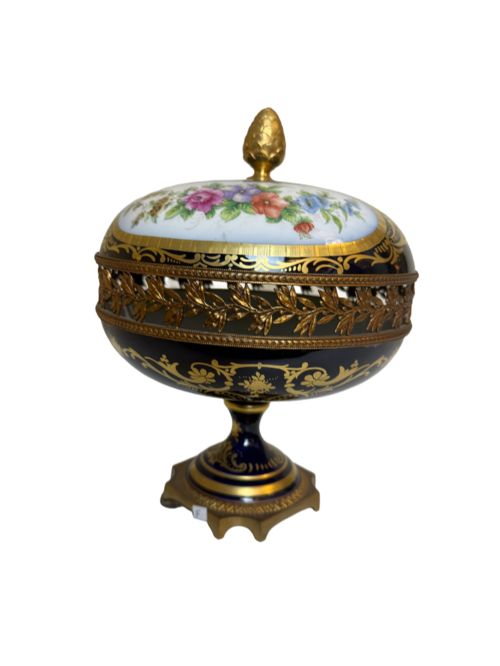
The integration of the cover with the main body defines the success of a lidded vessel. Well-executed pieces maintain harmony in form and decoration from the base to the finial.
The Cobalt Blue Porcelain Jar Glossary
- Cobalt enamel
- A vitrified blue pigment applied beneath or over the glaze to produce rich, deep blue tones. It forms the primary visual anchor for Imari and related wares.
- Imari palette
- A traditional decorative scheme combining underglaze blue with iron red enamel and gilt. This combination originated in Japan and influenced makers worldwide.
- Baluster
- A vertical vase form with a rounded lower body that tapers toward the neck. This shape provides a stable and balanced canvas for complex enamel work.
- Iron red
- A rust-coloured enamel derived from iron oxide used alongside cobalt blue and gold leaf. It creates a warm, contrasting accent in traditional decoration.
Frequently Asked Questions
What is a cobalt blue porcelain jar?
A cobalt blue porcelain jar is a lidded vessel decorated with deep blue enamel, often accented with gold leaf or iron red.
These pieces originate from English and Japanese workshops across the nineteenth and early twentieth centuries.
How do I date a cobalt blue porcelain jar?
Dating relies on stylistic markers, materials, and manufacturing techniques recorded in the piece's construction.
Examples on this page span the nineteenth century, the Meiji period, and the nineteen-twenties.
Were these jars used for storage?
Many lidded vessels served decorative rather than practical storage functions, acting as mantel or cabinet centrepieces.
Their striking cobalt and gilt decoration suited display rooms rather than pantries.
How do Japanese and English jars differ?
Japanese pieces often feature the Imari palette with iron red and gilt over porcelain bodies from the Meiji period.
English examples, such as those from the nineteen-twenties, utilise earthenware alongside porcelain to achieve distinct decorative styles.