


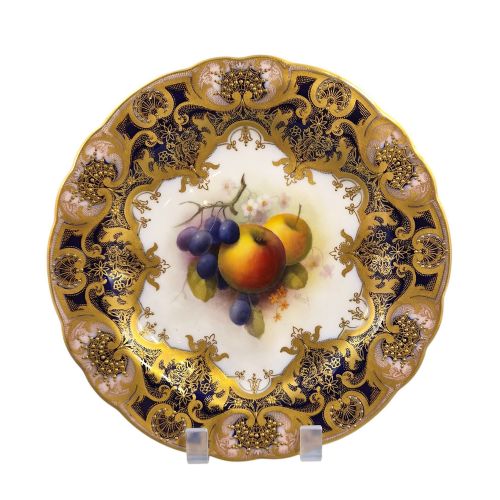
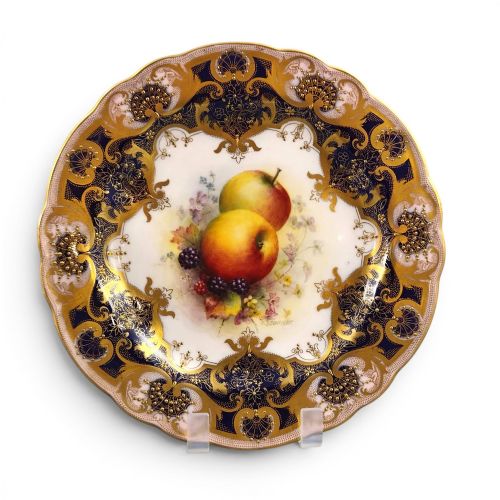


Cobalt and Gold Plate
Cobalt and gold plate brings together deep blue ceramic grounds and metallic enrichment, offering rich display pieces for cabinet and table.
Cobalt and Gold Plate
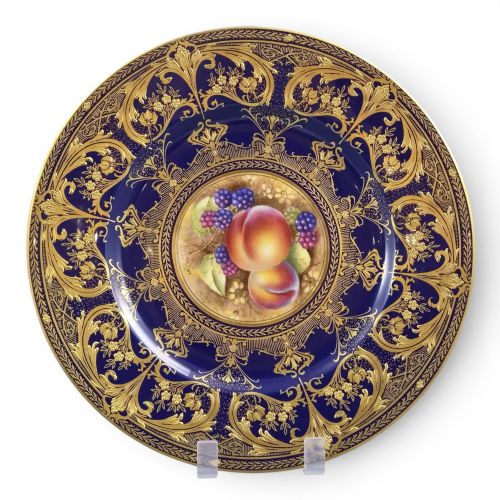
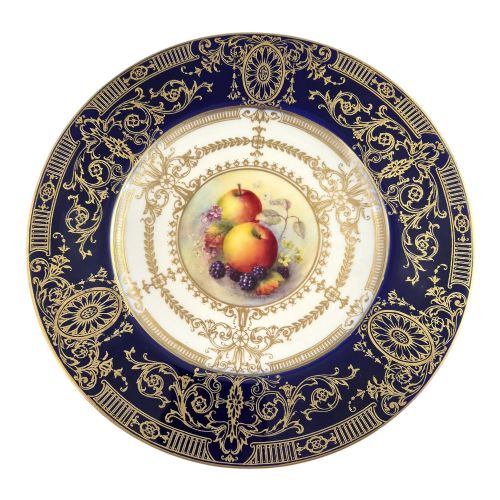
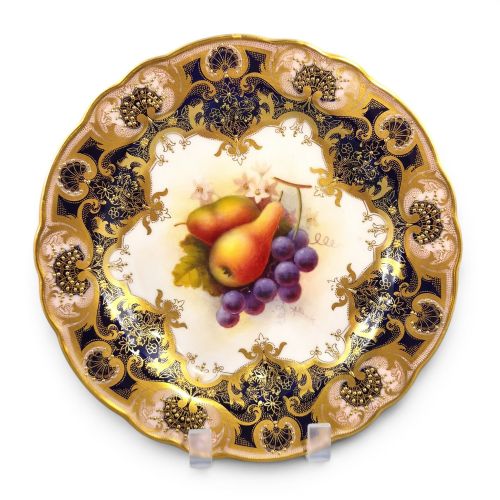
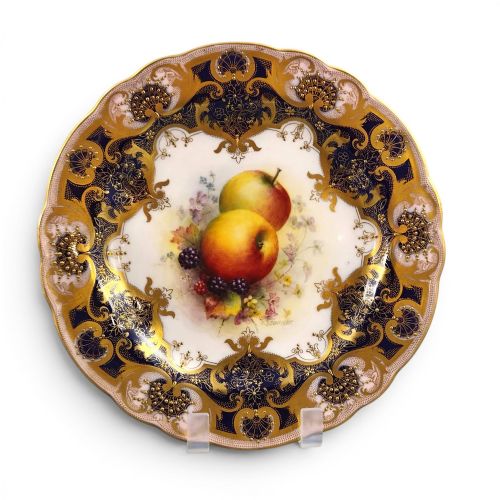
When you search for cobalt and gold plate, you encounter decorative ceramics designed for display, including cabinet plates, dessert services, and serving dishes. These items combine deep blue enamel or cobalt grounds with extensive gilding, gold leaf, and gold plate.
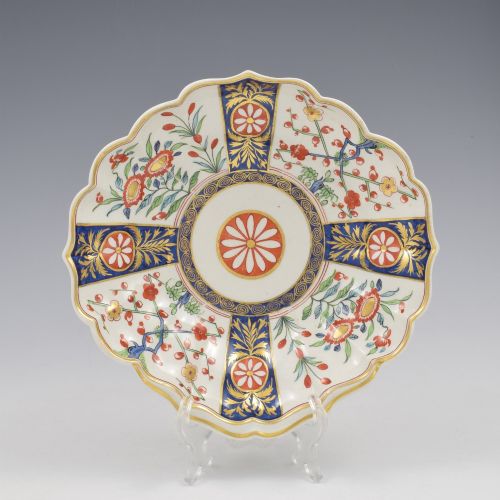
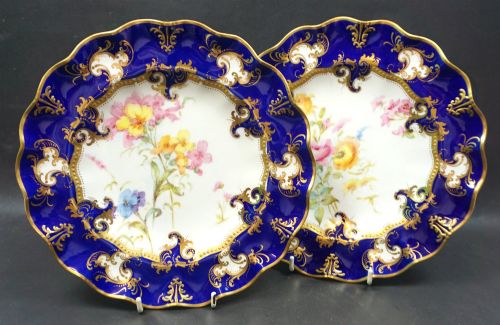
The selection on this page centres heavily on British porcelain and bone china alongside continental European pieces. Examples range from Georgian botanical serving dishes to Edwardian hand-painted cabinet plates.
Makers such as Royal Worcester, Royal Crown Derby, and Coalport dominate the domestic wares. Continental factories like Sevres and Royal Vienna also contribute significantly to the range.
Materials and methods
Potters shaped porcelain and bone china before applying cobalt underglaze or enamel for the characteristic deep blue ground. Artisans then introduced hand-painted scenes, botanical studies, or florals.
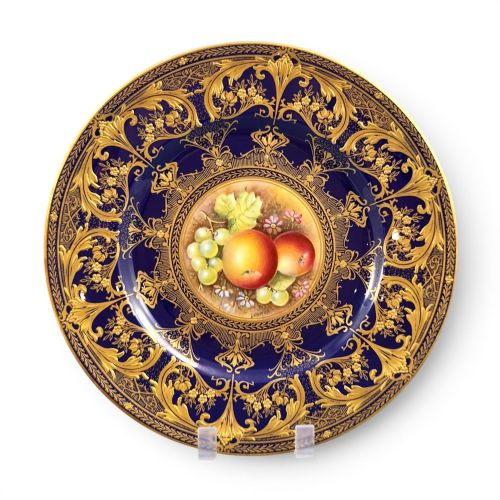
Gilding, gold leaf, and gold plate were applied by hand to borders, rims, and central motifs. Many plates received tooling to the gold to catch the light across intricate patterns.
Cobalt and Gold Plate Retail Price Guide 2026
Typical asking prices for cobalt and gold plate among the pieces listed under this phrase on Sellingantiques today, from the lower quarter to the upper quarter. They describe what is for sale here now, not the wider market.
Listings span from the Georgian period through the nineteenth century and into the twentieth century, featuring porcelain, bone china, and gold leaf.
Distinctions in quality
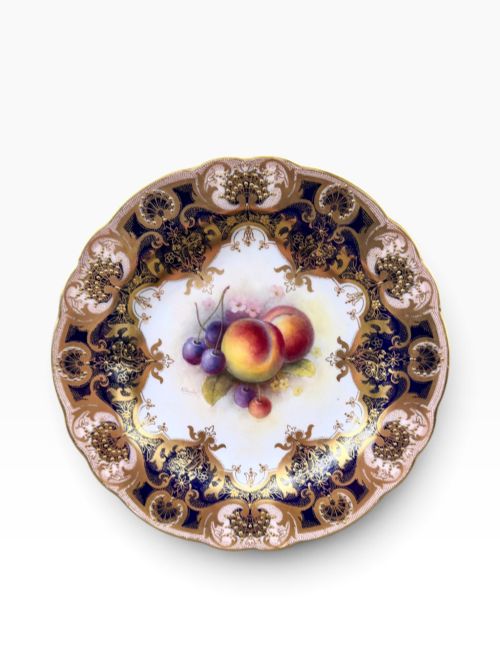
Quality rests in the precision of the hand-painting and the depth of the cobalt ground. Hand-painted fruit, figures, and botanical studies by documented artists elevate a piece above standard factory decoration.
The complexity of the gilding further separates standard wares from superior examples. Finely tooled and raised goldwork indicates a higher grade of craftsmanship.
Royal Crown Derby·Royal Worcester·Coalport·Sevres·Royal Vienna·Meissen·New Hall·Aynsley
The Cobalt and Gold Plate Glossary
- Cabinet plate
- A decorative ceramic plate intended purely for display in a cabinet rather than for dining. These often feature elaborate hand-painted subjects.
- Bone china
- A type of porcelain incorporating bone ash for strength and translucency. It forms the body of many British plates from the nineteenth century onwards.
- Gilding
- The application of gold leaf or gold powder to a ceramic surface. This technique highlights rims, handles, and borders.
- Enamel
- A glass-like substance fused to porcelain through firing to provide colour. Cobalt enamel creates the deep blue background seen on many plates.
Cobalt and Gold Plate: Frequently Asked Questions
What is a cabinet plate?
A cabinet plate is a decorative ceramic piece created for display rather than practical use at the dining table. These items frequently showcase detailed hand-painted scenes or portraits framed by cobalt and gold borders.
Makers produced them in sets or as individual showpieces to highlight the artistic skill of their painters. Collectors display them on stands or within glass cabinets to preserve their decorated surfaces.
How are cobalt blue grounds applied?
Cobalt oxide is applied to the porcelain body either under the glaze or as an enamel wash before firing. This mineral produces a stable, intense blue colour that withstands high kiln temperatures.
Once fired, the rich blue surface provides a contrasting background for subsequent applications of gold leaf and hand-painted details.
Are these plates meant for dining?
Most pieces listed here function as decorative items rather than tableware. The delicate hand-painted enamel and raised gold plate risk damage from regular use and washing.
Dessert services and serving dishes saw occasional dining use historically, but surviving examples are preserved for display and collection.
How do I identify the period?
Dating relies on factory backstamps, impressed marks, and stylistic indicators such as form and border decoration. Victorian and Edwardian pieces often bear specific registration numbers or date ciphers.
Comparing the painting style and gilding patterns against documented examples helps narrow down the decade of manufacture.