
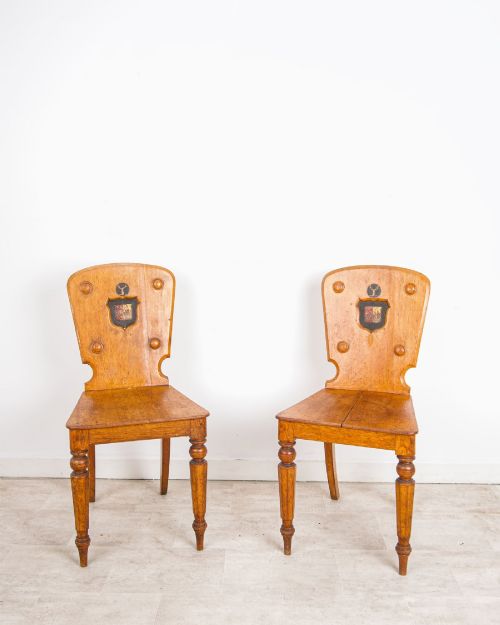

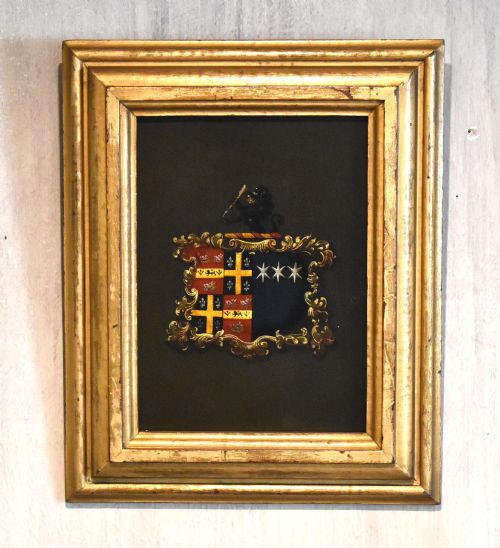
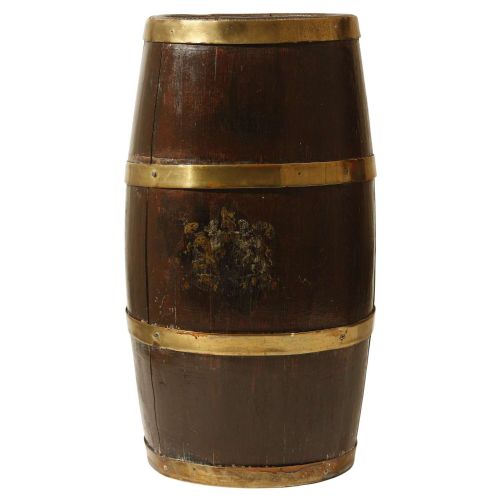


Coat of Arms Painting
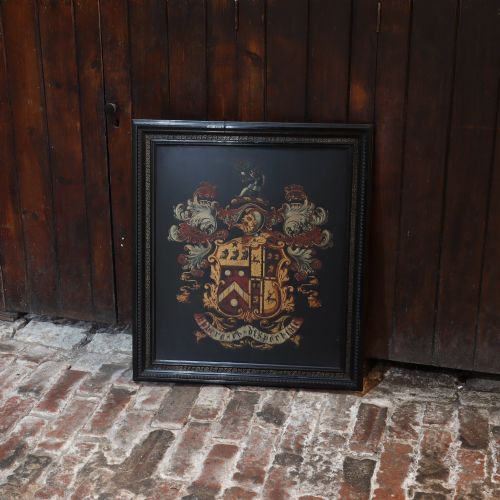
Coat of arms painting brings centuries of heraldry into interiors through oils, watercolours, and painted wood panels.
Coat of Arms Painting
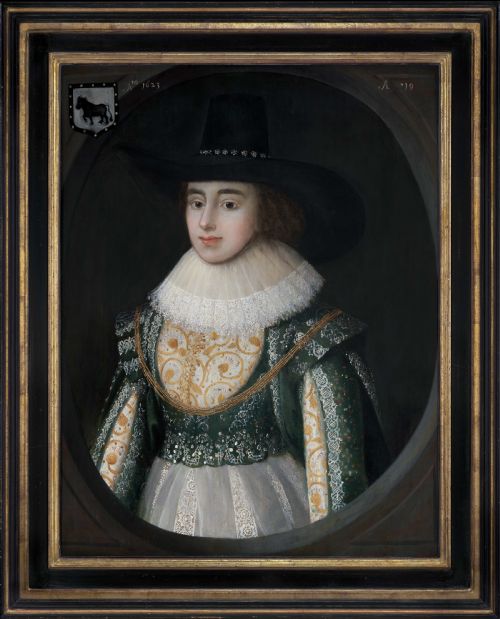
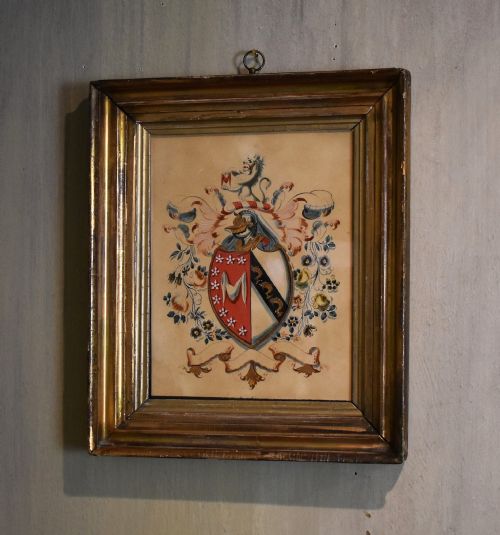
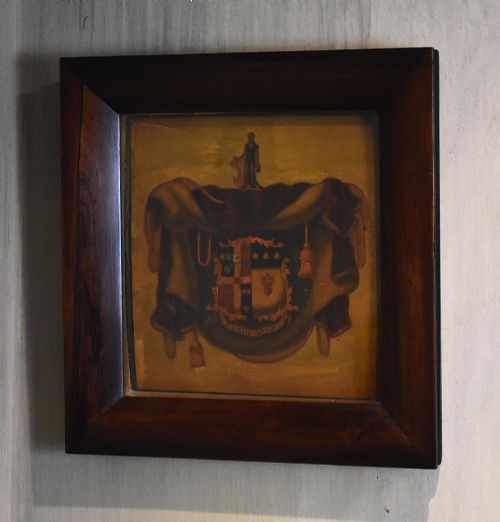
A coat of arms painting displays historic heraldic devices, crests, and armorial bearings rendered across diverse surfaces. You will encounter works ranging from 17th-century oils on panel and canvas to 18th-century silk pieces and 19th-century coaching panels.
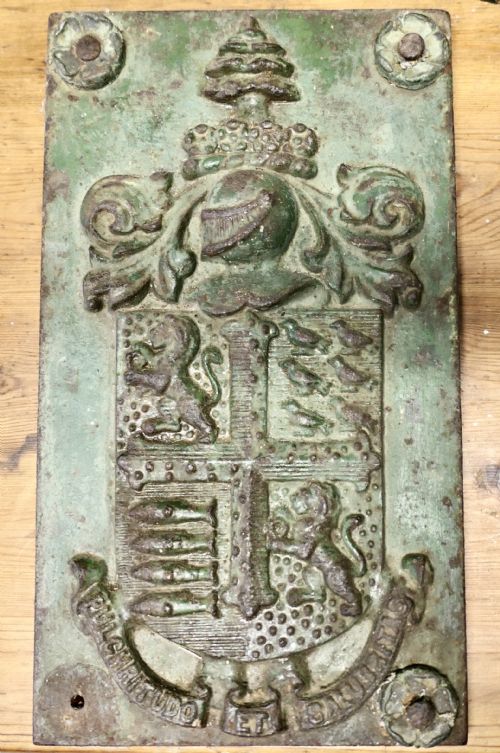
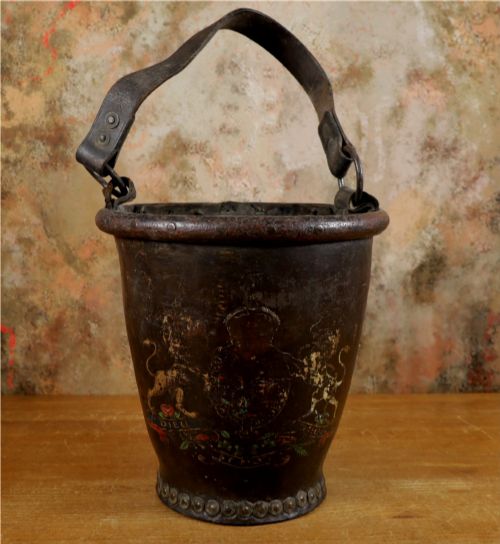
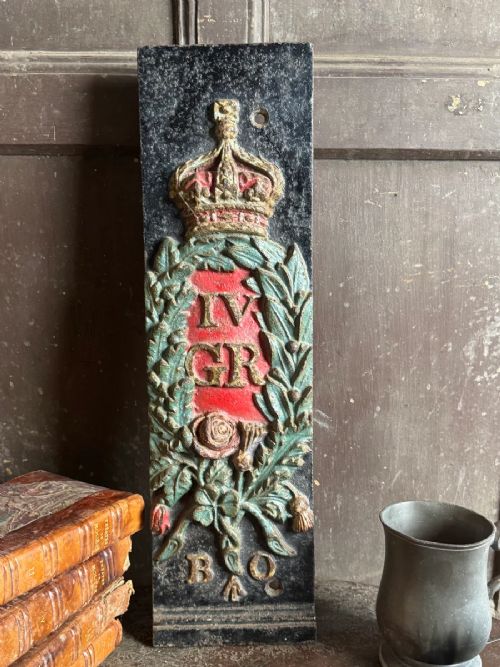
Beyond traditional canvases, heraldry appears on functional and architectural items including leather fire buckets, cast iron plaques, ceramic plates, and carved wooden crests. The selection spans Georgian, Victorian, and earlier periods with distinct regional British and European origins.
Materials and techniques
Makers applied oil paint, watercolour, and gold leaf directly to wood panels, canvas, silk, and leather substrates. Pigments often rest on prepared grounds of gesso or lead white, sealed with protective varnishes.
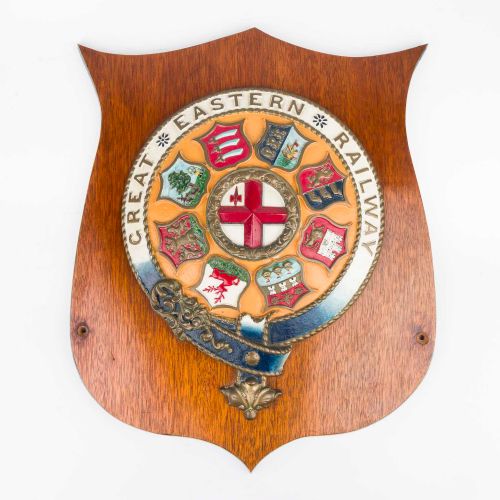
Metal and ceramic examples utilise cast iron, bronze, enamel, and glazed pottery, where armorial designs are fired or painted onto the hard body. Glass works employ hand-painted leaded windows and reverse painting on glass.
Some heraldic panels spent their working lives bolted to the sides of aristocratic carriages bouncing down muddy Georgian roads.
Judging quality in armorial art
Quality rests upon the precision of the heraldic draughtsmanship and the fidelity of the blazon. Master painters render complex charges, mantling, and supporters with anatomical accuracy and crisp line work.
The choice of medium and substrate elevates a piece, with fine oil on panel or canvas retaining pigment stability and detail better than distressed surfaces. Surviving original frames and documented family provenances add historical weight.
Cornelius Johnson·Barr Flight And Barr·Samson Of Paris·Icilio Federico Joni
The Coat of Arms Painting Glossary
- Blazon
- The formal description of a coat of arms using specific heraldic terminology. This written code dictates the exact arrangement of tinctures, charges, and divisions on the shield.
- Crest
- The component of a coat of arms that sits atop the helmet or coronet above the shield. In many decorative paintings, the crest appears independently of the full armorial bearing.
- Tincture
- The colours, metals, and furs used in heraldry, divided into metals like gold and silver, and colours such as red, blue, black, and green. Each carries specific traditional significance in armorial design.
- Mantling
- The decorative drapery hanging from the helmet around the shield, representing the cloth cloak worn over armour to protect the wearer from the sun. Painters rendered this foliage in sweeping, organic curves.
Coat of Arms Painting: Frequently Asked Questions
What is a coat of arms painting?
These works are historic visual representations of family lineages, institutions, or civic bodies displayed through heraldic shields, crests, and mottos.
Artists executed them on canvas, wood panels, leather, and metal to mark status, alliances, or property.
Where were these paintings displayed originally?
Owners hung them in the great halls of country houses, civic chambers, and ecclesiastical buildings to project authority and lineage.
Coach panels and fire buckets placed the armory on movable property, while architectural plaques adorned public buildings.
How do I date an armorial painting?
Dating relies on the style of the painting, the composition of the frame, and the materials of the substrate such as oak panels or hand-beaten copper.
Heraldic records and specific family genealogies often narrow down the exact decade when the arms were granted or used.
How do I care for antique painted panels?
Keep wooden panels and canvas works away from direct sunlight and fluctuating humidity to prevent warping, cracking, or pigment flaking.
Dust surfaces gently with a dry, soft brush and avoid chemical cleaning agents on painted or gilded areas.