
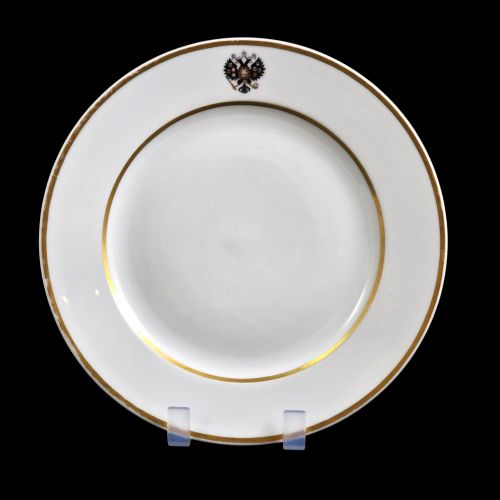


Coat of Arms China
Coat of arms china carries painted heraldry that records family alliances and personal honours.
Coat of Arms China
Coat of arms china covers ceramic plates, soup plates, bowls and platters painted with specific heraldic crests. These pieces include Chinese export porcelain from the eighteenth century alongside nineteenth-century British porcelain and glazed pottery.
The most common examples on this page are eighteenth-century Chinese export plates and dishes, often decorated in famille rose enamels with European arms. British factories also produced armorial services during the Georgian and Victorian periods.
Forms range from octagonal soup plates and rectangular dishes to cabinet plates and dessert plates. Each item displays hand-painted heraldry intended for wealthy patrons and dining services of distinction.
Materials and production methods
Hard-paste porcelain and glazed pottery form the base of these objects, shaped into plates, bowls and service dishes. Chinese export pieces utilise durable hard-paste porcelain fired in large kilns before receiving hand-painted decoration.
Overglaze enamel and gold leaf provide the colour and gilding for the heraldic shields and floral borders. Artisans applied enamels meticulously over the fired glaze to ensure the intricate details of the crests remained sharp.
Listings feature periods from the eighteenth century through the Georgian and Victorian eras, utilising porcelain, glazed pottery and gold leaf.
Assessing quality and execution
The precision of the hand-painted heraldry dictates the visual success of the piece, separating standard commercial output from bespoke commissions. Heraldic details rendered with exact lines and clear tinctures reflect higher skill among the painters.
The quality of the porcelain body and the richness of the overglaze enamels and gilding also vary across periods. Well-preserved gilding and smooth, bright enamel surfaces indicate superior initial manufacture and careful handling over centuries.
Coalport Porcelain·Chamberlain Worcester·Barr, Flight & Barr Worcester·Minton·Samson Of Paris
The Coat of Arms China Glossary
- Armorial
- Bearing a coat of arms or heraldic device. This term describes ceramics decorated with specific family crests.
- Famille rose
- A palette of opaque pink and rose enamels introduced in Chinese porcelain decoration during the eighteenth century. It allowed for subtle tonal gradations in floral and heraldic motifs.
- Hard-paste porcelain
- A dense, vitrified ceramic made from kaolin and petuntse fired at high temperatures. It forms the durable body of many export and European wares.
- Overglaze enamel
- Pigments applied to the surface of a previously fired and glazed ceramic before a lower temperature firing. This technique permits a wide spectrum of bright colours on decorative pieces.
- Gilding
- The application of gold leaf or gold paint to ceramic surfaces. It highlights borders, rims and heraldic elements on formal dining services.
Coat of Arms China: Frequently Asked Questions
What is coat of arms china?
Coat of arms china consists of ceramic plates, bowls and dishes painted with specific heraldic devices. These items were typically commissioned by elite families to display their lineage on dining tables.
The pieces span Chinese export wares and British porcelain factories from the eighteenth to the nineteenth century, uniting practical tableware with personal identity.
How were armorial services used?
These services were displayed during formal dinners and banquets to signal the wealth, status and social standing of the host. Guests would immediately recognise the heraldry and understand the family connections.
While some larger services remained in daily use among the aristocracy, many individual plates and dishes survive as decorative cabinet pieces.
How do I care for armorial porcelain?
Careful handling is essential due to the delicate overglaze enamels and gold leaf that decorate the surfaces. Hand washing in lukewarm water with mild soap prevents the painted heraldry from fading.
Displaying the pieces away from direct sunlight protects the enamel colours and maintains the integrity of the ceramic body.
How can I tell Chinese export from British pieces?
Chinese export pieces from the eighteenth century typically utilise hard-paste porcelain with distinctive famille rose enamels and specific border styles. British wares from the Georgian and Victorian periods often reflect domestic factory bodies like Worcester or Minton.
Examining the foot ring, paste texture and style of the heraldic painting helps distinguish between Asian export workshops and European manufactories.