

Chinese Famille Rose
Chinese famille rose porcelain brings delicate pink enamel palettes and intricate floral motifs from historical kilns directly into domestic interiors.
Chinese Famille Rose
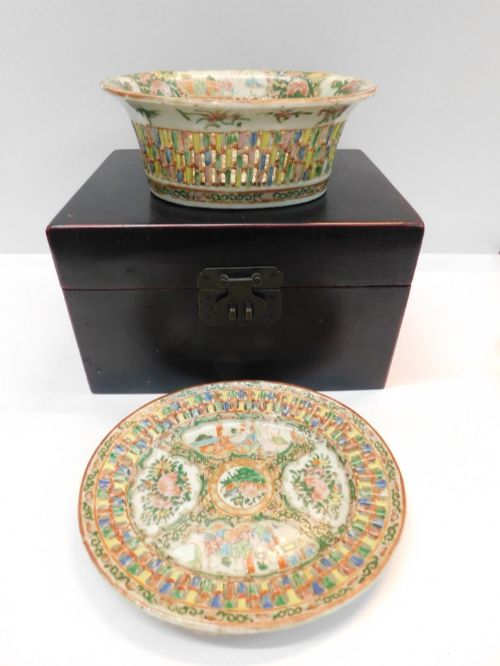
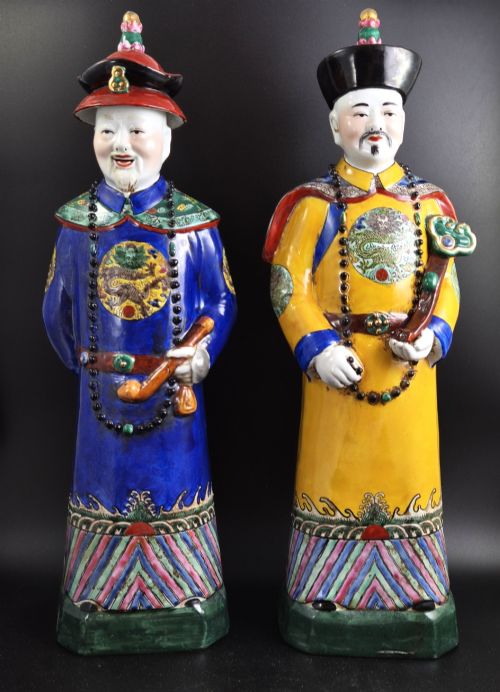
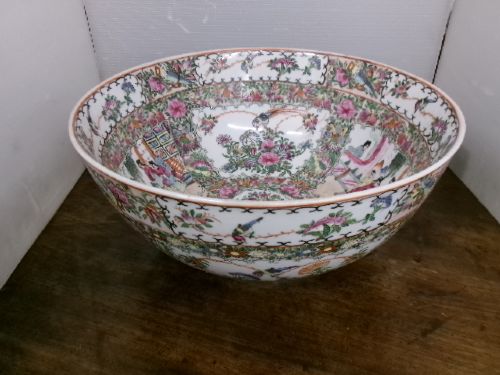
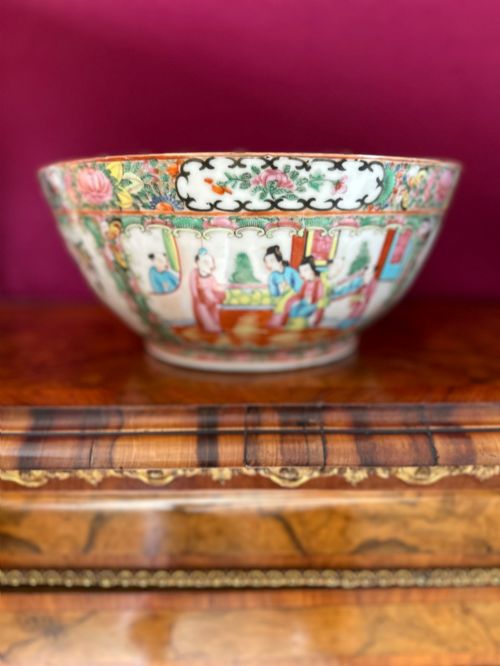
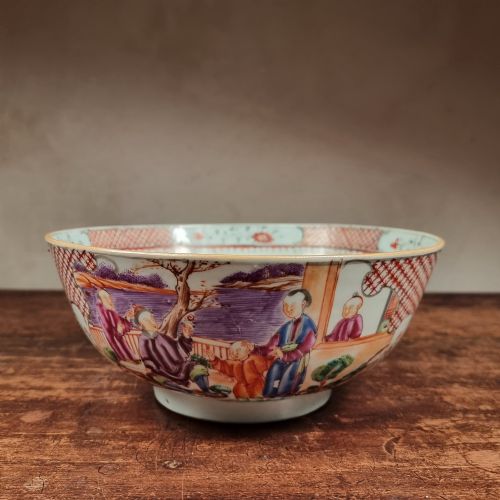
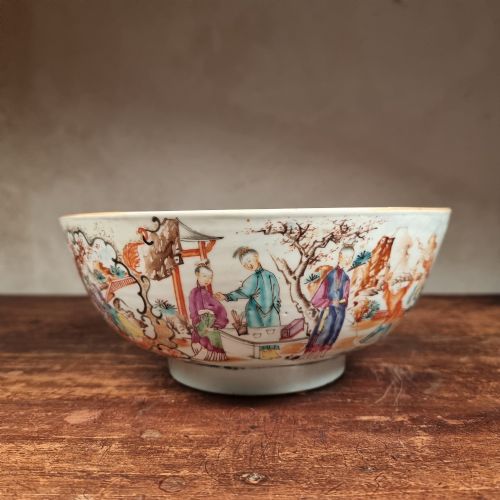
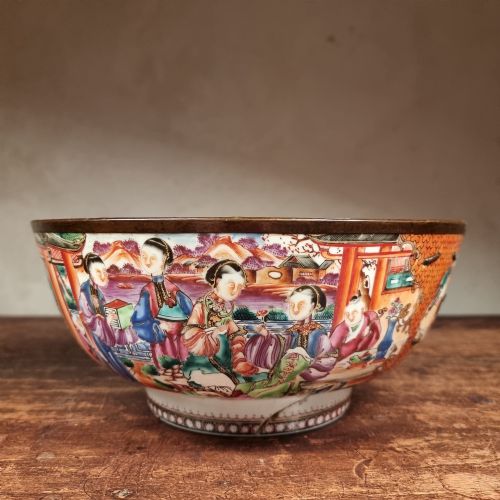
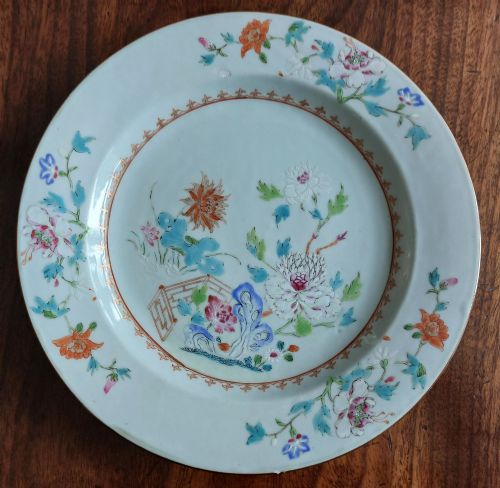
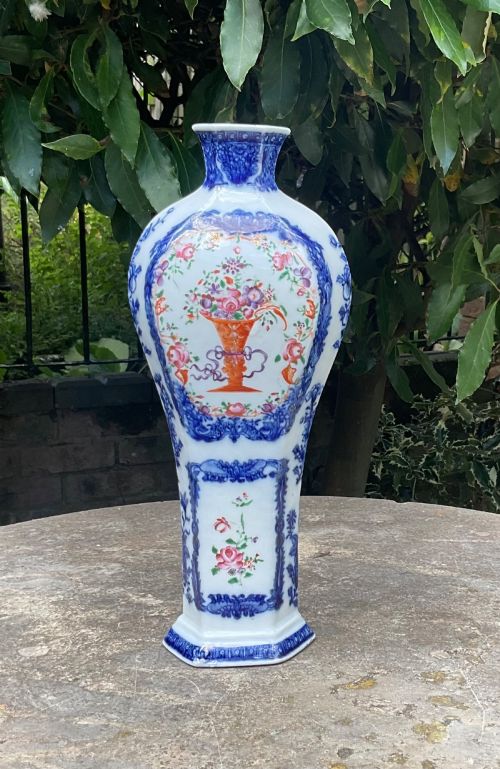
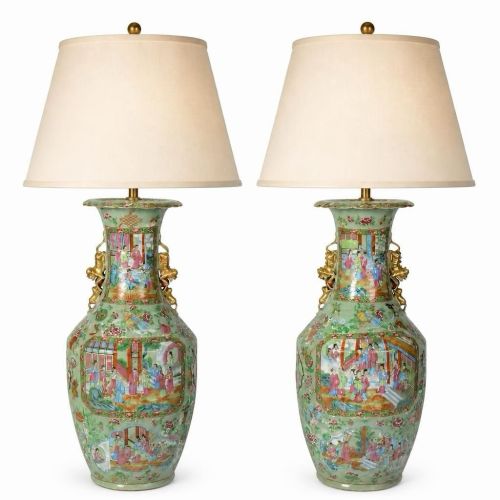
Chinese famille rose ceramics encompass functional vessels, decorative plates, and sculptural figures produced primarily during the Qing dynasty and the subsequent Republic period. Buyers encounter diverse forms ranging from large punch bowls and ginger jars to export dishes and table lamps mounted in ormolu.
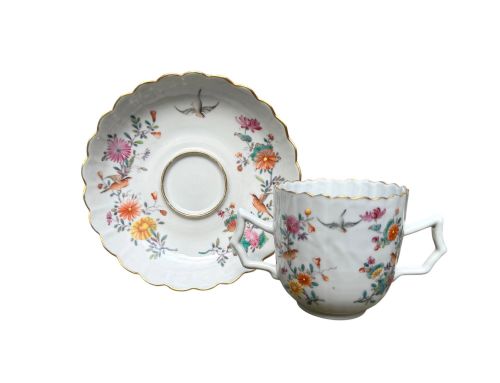
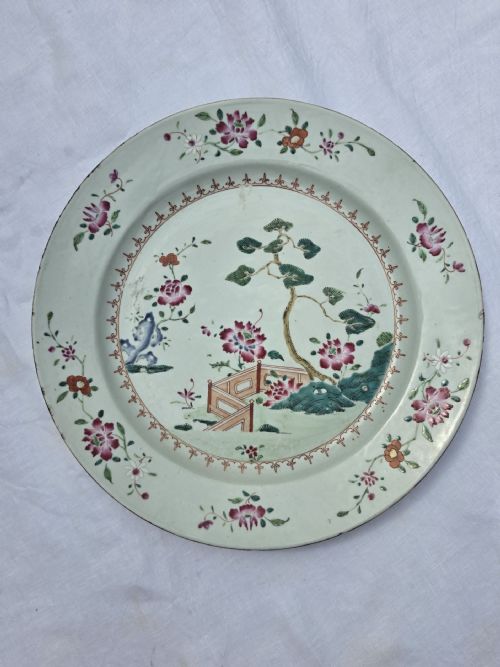
The aesthetic relies on an opaque pink enamel introduced during the eighteenth century, alongside a broader pastel palette depicting birds, flowers, and narrative scenes. Eighteenth-century examples often display the refined brushwork of the Qianlong period, while nineteenth-century Canton pieces offer dense, colourful panel decoration.
Vessels span utilitarian tea wares, garden planters, and cabinet pieces designed for both domestic use in China and the Western export market. Later twentieth-century iterations continue traditional figural and floral themes through workshops operating in the Republic era and beyond.
How they were made
Production centres on high-fired white porcelain bodies painted with mineral-based overglaze enamels, sometimes enhanced with gilding or gold leaf highlights. Artisans applied colours by hand before subjecting the pieces to a secondary lower-temperature firing to fix the palette.
European adaptations and mounts occasionally integrate brass or ormolu hardware onto porcelain bodies, particularly on lamps and jars exported during the nineteenth century. Glaze formulations vary from clear glassy coatings to celadon-tinted or coral-orange ground layers that support the enamel designs.
Listings feature porcelain forms spanning the 18th, 19th, and 20th centuries, including Qing dynasty and Republic period pieces.
What varies in quality
The refinement of the hand-painted brushwork distinguishes standard commercial wares from exceptional imperial or high-export commissions. Precision in the rendering of botanical details, facial expressions on figural subjects, and the crispness of iron-red or gilt accents indicate the skill of the painter.
The weight and purity of the porcelain body, from thick Canton potting to thin eggshell porcelain bowls, reflect the intended tier of production. Enamel durability and the vibrancy of the pink palette without muddiness separate proficient workshop output from lesser decorative items.
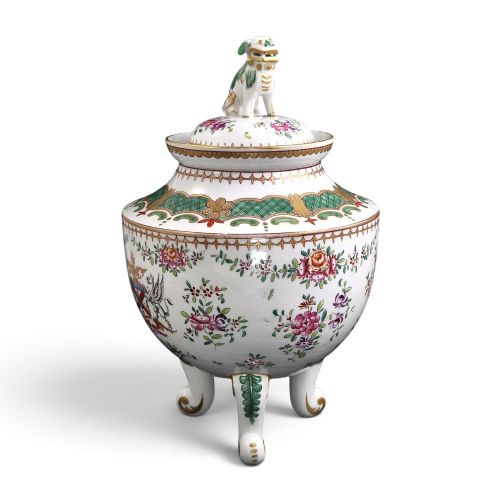
Samson Paris·Zhu Mao Ji
The Chinese Famille Rose Glossary
- Famille rose
- A French term denoting a ceramic palette dominated by opaque pink enamel, developed in China during the Qing dynasty. This palette replaced the earlier green-dominant families with softer rose and pastel tones.
- Canton
- A style of Chinese export porcelain characterised by crowded panel decoration depicting figures, birds, and flowers. Production centred on the southern port city for international markets throughout the nineteenth century.
- Qianlong
- An eighteenth-century imperial reign period associated with technical mastery and intricate ornamentation in porcelain. Pieces bearing this mark or dating to the era command strong collector interest.
- Millefleurs
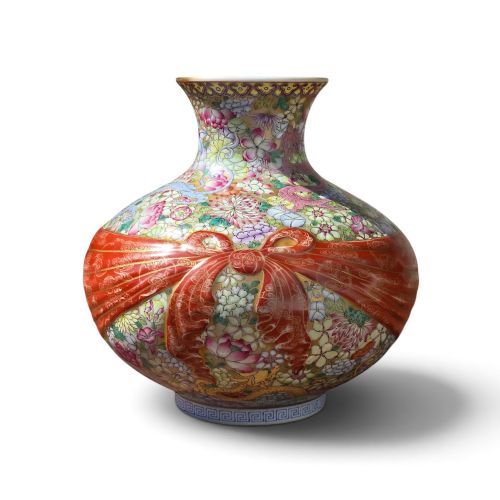
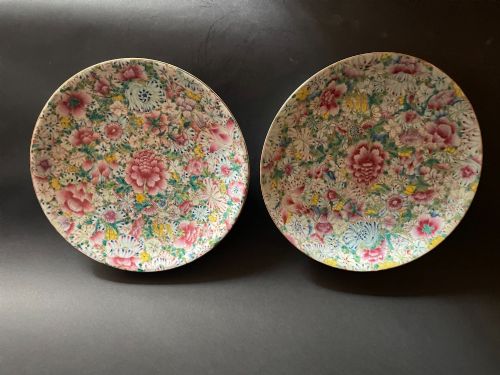
- A decorative pattern covering the entire surface of a vessel with densely painted flowers. This intensive style requires precise miniature brushwork across the porcelain body.
- Orpiment
- An arsenic sulfide mineral historically used in ceramic decoration, though famille rose relies primarily on gold-derived pink enamel. Enamel stability depends on precise firing temperatures in the kiln.
Chinese Famille Rose: Frequently Asked Questions
What is Chinese famille rose?
Chinese famille rose refers to porcelain decorated with an opaque pink enamel palette introduced during the eighteenth century. The style encompasses plates, vases, and bowls painted with floral, bird, and figural motifs.
Artisans applied these mineral-overglaze colours by hand over a white porcelain body before a secondary firing. The aesthetic evolved from restrained eighteenth-century compositions to denser nineteenth-century Canton designs.
How do I date a piece?
Dating relies on stylistic shifts, reign marks, and physical characteristics such as potting weight and enamel texture. Eighteenth-century Qianlong examples typically show finer brushwork and thinner bodies compared to heavy nineteenth-century Canton wares.
Reference marks on the base often indicate imperial or workshop periods, though apocryphal marks appear frequently on later pieces. Comparing the palette and glaze opacity helps establish the era of manufacture.
How were these vessels used?
Original functions ranged from dining and tea service to ornamental display in European and Chinese interiors. Large punch bowls, ginger jars, and cisterns served both practical domestic roles and prestige functions.
Later items include lamps converted from vases and decorative jardinieres intended for indoor planting. Export pieces were specifically packaged for maritime trade to Western markets.
Where were they made?
Many principal ceramics originated in the kiln complex at Jingdezhen, the historic centre of imperial porcelain production. Other pieces were finished and decorated in southern workshops around Canton for export distribution.
European ceramic factories such as Samson in Paris also produced revival pieces mimicking these Chinese export styles during the nineteenth century.
How do I care for antique porcelain?
Antique porcelain requires gentle handling to protect fragile overglaze enamels and delicate gilt highlights from abrasion. Cleaning should involve warm water and a mild detergent without abrasive sponges.
Display areas ought to avoid direct sunlight to prevent fading in the coloured enamels over time. Secure mounting prevents tipping for taller vases and lamp conversions.