



Coastal Landscape Fine Art
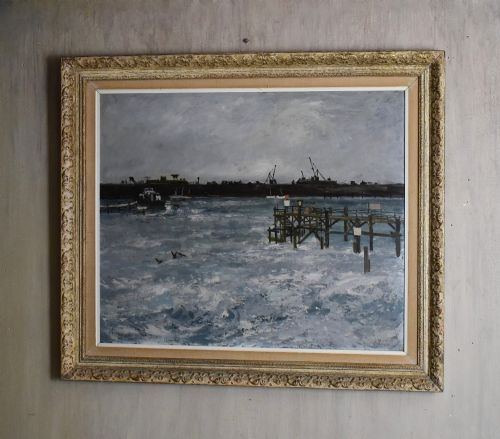
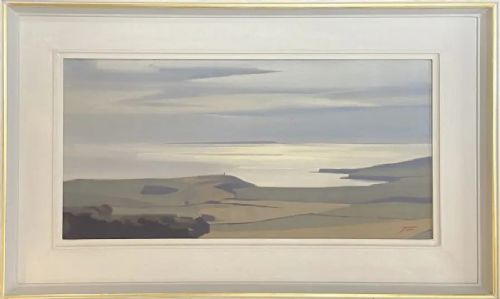
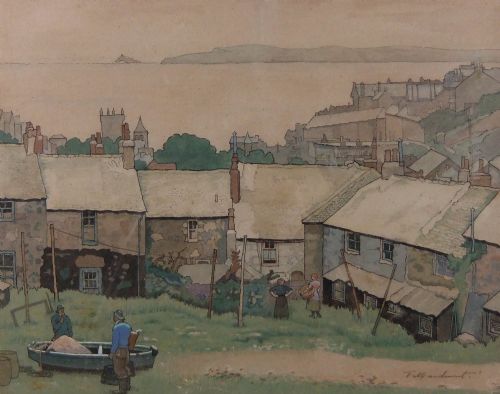
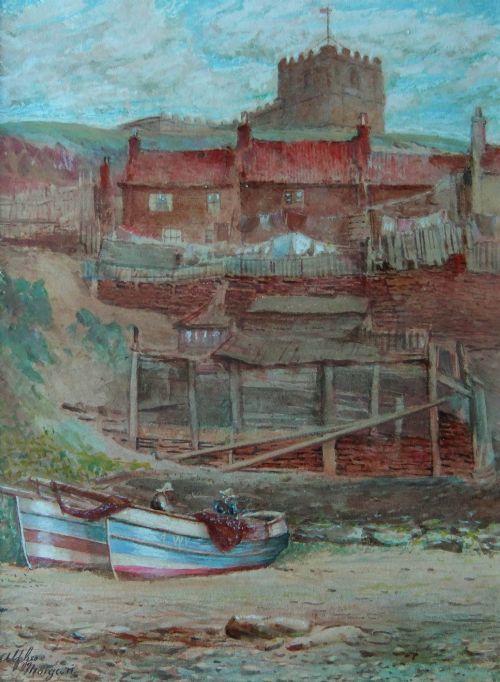
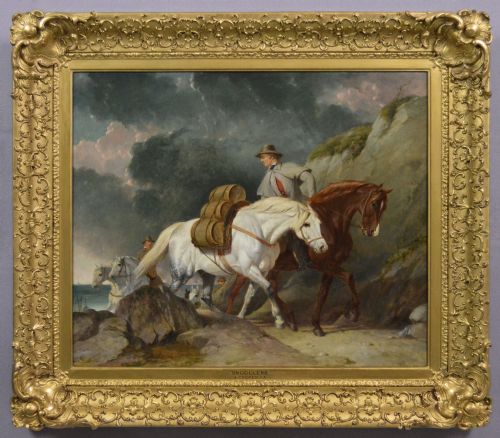
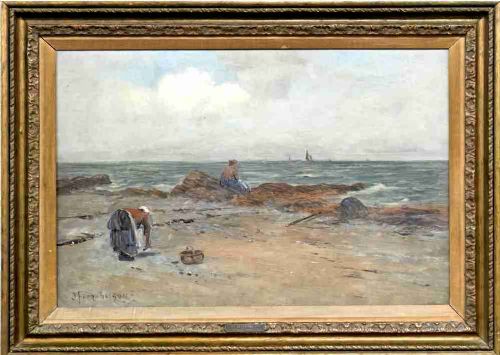
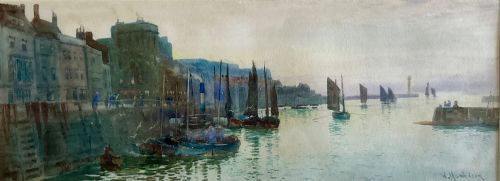
When you search for coastal landscape fine art, you step into a visual record of harbours, cliffs, and shorelines captured by painters from the nineteenth century into the mid-twentieth century.
Coastal Landscape Fine Art
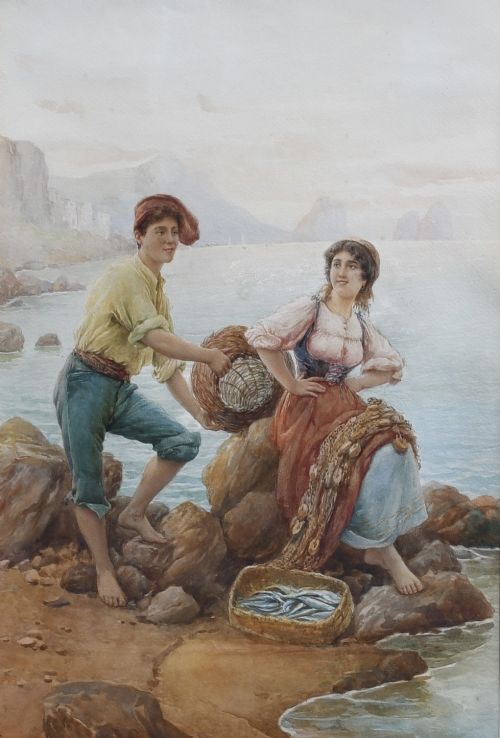
These works capture marine and shore views across Britain and continental Europe, ranging from busy fishing ports to quiet cliff tops and estuaries. You encounter both grand Victorian canvases and smaller twentieth-century impressions depicting everyday coastal life.
The most frequent pieces on this page are oil paintings and watercolours originating from the nineteenth and early twentieth centuries. Artists often recorded specific locations such as Whitby, the Isle of Man, and various French and Italian ports.
Framed presentations dominate the selection, frequently retaining period giltwood frames that complement the maritime subject matter. Subjects vary from working vessels and fishermen to expansive beaches and dramatic headlands.
Materials and technique
Painters relied primarily on oil paint applied to canvas or wood panels, and watercolour applied to paper, capturing the changing light of the sea and sky. Many works incorporate visible brushwork characteristic of impressionist and post-impressionist approaches.
Watch for local ponies and sheep wandering down coastal paths alongside Victorian fishermen.
What separates the examples
Quality rests upon the artist's ability to render atmospheric light, spatial depth, and movement within the water and sky. Stronger works demonstrate confident handling of pigment and a coherent composition that draws the eye into the coastal scene.
The condition of the paint surface and the originality of the matching period frame influence the integrity of the piece. Works that retain their original stretcher, unlined canvas, and period gilt frame hold greater historical completeness.
Peter Brannan·James Fry·Thomas Maidment·Alfred G Morgan·Abraham Cooper·Joseph Farquharson·Carlo Ferranti·William Matthison·Raymond Moritz·Pieter Cornelis Dommersen·Arthur Tucker·Herbert Royle·Eugene Joseph Verboeckhoven·Florence Hess·George Morland·William Pitt·Robert Buchan Nisbet·John Douglas Perrett·Thomas Rose Miles·John McDougal·James Torrington Bell·Frank Wasley·Thomas Bush Hardy·Hirst Walker·Owen Bowen
The Coastal Landscape Fine Art Glossary
- Watercolour
- A paint consisting of water-soluble pigments, widely used on paper for lighter, translucent maritime studies.
- Giltwood
- Wood carved and coated with gold leaf or gold paint, forming the traditional finish for nineteenth-century picture frames.
- Impressionism
- A nineteenth-century painting style focusing on accurate depiction of light and fleeting visual moments, evident in many marine scenes.
- Canvas
- Heavy woven fabric stretched across a wooden frame to serve as a durable support for oil paint.
- Estuary
- The tidal mouth of a large river where the tide meets the stream, frequently chosen by landscape artists.
Coastal Landscape Fine Art: Frequently Asked Questions
What periods do these paintings cover?
The selection spans from the eighteenth century through the Victorian era and into the mid-twentieth century. Most examples date from the late nineteenth and early twentieth centuries.
You will find nineteenth-century realist works alongside early modern British and French post-impressionist interpretations of coastal life.
Are these works painted on canvas or paper?
Artists used multiple supports depending on their medium and sketching habits. Oils appear primarily on canvas and wood panels.
Watercolours are executed on paper, often mounted and framed behind protective glass to preserve the delicate pigments.
Which locations appear most often?
British coastal towns such as Whitby, St Ives, and various Scottish harbours feature prominently in the selections. European destinations including French ports and Italian coastal scenes also appear frequently.
Artists frequently travelled to working fishing ports to record the daily departure and return of boats.
How should I care for a framed oil painting?
Keep paintings away from direct sunlight, excessive moisture, and rapid temperature fluctuations to protect the canvas and paint layers. Dust the surface gently with a soft, dry brush without applying pressure.
Leave the cleaning of older varnish layers to professional conservators to avoid disturbing the original pigment.