
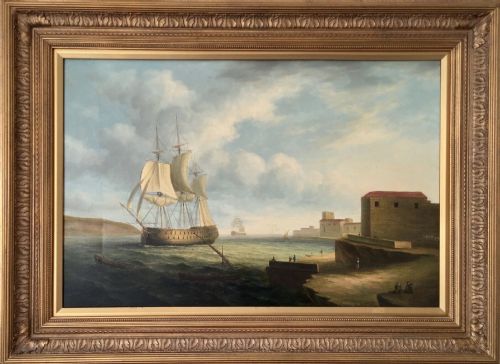


Seascape Oil on Panel
When you handle a seascape oil on panel, you hold a pocket of salt air and changing light fixed upon wood.
Seascape Oil on Panel
A seascape oil on panel captures marine subjects, harbours, and coastal scenes painted directly onto wooden supports rather than stretched canvas. These works range from small Victorian topographical studies to mid-century impressionist views of the Mediterranean and British coasts.
You will encounter works spanning the nineteenth and twentieth centuries, including miniature paintings by named artists and unsigned plein air coastal sketches. The subjects cover everything from busy harbour scenes with fishing boats to quiet jetties and open seas.
The physical panel gives these oil paintings a rigid permanence, often retaining the distinct texture of wood grain beneath the pigment. They represent a tradition of portable marine art created by artists working directly beside the water.
What varies in quality
Quality rests in the precision of brushwork and the artist's command of light across water, distinguishing a hurried souvenir from a studied marine observation. The best panels show confident handling of atmosphere and reflection without heavy reworking.
The choice and preparation of the wood panel also affect the final piece, alongside the preservation of the original giltwood frame. Finer works maintain stable paint layers without extensive cracking, preserving the intended vibrancy of the coastal scene.
Listed works combine oil paint with wood panels, gesso, and gilded wood, spanning periods from the Victorian era through mid-century impressionism.
James Hardy·Pieter Cornelis Dommersen·Fernando Del Basso·Florence Hess·Arthur Bowmar Porter·Stephen Brownlow·Robert Pearson
The Seascape Oil on Panel Glossary
- Panel
- A rigid wooden support used as a painting surface instead of canvas. It provides a stable base that resists the sagging associated with fabric supports.
- Gesso
- A plaster-like mixture applied to wood panels to create a smooth, absorbent surface for oil paint. This preparation prevents the oil from soaking directly into the wood.
- Giltwood
- Wood carved and covered with a thin layer of gold leaf or metallic gilt. It frequently frames these maritime works to complement the warmth of the painted light.
- Marine
- A genre of art focused on the sea, ships, and coastal views. These subjects document historical shipping, ports, and maritime weather patterns.
- Plein air
- Painting outdoors in direct observation of the landscape and changing light. This method produced many of the immediate coastal studies found on wood panels.
Seascape Oil on Panel: Frequently Asked Questions
Why paint seascapes on wood panels?
Wood panels offered a rigid and portable surface that suited artists working outdoors by the coast. The firm support protected the paint layer from the flexing that affects canvas during travel.
Panels also allowed for finer detail in miniature formats, making them practical for artists capturing quick harbour scenes and changing weather.
How do I care for an oil on panel?
Keep the painting away from direct heat sources and dramatic humidity shifts, which cause wood to expand and contract. Stable indoor conditions protect both the wooden support and the oil paint layer.
Display the piece out of direct sunlight to prevent fading in the delicate pigments of the sky and sea.
Are these paintings usually signed?
Many works bear the artist signature or monogram, while others remain completely unsigned or attributed through historical records. Unsigned marine panels often originated as plein air studies captured quickly on location.
Signatures when present help date the work and connect the coastal scene to a specific regional school or painter.
How do I identify the period of a panel?
The style of the frame, the preparation of the wood, and the clothing or vessels depicted offer clues to the date. Victorian works often feature heavier giltwood frames and topographical precision, while mid-century examples show looser impressionist brushwork.
Examining the reverse of the panel can reveal old labels, stamps, or handwritten notes regarding the coastal location.