


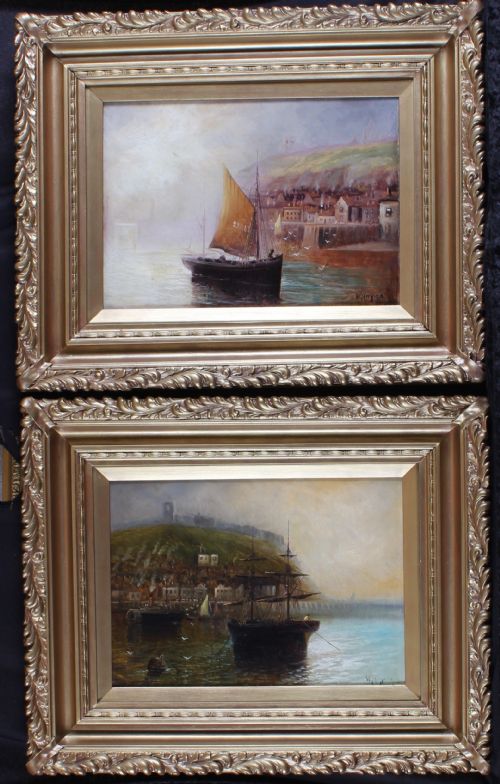


Nautical Oil Painting Pair
A nautical oil painting pair brings the movement of nineteenth-century shipping and coastal weather straight onto the wall.
Nautical Oil Painting Pair
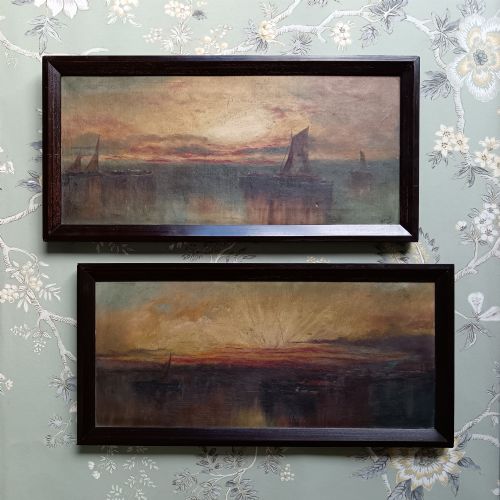
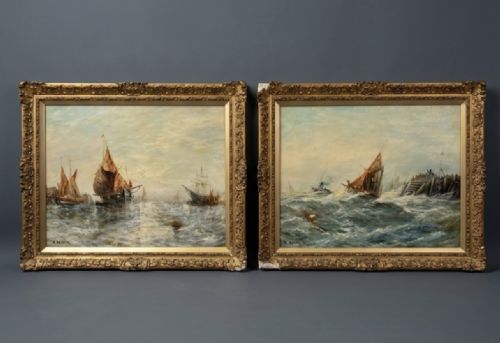
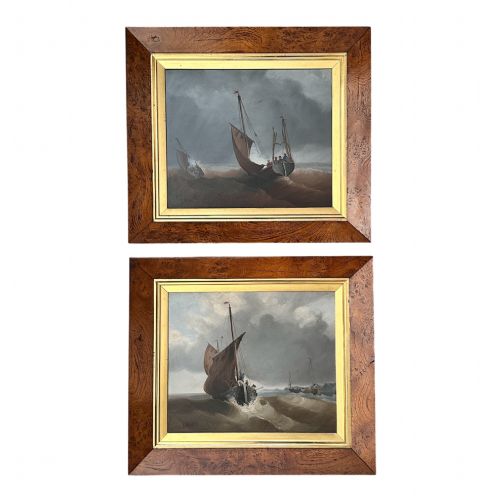
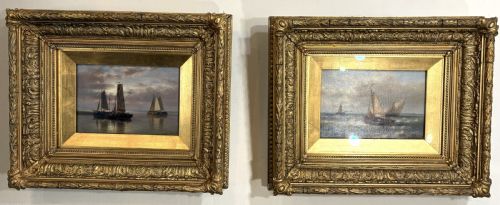
A nautical oil painting pair presents matching maritime scenes, most frequently depicting sunrise and sunset, coastal views, or fishing boats upon the water. These works span the nineteenth century and the Edwardian period, often recording specific locations such as Whitby, Scarborough, and Rochester on the Medway. The pairing creates a balanced display, historically intended to hang together as complementary views of the sea.
The subjects on this page range from calm Dutch shores to barques pounding the channel in heavy weather. Buyers encounter works rendered by named artists of the marine school alongside unsigned maritime studies housed in their original frames. Each pair captures the changing conditions of shipping and coastal life through dual canvases or boards.
Materials and technique
The works on this page utilise oil paint applied to canvas or board, mounted within wood, giltwood, or gesso frames. Painters built up the maritime scenes using layered pigments to achieve the depth of the sea and the luminous quality of coastal skies. These traditional media allowed artists to capture both the fine rigging of sail boats and the heavy motion of open water.
Makers enclosed these oil paintings in ornate or simple moulded frames of gilt wood, which served to isolate the marine subject and protect the edges of the canvas. The combination of oil on canvas with carved gilt surrounds forms the standard construction for these nineteenth-century and Edwardian pairs.
Materials recorded on this page include oil paint, canvas, board, wood, giltwood, gesso, and gilt wood.
What varies in quality
Quality in a nautical oil painting pair rests upon the artist's command of maritime atmosphere, wave movement, and rigging detail. Superior examples display a confident handling of light upon the water and accurate depiction of shipping vessels, whereas lesser works rely on formulaic waves and stiff coastal forms. The distinction lies in the observation of natural light and sea conditions.
The integrity and period appropriateness of the framing also influence the standing of a pair. Original giltwood or gesso frames that match the age and scale of the canvases elevate the overall work, while mismatched or later replacements alter the presentation of the pair.
B. Nash·John Moore of Ipswich·Abraham Hulk I·Gustave De Bréanski·Pieter Cornelis Dommersen·Adrian Van Porten·Ebeneezer Colls·Walter Meegan·Hubert Thornley·Thomas Rose Miles RCA
The Nautical Oil Painting Pair Glossary
- Barque
- A sailing vessel with three or more masts, appearing frequently as the subject in Edwardian and nineteenth-century maritime art. These large commercial ships feature prominently in channel and coastal paintings.
- Gesso
- A plaster-like mixture applied to wooden frames before gilding, used to create moulded decorative relief. Period frames rely on this material for their ornate corner details and surface texture.
- Marine Art
- Paintings and visual works that depict ships, sea views, and coastal environments. This genre encompasses calm estuarine scenes as well as dramatic storm paintings.
Nautical Oil Painting Pair: Frequently Asked Questions
How should I hang a pair?
Hang the two paintings at eye level with a consistent gap between them, matching the natural horizon line if the compositions allow. This keeps the viewing experience balanced across both canvases.
Ensure they are placed away from direct sunlight and damp coastal drafts to protect the oil paint and giltwood frames over time.
What subjects do these pairs show?
These works depict sail boats, fishing boats, barques, and coastal shipping around British and Dutch shores. Scenes often contrast morning light with evening glow or calm waters with rough channel weather.
Artists recorded specific locations like Whitby and Scarborough, capturing the working maritime trade of the nineteenth and early twentieth centuries.
Are the frames original to the paintings?
Many pairs retain their period giltwood or gesso frames, which show the wear and patination expected of nineteenth-century items. These surrounds were chosen to complement the marine subject.
Inspect the joinery and surface finish of the wood to understand the history of the framing and its relation to the canvas.
How do I care for oil paintings?
Dust the canvas and frame gently with a soft, dry brush, avoiding any moisture or chemical cleaning agents on the paint surface. Keep the room temperature stable to prevent the canvas from slackening.
Consult a professional restorer if the giltwood shows flaking or the oil surface requires cleaning.