


Edwardian Sea Artwork
Edwardian sea artwork captures coastal life and maritime scenes through watercolours, oils, and gouache created during the early twentieth century.
Edwardian Sea Artwork
These pieces encompass paintings and watercolours depicting coastal views, harbour scenes, and maritime vessels from the Edwardian era and surrounding decades. A buyer exploring this selection encounters coastal landscapes, shipping studies, and beach scenes originating from British and international waters. The watercolours and oil paintings on paper, canvas, and board reflect both realist and impressionist approaches to the sea.
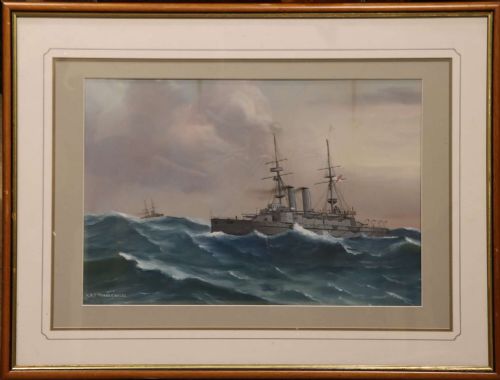
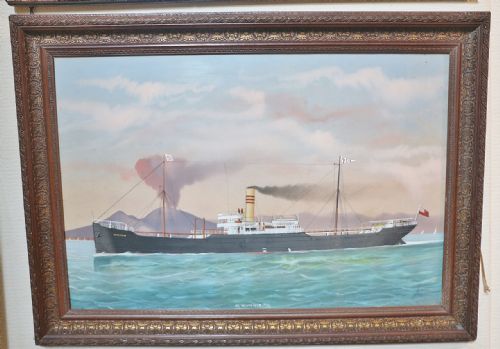
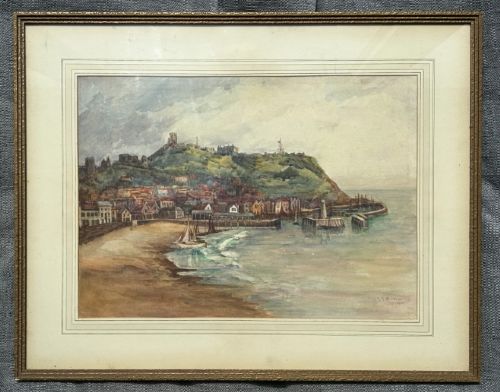
Works on this page range from detailed portrayals of named steamships and royal yachts to atmospheric watercolours of Yorkshire and Cornish harbours. Many pieces capture local maritime industries, including seaweed gatherers and fishing fleets returning to ports like Whitby and Scarborough. Others record specific vessels such as the HMS Prince of Wales and the SS Westfield against coastal backdrops.
Materials and technique
Artists of this period utilised traditional supports including stretched canvas, wooden panel boards, and heavyweight watercolour paper. Watercolours and gouache pigments were applied with brushes to capture translucent washes of sea and sky, while oil paints allowed for thicker impasto applications on canvas to render choppy waves and stormy waters.
Many works are framed behind glass or within period wooden frames that complement the maritime subject matter. Pigments were brushed onto paper or canvas to create tonal depth, often finished with artist signatures, initials, or dates inscribed directly into the composition.
Listings feature works executed in oil paint, watercolour pigment, and gouache on canvas, paper, and wood.
Factors of quality
Quality in these maritime works rests on the artist's ability to render water, light, and atmospheric conditions convincingly. Superior examples demonstrate a secure command of perspective, particularly when depicting complex rigging on sailing ships or the shifting surface of the sea.
Provenance and documentation also distinguish individual pieces, with signed works, legible inscriptions, and identified locations holding greater weight. The preservation of the paper support or canvas, alongside the retention of original framing, influences the overall character of the piece.
Charles Napier Hemy·Daniel Sherrin·Frederick Stuart Richardson·George Hamilton Constantine·William Kay Blacklock
The Edwardian Sea Artwork Glossary
- Gouache
- An opaque water-based medium that provides solid blocks of colour and fine detail. Artists used gouache to highlight highlights on water and ship rigging.
- Impressionism
- A style focusing on light and movement rather than strict realism. Impressionist beach scenes record the transient effects of sun and shadow.
- Maritime
- Pertaining to ships, shipping, and the sea. Maritime works concentrate heavily on vessels, naval history, and coastal navigation.
- Provenance
- The documented history of ownership for a piece of artwork. Clear signatures and exhibition records help establish provenance.
- Watercolour
- A paint consisting of water-soluble pigments diluted with water. Watercolour paintings on paper require careful preservation behind glass.
Edwardian Sea Artwork: Frequently Asked Questions
What subjects appear in edwardian sea artwork?
These works depict coastal harbours, tall-masted sailing ships, steam vessels, and beach scenes. Artists frequently recorded specific coastal locations across Britain, including Yorkshire and Cornish fishing ports.
Scenes also encompass naval vessels, royal yachts, and everyday coastal labour such as seaweed gathering and shrimp netting.
How do I care for watercolour paintings?
Watercolour paintings on paper require protection from direct sunlight to prevent the pigments from fading over time. Keeping them behind glass in stable environmental conditions preserves the paper support.
Avoid hanging works in areas with high humidity or fluctuating temperatures to protect the materials.
How are periods identified in these paintings?
Periods are determined through artist signatures, dated inscriptions on the front or reverse, and stylistic indicators. Costume details, shipping types, and framing styles also provide chronological clues.
Many works carry direct dates or are attributed to active artist lifespans recorded in the evidence.
Where were these coastal scenes painted?
Many paintings record British coastal locations such as Scarborough, Whitby, St Ives, and Polperro. Other works depict international waters and harbours, including the Pearl River in Hong Kong.
Artists travelled extensively along coastlines to capture local fishing fleets and maritime traffic.