


Vintage Sailing Vessel Portrait
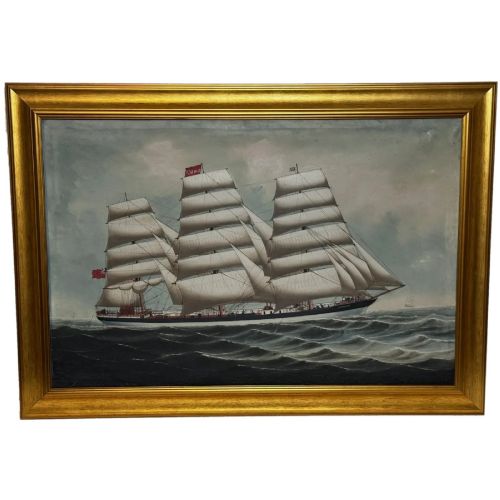
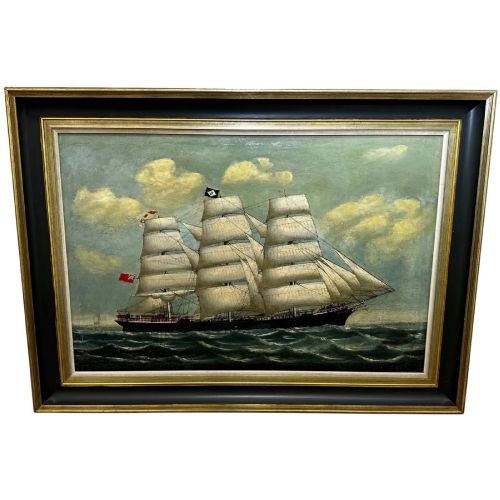
A vintage sailing vessel portrait captures the proud history of maritime trade and naval might upon canvas.
Vintage Sailing Vessel Portrait
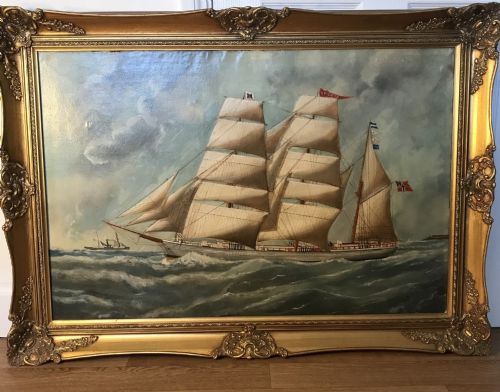
A vintage sailing vessel portrait depicts historical ships across changing sea conditions, ranging from calm harbour scenes to choppy waters. Buyers searching this phrase examine detailed renderings of barques, schooners, and clippers upon canvas or paper.
The pieces presented span several distinct periods, including the Victorian era, the Edwardian period, and the nineteenth century. Common stylistic approaches encompass Victorian maritime art, China trade works, and traditional English school painting.
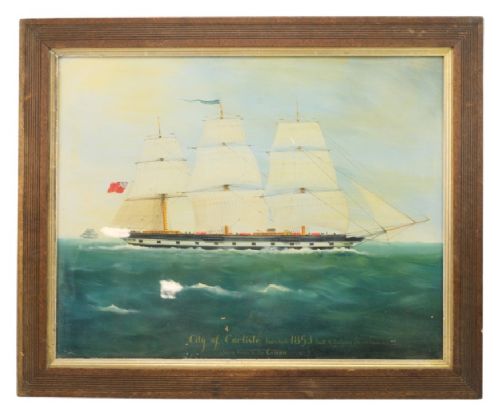
Meticulous ship portraits record specific vessels such as the Slieve Roe, the City of Carlisle, and the Thermopylae. These depictions serve as historical documents of commercial shipping and naval architecture from earlier centuries.
Materials and Construction
Artists typically applied oil paint onto canvas or paper surfaces to achieve depth in water and rigging details. Giltwood frames accented with gold leaf frequently enclose these maritime works.
Surviving pieces rely on traditional wooden stretchers and protective glass layers to preserve the painted pigments. The combination of oil paint and canvas defines the predominant construction seen in these historical records.
Ships brave choppy waters and pass distant lighthouses while remaining perfectly dry on parlour walls.
Assessing Quality and Execution
Mastery in depicting rigging accuracy and hull proportions separates superior maritime works from simpler decorative renderings. The handling of restless water and atmospheric light indicates the skill level of the painter.
Provenance and attribution to documented artists such as Joseph Heard or Reginald Arthur Borstel elevate the standing of a canvas. The integration of a named vessel with historical context enhances the importance of the work.
Reginald Arthur Borstel·Lai Fong·Marie Edouard Adam·Joseph Heard·Samuel John Milton Brown
The Vintage Sailing Vessel Portrait Glossary
- Barque
- A sailing ship with three or more masts, having the fore- and main-masts square-rigged and the mizzen-mast fore-and-aft rigged. This vessel type appears frequently in nineteenth-century maritime paintings.
- Clipper
- A very fast nineteenth-century sailing ship with multiple masts and a square rig. These vessels dominated international trade routes before the widespread adoption of steam power.
- Giltwood
- Wood that has been covered with a thin layer of gold leaf or gold paint. Frames utilising this finish commonly surround period oil paintings.
- China Trade
- Goods produced in China during the eighteenth and nineteenth centuries specifically for Western export. These works often include detailed depictions of foreign vessels in Asian ports.
- Watercolour
- A painting method in which the paints are made of pigments suspended in a water-based solution. Examples of this medium complement oil paintings within marine collections.
Vintage Sailing Vessel Portrait: Frequently Asked Questions
What periods do these ship portraits come from?
The works originate largely from the nineteenth century, extending into the Edwardian era. Specific dates noted in the records span from eighteen hundred through nineteen hundred and ten.
Victorian and Georgian maritime styles represent the primary chronological periods associated with these paintings.
How were these maritime paintings created?
Makers utilised oil paint applied to canvas or paper surfaces to capture detailed vessel anatomy. Many examples retain their original giltwood frames.
Protective glass components and wooden stretching frames support the physical structure of the artwork.
Which specific vessels appear in the art?
Recorded subjects include commercial clippers, three-masted schooners, and wooden barques operating on trade routes. Named ships such as the Slieve Roe, the City of Carlisle, and the Thermopylae feature prominently.
Scenes also capture junks on the Pearl River and vessels positioned near coastal landmarks like Eddystone Lighthouse.
Where should I display a marine painting?
These works suit traditional study spaces, libraries, or living rooms alongside other historical artefacts. Proper placement avoids direct sunlight to protect the oil paint and canvas.
Pairing the paintings with period giltwood frames enhances their visual impact on wall displays.