



19th Century Animalier Art
Nineteenth century animalier art captures the natural behaviour and striking presence of beasts through oil paintings, studies on paper, and bronze sculptures.
19th Century Animalier Art
Nineteenth century animalier art centres on the depiction of animals, ranging from domestic cats and pugs to farmyard sheep, poultry, and powerful exotic beasts like lions and falcons. Buyers encounter framed oil paintings, chromolithographs, studies on paper, and cast metal sculptures across this selection.
The objects span from mid-Victorian creations to later nineteenth century pieces, reflecting prevailing European academic and realist movements. Works originate from various regions including Britain and Belgium, capturing both rural scenes and dramatic exotic encounters.
Oil paintings dominate the available forms, often presenting detailed pastoral studies of flocks and poultry alongside intimate domestic animal groups. Alongside these canvases, solid bronze sculptures record muscular forms and dynamic postures with remarkable anatomical precision.
Materials and construction methods
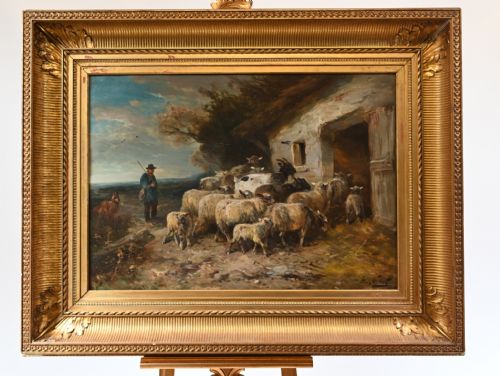
Painters utilise oil on canvas or prepared paper, building rich textures with layered pigments and fine brushwork to render fur, feathers, and coastal landscapes. Chromolithographs employ multi-plate printing processes to replicate the depth and colour saturation of original animal studies.
Sculptors work in bronze, casting metal via traditional techniques before applying patination to accentuate muscle tone, hair texture, and naturalistic shadow. Framed works incorporate traditional timber moulding, occasionally accented with gold leaf.
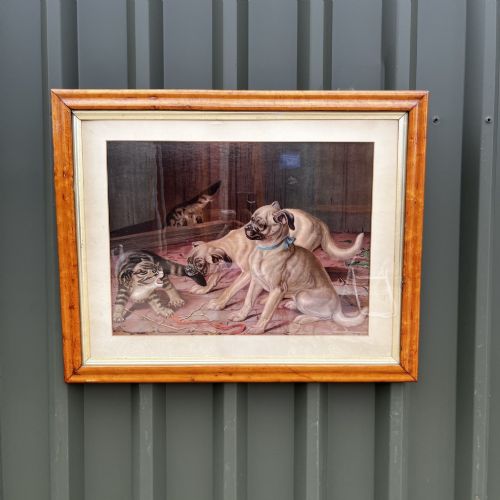
Pugs and cats share the same Victorian print frame, proving that historic rivalries make excellent parlour company.
Distinctions in quality
Quality rests upon anatomical accuracy and the artist's ability to convey character and movement within the subject. Superior bronzes demonstrate crisp chasing in the metalwork and nuanced patination, while finer paintings exhibit careful observation of light upon fur and feather.
Provenance and signatures elevate specific works, with documented pieces by established practitioners commanding greater attention. The condition of the canvas surface, the clarity of paper studies, and the preservation of original framing contribute to overall integrity.
Valentine T. Garland·Horatio Henry Couldrey·Henry Schouten·Luigi Secchi·Eugene Joseph Verboeckhoven·Edgar Hunt·John Macallan Swan·Geza Vastagh·Pierre Jules Mène
The 19th Century Animalier Art Glossary
- Animalier
- Artworks dedicated to the realistic portrayal of animals, encompassing both sculpture and painting. This genre gained immense popularity across Europe during the nineteenth century.
- Chromolithograph
- A multicolour planographic printing technique used to reproduce pictorial works with vibrant hues. Each colour requires a separate lithographic stone.
- Patina
- The surface sheen or colour change developed on bronze through age or chemical treatment. Artists intentionally apply chemical patinas to enhance sculptural depth.
- Realism
- An artistic movement focused on depicting subject matter truthfully without artificiality or romantic styling. Nineteenth century animalier realism prioritises authentic animal behaviour and anatomy.
19th Century Animalier Art: Frequently Asked Questions
Where should I display an animalier bronze?
Bronzes suit sturdy wooden surfaces such as sideboards, desks, or dedicated display tables where viewers can appreciate them from multiple angles. Natural light helps reveal the subtle variations in the patinated metal surface.
Avoid placing metal sculptures in damp environments or areas subject to extreme temperature fluctuations to protect the patination over time.
What subjects are typical in animalier art?
Common subjects include domestic pets like cats and pugs, agricultural animals such as sheep flocks and poultry, and wild creatures including lions and birds of prey. Artists frequently placed these animals within natural pastoral or coastal landscapes.
The choice of subject often reflects the prevailing academic interest in domestic realism and exotic natural history during the Victorian period.
How do I distinguish studies from finished paintings?
Studies on paper or canvas usually display looser brushwork and focus on capturing a specific posture, gesture, or anatomical detail rather than a complete narrative scene. Artists created these preparatory works to refine their observations before starting larger compositions.
Finished paintings present fully realised backgrounds, carefully blended pigments, and complete compositional framing intended for public exhibition.