

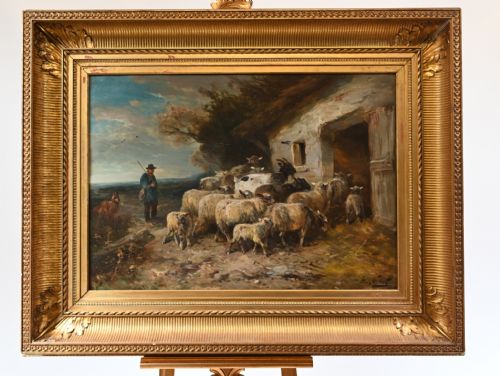


Traditional Livestock Oil Painting
Traditional livestock oil painting brings the pastoral countryside and prized farm animals of past centuries directly onto the wall.
Traditional Livestock Oil Painting
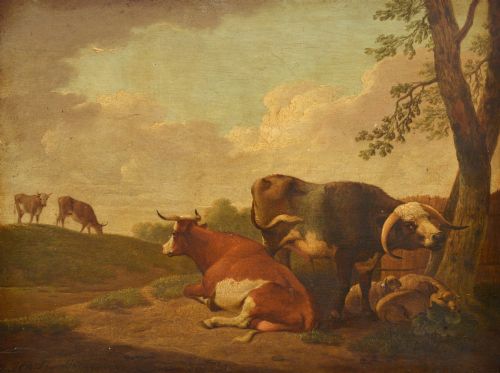
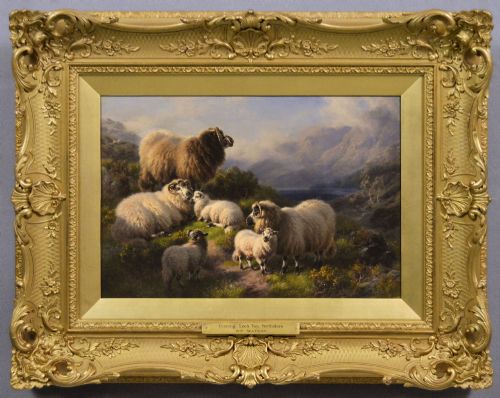
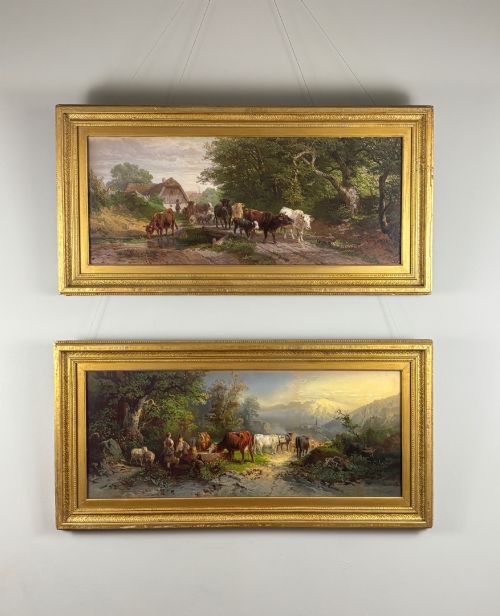
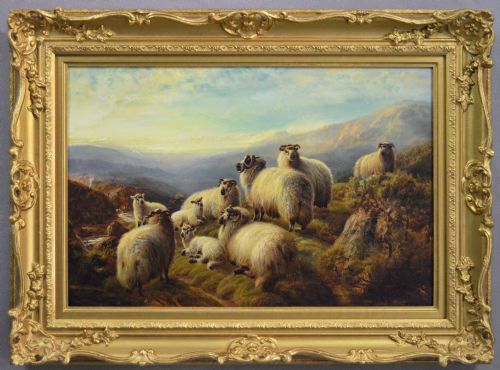
Traditional livestock oil painting captures rural scenes, pastoral landscapes, and detailed portraits of cattle, sheep, and farmyard animals from the eighteenth, nineteenth, and early twentieth centuries. Buyers seeking these works encounter depictions ranging from solitary shorthorn bulls to extensive flocks of sheep resting in Scottish highlands or English river valleys.
The pieces typically originate from British, Belgian, and German artists working within realist, romantic, and animalier traditions. Common compositions place animals at the centre of serene rural vistas, often framed by the original period wood and gesso ornamentation.
Materials and methods
These works are executed using oil paint applied to woven canvas substrates, frequently supported by wooden stretcher frames. Artists utilised traditional pigments combined with oil media to achieve rich textures across animal coats and expansive skies.
Many surviving examples retain their period frames constructed from wood and finished with layers of gesso and gold leaf. These giltwood surrounds complete the presentation of the canvas.
Several canvases manage to make a simple farmyard cockerel look as stern and dignified as a Victorian magistrate.
Evaluating quality in traditional livestock oil painting
Quality rests upon the anatomical precision of the animals and the handling of light within the surrounding landscape. Master hands render the texture of wool, hide, and muscle with convincing weight, whereas lesser works rely on formulaic repetition.
The integration of the beast into its pastoral setting marks the distinction between standard commercial production and fine art execution. Stronger pieces maintain compositional harmony between the landscape and the livestock.
Hendrik Willem Schweickhardt·William Watson Jnr·Johann Friedrich Voltz·Robert Watson·Henry Schouten·A M Gauci·William Henry Mander·Thomas Sidney Cooper·Eugene Joseph Verboeckhoven·Heinrich Harder·Julius Caesar Ibbetson·Charles Jones·Arthur Charles Dodd·Claude Cardon·John W Morris·Henry Brittan Willis·Edgar Hunt·Henry Cheadle·William Sidney Cooper·W A Clark·William Huggins·A Davis·Louis Marie Dominique Robbe·Thomas E Francis
The Traditional Livestock Oil Painting Glossary
- Oil on Canvas
- A painting medium where pigments bound in oil are applied to a stretched cloth support. This combination allows for rich blending and deep colour saturation.
- Animalier
- A nineteenth-century artistic genre dedicated to the realistic portrayal of animals. Practitioners focused heavily on the accurate anatomy and behaviour of livestock and wildlife.
- Gesso
- A plaster-like mixture applied to wooden frames as a smooth base before gilding. It provides the foundation for intricate moulded details.
- Giltwood
- Wood that has been coated with thin sheets of gold leaf or metallic powder. It forms the traditional decorative framing for period fine art.
- Pastoral
- A style of art that idealises rural life and agricultural scenes. These compositions typically feature shepherds, herdsmen, and farm animals in calm open country.
Traditional Livestock Oil Painting: Frequently Asked Questions
What subjects appear in traditional livestock oil painting?
The works depict cattle, sheep, horses, and poultry placed within rural landscapes, farmyards, and coastal pastures. Common subjects include prize-winning bulls, resting flocks, and herds gathered near rivers.
Artists frequently set these animals against recognisable British and European topography, ranging from Welsh valleys to Scottish highlands.
How should I display a traditional livestock oil painting?
These paintings suit traditional reception rooms, studies, and dining spaces where period furnishings complement the pastoral subject matter. Hang the canvas away from direct sunlight to protect the oil pigments and the underlying canvas.
Ensure the piece rests on a stable wall where room temperature remains reasonably consistent throughout the year.
Were these paintings made as portraits?
Many livestock paintings functioned as literal portraits commissioned by farmers and landowners to record prized Shorthorn bulls, Hereford cows, or champion rams. These works documented successful breeding lines and agricultural prestige.
Other canvases adopted a broader pastoral narrative, focusing on the atmosphere of rural labour rather than an individual animal's pedigree.