


Antique Belgian Animal Painting
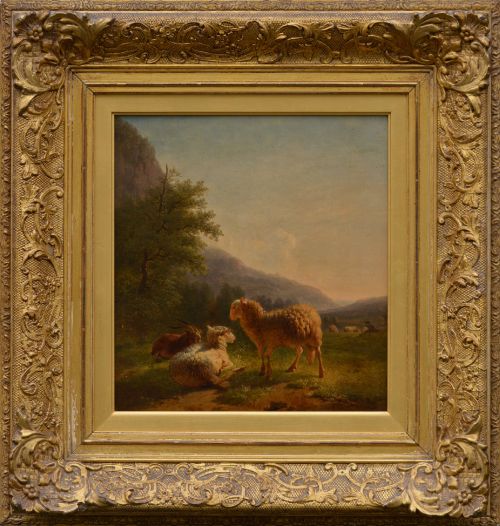
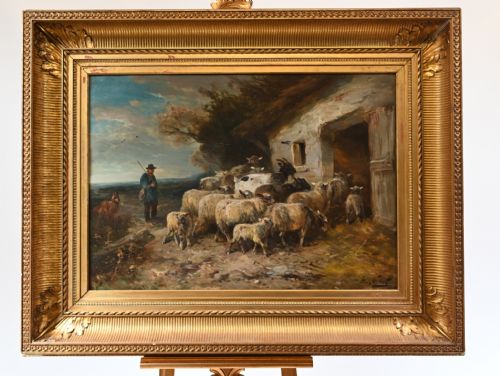
An antique belgian animal painting captures nineteenth-century pastoral life with oil on canvas, offering collectors exquisite studies of sheep, cattle, and poultry.
Antique Belgian Animal Painting
An antique belgian animal painting portrays pastoral scenes, farmyards, and coastal landscapes populated by sheep, goats, ponies, and poultry. These works belong primarily to the nineteenth century, drawing on nineteenth-century realism, romanticism, and pastoral traditions.
The pieces on this page include oils by identified nineteenth-century masters, period followers, and framed fine art paintings. Buyers encounter works attributed to Eugène Verboeckhoven, Henry Schouten, Franz van Severdonck, Pierre Emmanuel Dielmans, J L van Leemputten, and Louis Marie Dominique Robbe.
How they were made
These works are executed in oil paint on canvas, mounted on wooden stretchers and housed within frames finished in gold leaf, gesso, gilt, and giltwood. The application of oil paint allows for fine rendering of animal fleece, feathers, and natural light.
The integration of canvas and oil relies on traditional nineteenth-century painting techniques, where artists built up layers of pigment to achieve depth in landscapes and animal subjects.
Listings feature works spanning the nineteenth century, utilising oil on canvas, wood, gold leaf, gesso, gilt, and giltwood within realism, romanticism, and pastoral styles.
What varies in quality
Quality rests in the handling of brushwork and the anatomical precision of the animals, distinguishing primary works by listed masters from follower pieces and vernacular folk art. The articulation of light within pastoral landscapes and coastal settings dictates the visual strength of each canvas.
The preservation of the original oil surface and the condition of the giltwood or gesso frame contribute to the overall integrity of the piece.
Eugène Verboeckhoven·Henry Schouten·Franz van Severdonck·Pierre Emmanuel Dielmans·J L van Leemputten·Louis Marie Dominique Robbe
The Antique Belgian Animal Painting Glossary
- Oil on Canvas
- A traditional painting medium consisting of pigments bound with a drying oil, applied to a stretched woven fabric support. This combination provides durability and a flexible surface for detailed pastoral scenes.
- Giltwood
- Wood carved and covered with a thin layer of gold leaf or metallic powder, frequently used for nineteenth-century picture frames. It enhances the visual presentation of fine art paintings.
- Realism
- An artistic movement focusing on everyday subjects and accurate depictions of nature without idealisation. In these listings, it appears in the straightforward representation of farmyard scenes and livestock.
- Gesso
- A paint mixture consisting of a neutral binder mixed with chalk, gypsum, or pigment, used as a prepared surface on wood for framing. It provides a smooth base for subsequent gilding.
Antique Belgian Animal Painting: Frequently Asked Questions
How do I identify a nineteenth century pastoral painting?
Nineteenth-century pastoral paintings are characterised by naturalistic depictions of farm animals, sheep flocks, and poultry set against rural landscapes. Artists of this era utilised oil on canvas to capture atmospheric lighting effects.
Examination of the stretcher bars, canvas texture, and framing materials such as giltwood or gesso helps confirm the nineteenth-century origins of the artwork.
Who are the key Belgian animal painters?
Prominent Belgian animal painters include Eugène Verboeckhoven, Henry Schouten, and Franz van Severdonck, alongside contemporaries like Pierre Emmanuel Dielmans and Louis Marie Dominique Robbe. Their works often focus on sheep, cattle, and farmyard animals.
Followers and circle artists also produced similar pastoral compositions during the same period, contributing to the wider body of nineteenth-century animal painting.
What frames accompany these paintings?
These artworks are typically presented in period frames constructed from wood and finished with gold leaf, gesso, or gilt. The decorative mouldings complement the nineteenth-century aesthetic of the canvas.
Original frames enhance the historical context of the piece, though framing styles can vary from simple wood profiles to ornate giltwood designs.
How should I care for an oil painting on canvas?
An oil painting on canvas requires stable indoor humidity and protection from direct sunlight to preserve the integrity of the oil paint and canvas support. Dusting should be performed gently with a soft, dry brush.
Avoid using liquid cleaners on the canvas surface or the giltwood frame, and consult a professional conservator for any structural repairs to the canvas or gesso.