

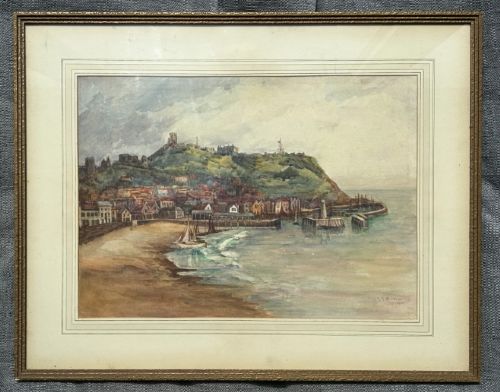


Coastal Harbour Watercolour
Coastal harbour watercolour paintings capture bustling fishing ports and quiet anchorages through delicate washes on paper.
Coastal Harbour Watercolour
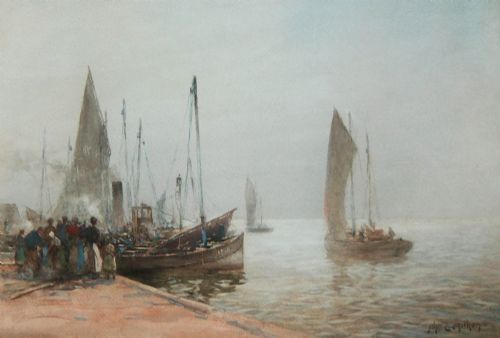
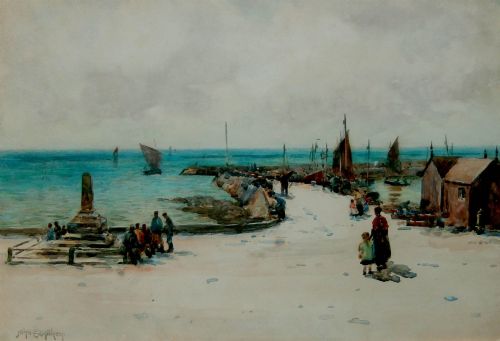
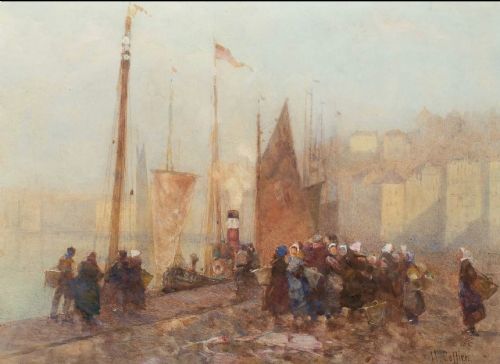
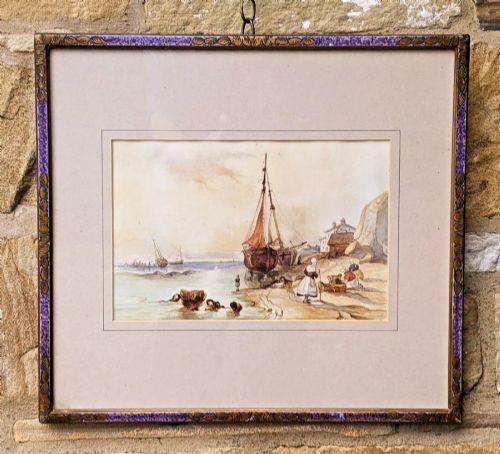
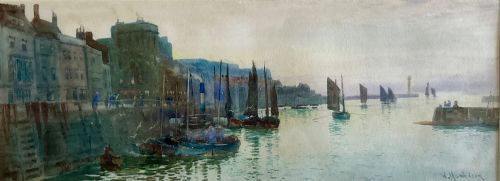
A coastal harbour watercolour presents maritime scenes from British and European ports, focusing on working docks, returning fishing fleets, and coastal architecture. These works document historic harbours in Yorkshire, Cornwall, and Scotland, alongside continental views from France and Belgium.
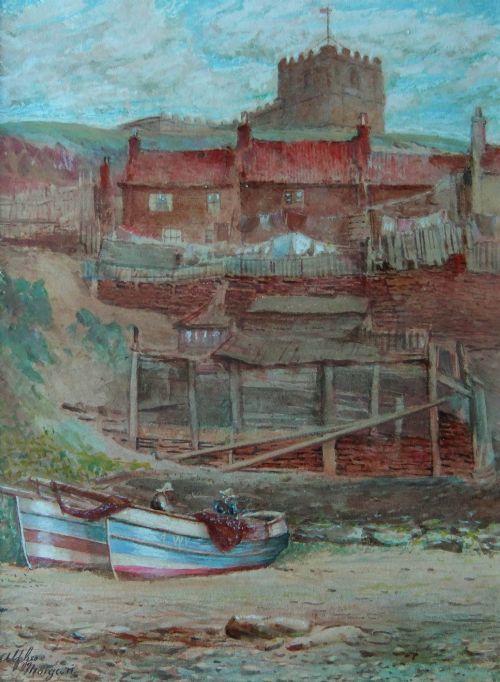
The pieces on this page span the late nineteenth century through to the 1940s, with a strong concentration of early twentieth-century examples. Buyers will frequently encounter depictions of Yorkshire fishing towns like Whitby and Staithes, as well as Cornish harbours such as St Ives and Polperro.
Works appear under various designations including fine art paintings, framed artwork, and wall art. They generally arrive framed in wood or gilt wood, often protected by glass to preserve the paper and watercolour pigment.
Materials and technique
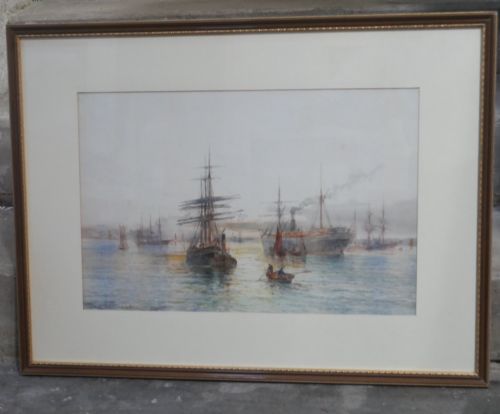
Artists painted these scenes using watercolour pigment and paint applied to paper substrates. The medium allowed for rapid outdoor sketching, capturing changing light on water, smoke from steam tugs, and weathered timber docks.
Finished works received protection behind glass and mounting within wood or gilt wood frames. This framing protected the delicate paper surfaces from atmospheric moisture and handling damage.
Coastal Harbour Watercolour Retail Price Guide 2026
Typical asking prices for coastal harbour watercolour among the pieces listed under this phrase on Sellingantiques today, from the lower quarter to the upper quarter. They describe what is for sale here now, not the wider market.
Listings feature works created across seven decades, spanning from the 1890s through to the 1940s.
Separating the ordinary from the exceptional
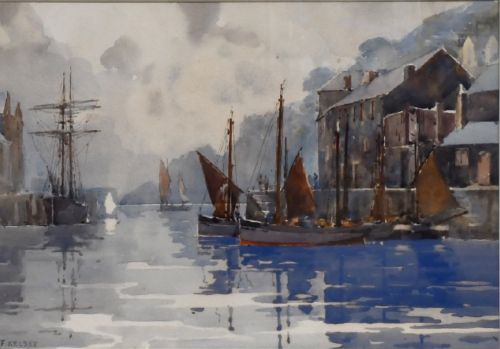
Quality in a coastal harbour watercolour rests upon the artist's handling of light, atmosphere, and maritime architecture. Stronger examples demonstrate confident brushwork that defines rigging, boat hulls, and stone quays without overworking the paper.
Composition and tonal control distinguish accomplished works from standard topographical records. The finest pieces balance bustling human activity with expansive skies and reflective water, maintaining transparency in the pigment washes.
James E. Aitken·John E. Aitken·William Banks Fortescue·Hector Caffieri·Alfred G. Morgan·William Matthison·Frank Kelsey·F A Roylance·George F Pennington·Paul Delvaux·Richard Harry Carter·William Lee Hankey·Thomas Bush Hardy·Ernest Dade·Arthur Tucker·Tom Clough·William Tuck·Fred Waugh·James Thomas Watts·Samuel Owen·Kate E Booth·Ernest F. Hill·Frederick Stuart Richardson·Alfred Robert Quinton·Percy Brooke
The Coastal Harbour Watercolour Glossary
- Watercolour pigment
- The finely ground colour particles suspended in a water-soluble binder used to create these paintings. It provides the transparent washes characteristic of the medium.
- Gilt wood
- Timber framing treated with a gold-leaf or metallic paint finish. This traditional framing style enhances the presentation of maritime works.
- Newlyn School
- An art movement associated with late nineteenth and early twentieth-century painters working in Cornwall. Artists recorded local fishing communities and harbour life directly from nature.
- Seascape
- A painting or artwork depicting the sea, coastal views, and maritime vessels. These compositions form the core subject matter for harbour watercolours.
Coastal Harbour Watercolour: Frequently Asked Questions
Where were these harbour scenes painted?
Artists recorded active fishing ports across the British coastline, particularly focusing on Yorkshire locations like Whitby and Scarborough, alongside Cornish havens such as St Ives and Polperro. Some painters also travelled to continental ports in France, Belgium, and Venice.
These working harbours provided varied subjects, from moored luggers and processing catches on the docks to historic abbey backdrops and rocky coastlines.
How should I display a watercolour at home?
Watercolours require protection from direct sunlight to prevent the pigments from fading over time. Hang them on interior walls away from direct heat sources and damp environments.
Ensure the frame remains properly sealed behind glass to shield the paper from atmospheric pollutants and humidity fluctuations.
How do I date an antique watercolour?
Dating relies upon artist signatures, exhibition records, stylistic clues, and framing materials. Many pieces from this era carry dates inscribed by the artist or contemporary gallery labels on the reverse.
Clothing styles of figures on the quayside and the types of vessels depicted, such as sailing trawlers or early steam vessels, also offer clear chronological markers.
What is the difference between an etching and a watercolour?
A watercolour is a unique, hand-painted artwork created directly on paper using water-soluble pigments. Etchings are printed multiple times from a metal plate that has been etched with acid.
Paintings show individual brushstrokes and washes of colour unique to that single sheet of paper.