


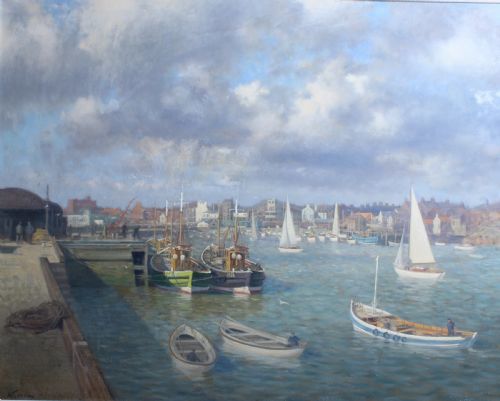

Coastal Harbour Wall Art
Coastal harbour wall art brings maritime history into your room through original watercolours and oil paintings of fishing ports and trading towns.
Coastal Harbour Wall Art
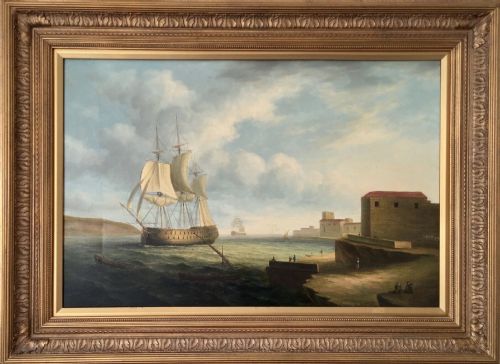
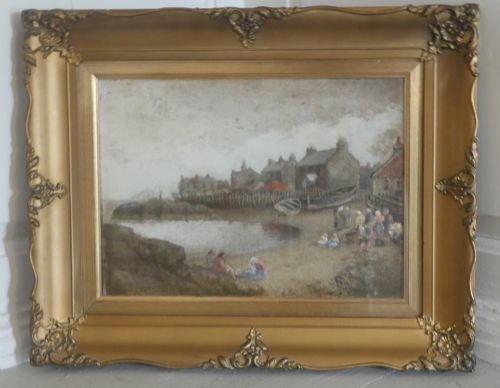
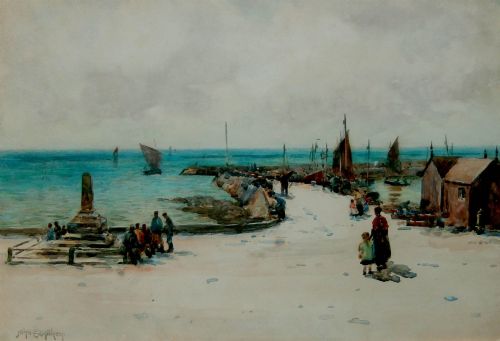
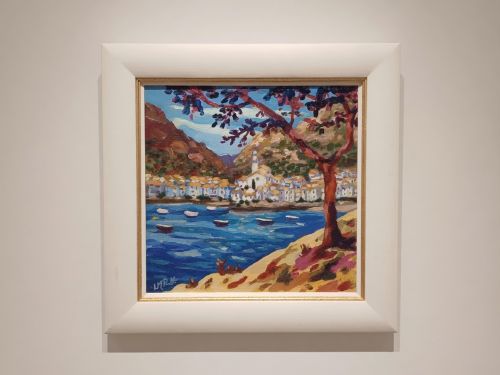
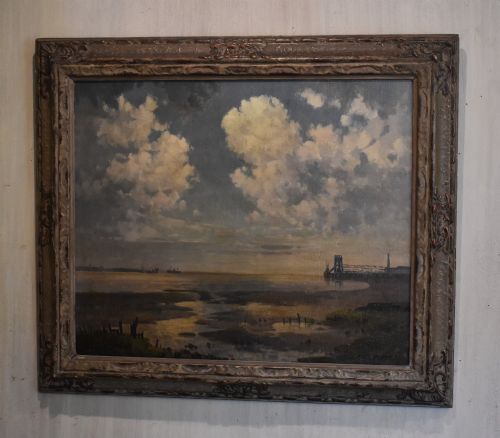
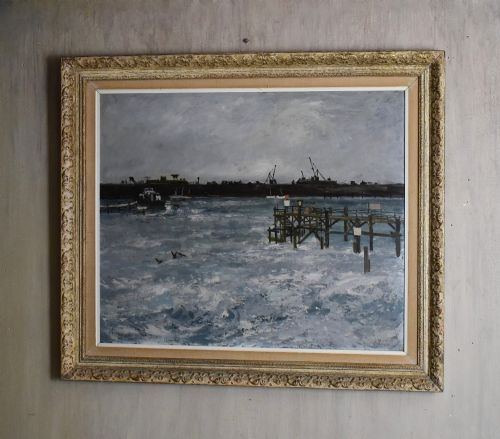
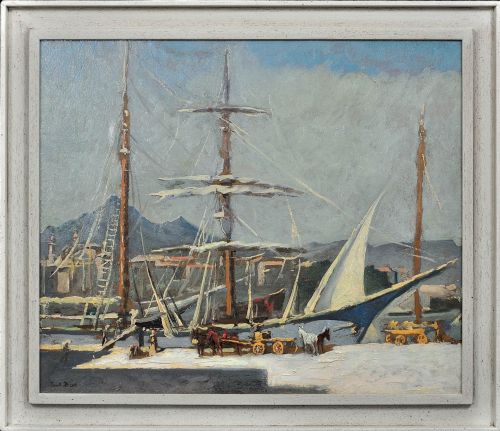
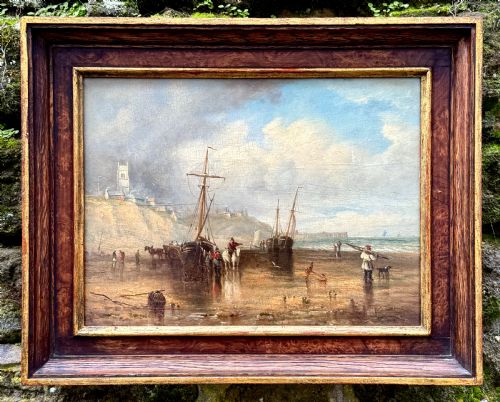
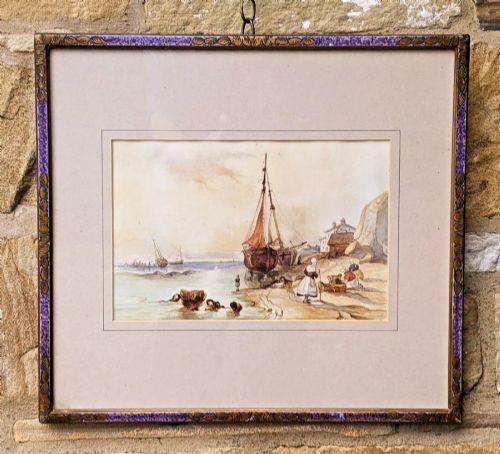
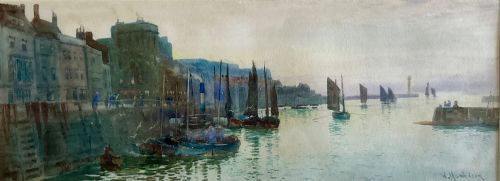
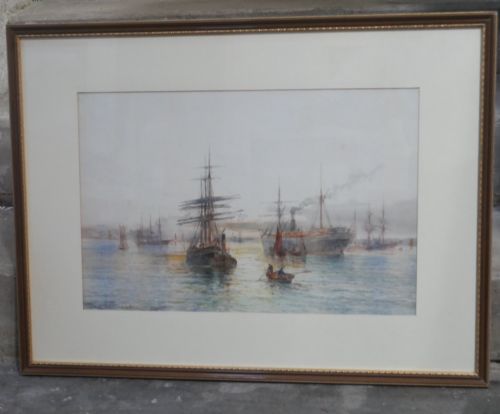
When searching for coastal harbour wall art, buyers encounter framed watercolours and oil paintings depicting maritime scenes from the nineteenth and twentieth centuries. These artworks capture busy quaysides, fishing luggers, and quiet havens across Britain and continental Europe.
The selections available range from Victorian watercolours of Cornish ports to mid-century oil paintings of industrial rivers and Mediterranean inlets. Such pieces reflect the changing styles of British Impressionism, Post-Impressionism, and traditional marine landscape painting.
Materials and techniques
Painters utilised oil paint on canvas, board, and panel to build rich textures for coastal scenes, while others worked in watercolour on paper for delicate washes of light and sea. Support materials vary from traditional stretched canvas to wood panels and heavy card.
Framed presentation is common, often utilising period wood mouldings that complement the palette of the maritime scene within. Pigments capture specific qualities of light across northern waters and southern ports.
Current listings feature watercolours and oil paintings spanning the Victorian era through the mid-twentieth century, utilising canvas, paper, wood, and glass.
Assessing quality in maritime paintings
Quality rests upon the artist's ability to handle atmospheric light, water movement, and architectural perspective within the harbour setting. Strong compositions balance the static forms of stone quays and anchored vessels with the fluid movement of the sea.
Condition of the medium also distinguishes works, as stable pigment adhesion on canvas and minimal fading in watercolours preserve the intended visual impact. Clear signatures, period framing, and documented provenance further elevate individual pieces.
James Hardy·Kenneth Cozens·Edward Mills·John E Aitken·William Banks Fortescue·Augusto Alberici·Lucy Pratt·Clive Browne·Peter Brannan·Paul Bret·Thomas Creswick·William Matthison·Walter Goodin·George F Pennington·Alfred George Morgan·Paul Delvaux·Edward Matthew Elliott·Richard Harry Carter·Gyrth Russell·Jean Baptiste Olive·William Lee Hankey·Thomas Bush Hardy·Donald McIntyre·TS Wallis·James Webb
The Coastal Harbour Wall Art Glossary
- Watercolour
- A painting method where fine pigment is suspended in a water-based, translucent solution applied to paper. It allows for luminous washes representing sea and sky.
- Lugger
- A traditional two-masted fishing vessel frequently seen in British coastal art from the nineteenth and early twentieth centuries. These working boats populate many West Country harbour scenes.
- Provenance
- The documented history of ownership and exhibition for an artwork. It provides secure attribution to named artists and verifies the historical timeline of the piece.
- Panel
- A rigid support surface for oil paintings, commonly made of wood. Artists utilised panels for stability and smooth application in smaller format maritime works.
Coastal Harbour Wall Art: Frequently Asked Questions
What subjects appear in coastal harbour wall art?
Paintings commonly depict working fishing ports, sailing ships at anchor, and quiet quaysides from British and European locations. Artists focused on the daily life of maritime communities, capturing vessels such as trawlers and luggers alongside stone harbour walls.
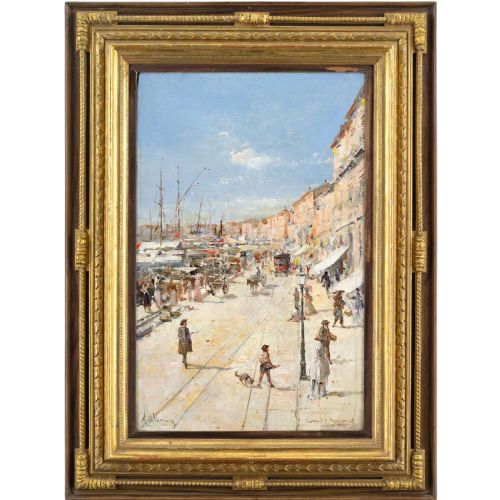
Scenes range from Cornish fishing villages like St Ives to Mediterranean ports in France and Italy, executed across the nineteenth and twentieth centuries.
How do I choose between oil and watercolour?
Oil paintings on canvas or panel offer rich textures, heavier brushwork, and deep colour saturation suitable for dramatic seas and skies. Watercolours on paper provide a lighter, more translucent quality that emphasises atmospheric light and delicate coastal tones.
Both mediums suit wall display, but oil works often feature robust frames that add substantial presence to a room.
How do I date a maritime painting?
Dating relies on stylistic evidence, artist signatures, framing methods, and the types of vessels depicted in the harbour. Victorian works often show traditional rigging and detailed academic brushwork, while mid-century pieces display broader marks and simplified forms.
Inscribed titles, artist life dates, and retailer labels on the reverse also help establish the period of creation.
How should I hang and care for these artworks?
Artworks require placement away from direct sunlight and excessive humidity to protect paper watercolours and oil pigments alike. Framed pieces should hang securely on stable wall fixings suited to the weight of the wood and glass.
Regular light dusting of frames and avoiding damp environments will maintain the condition of both canvas and paper supports.