




Coastal Harbour Oil Landscape
When you search for a coastal harbour oil landscape, you open a window onto maritime history through the brush of artists capturing ports, shipping, and coastal light.
Coastal Harbour Oil Landscape
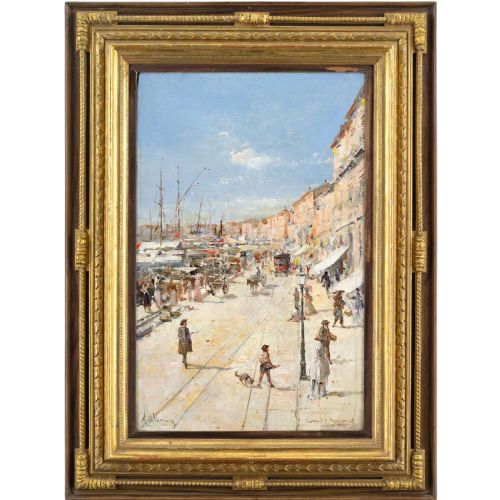
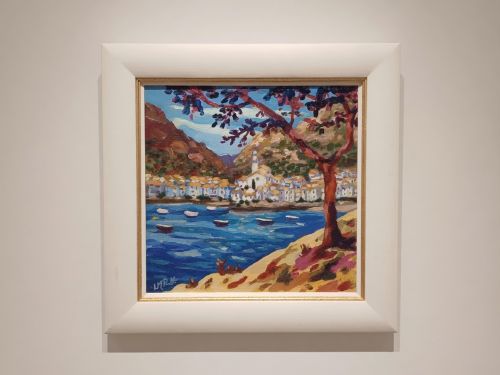
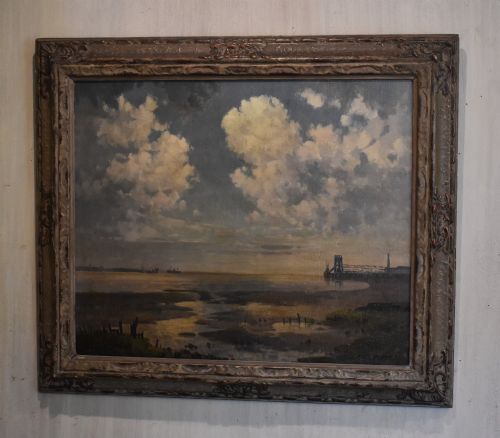
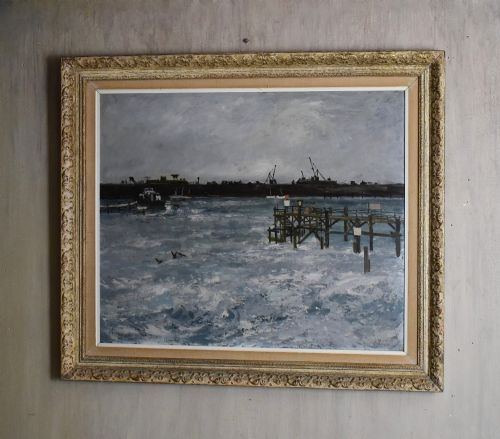
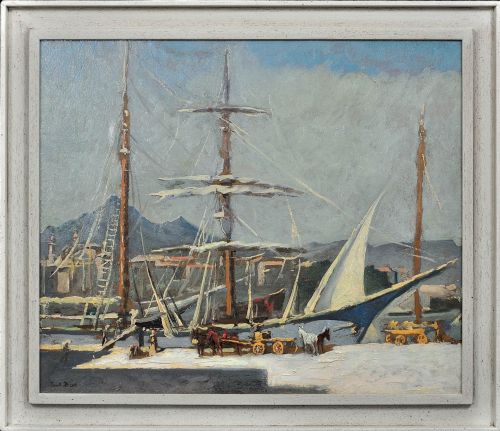
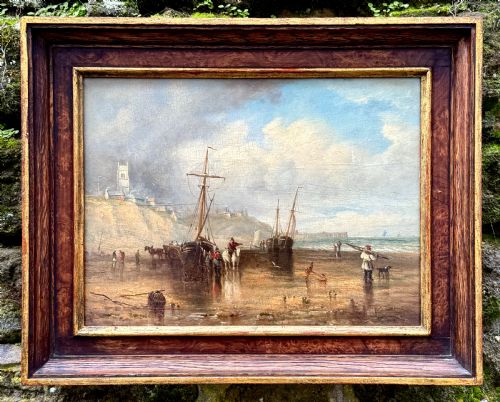
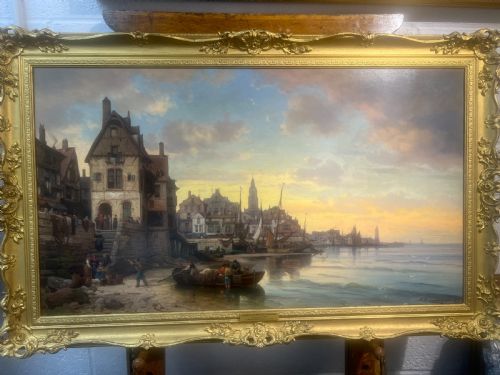
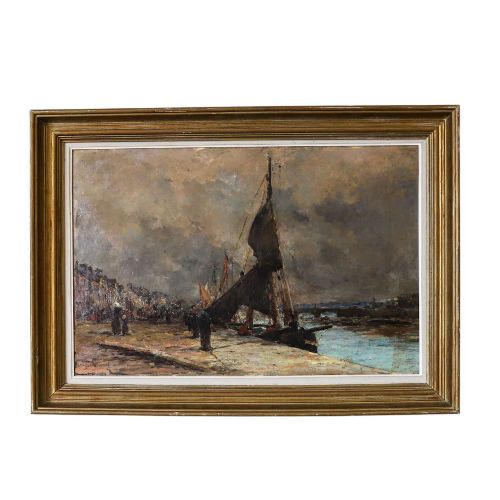
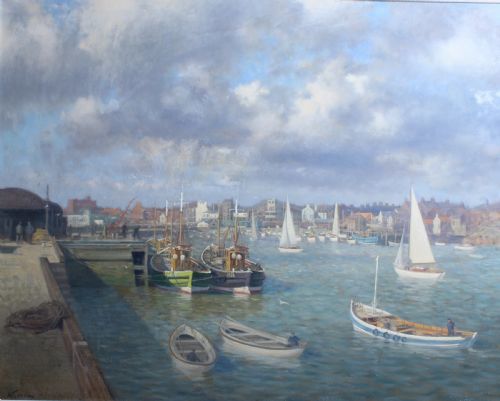
A coastal harbour oil landscape captures maritime life, working ports, and coastal views through the medium of oil paint. These works range from nineteenth century shipping scenes to mid-century impressionist depictions of British and European harbours.
The selections available span from large canvas works to smaller compositions on board, featuring locations from Cornish fishing villages to Mediterranean ports. Common subjects include sailing boats, old barges, quaysides, and tidal scenes depicted in varied atmospheric conditions.
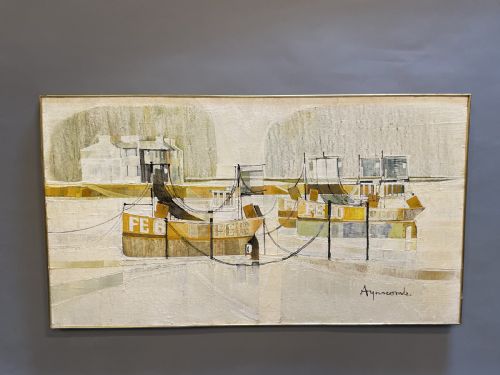
Works originate from British, French, and Italian schools, reflecting diverse regional styles from Victorian maritime realism to post-impressionism and mid-century modern interpretations. Each piece offers a specific window into historical maritime activity and coastal geography.
Materials and technique
Artists painted primarily using oil paint applied to stretched canvas, wooden panels, or board, building rich textures and layered tones. The medium allowed for subtle blending of light on water and heavy impasto applications for vessels and masonry.
Many works are housed in period frames constructed from wood, including giltwood finishes and gold leaf ornamentation that complement the traditional subjects. The physical support often dictates the texture, with canvas providing a traditional weave and board offering a rigid surface for expressive brushwork.
Several artists captured French fishing ports between rainstorms, proving that coastal painters rarely minded getting damp for a good view.
Elements of distinction
Quality rests in the handling of light, atmosphere, and spatial depth, where proficient artists capture the movement of choppy seas and the specific quality of maritime air. The conviction of the brushwork and the harmony of the palette distinguish accomplished compositions from routine topographical records.
The integration of the original frame and the preservation of the pigment layer influence the character of the piece. Works that retain their surface integrity without extensive restoration offer a more direct connection to the artist's original vision.
Kenneth Cozens·Edward Mills·Augusto Alberici·Clive Browne·Peter Brannan·Paul Bret·Thomas Creswick·Charles Euphraisie Kuasseg·Walter Goodin·William Edward Webb·Edward Matthew Elliott·Gyrth Russell·Jean-Baptiste Olive·Raymond Picque·James Fry·George Turland Goosey·Adrian Van Porten·Stanley Leader·Donald McIntyre·T.S. Wallis·Alfred Henry Vickers
The Coastal Harbour Oil Landscape Glossary
- Impasto
- Paint applied thickly to a canvas or board, standing out from the surface to create texture and catch light. This technique frequently highlights waves, sails, and architectural details in marine scenes.
- Giltwood
- Wood carved and covered with a thin layer of gold leaf or gold paint, commonly used for traditional picture frames. These frames often match the period of the painting they enclose.
- Provenance
- The documented history of ownership of an artwork, tracing its path from the artist or gallery to the current collection. Clear provenance helps verify the attribution and age of nineteenth and twentieth century paintings.
- Maritime painting
- Artwork depicting ships, sea views, harbours, and coastal life as the primary subject matter. This genre encompasses both documentary records of shipping and expressive coastal landscapes.
Coastal Harbour Oil Landscape: Frequently Asked Questions
How do I date an antique marine oil painting?
Dating relies on stylistic evidence, costume of figures on the quayside, the type of shipping depicted, and materials like canvas or framing methods.
Examines signatures, artist records, and label remnants on the reverse of the canvas or board for definitive chronological clues.
Where should I hang a coastal harbour landscape?
These works suit well-lit spaces away from direct sunlight, which can degrade sensitive oil pigments and gilt frames over time.
Pairing the painting with neutral wall colours allows the natural palette of the sea and sky to command attention.
What is the difference between oil on canvas and oil on board?
Canvas uses woven fabric stretched over a wooden frame, providing flexibility and a traditional textured ground for the artist.
Board provides a rigid wooden support, often favoured for smaller en plein air studies executed quickly on location.
Are all coastal paintings signed by the artist?
Many fine historical works remain unsigned or carry monograms rather than full signatures, particularly studies and earlier pieces.
Attribution then depends on stylistic comparison, subject matter, and archival records rather than a signature.