


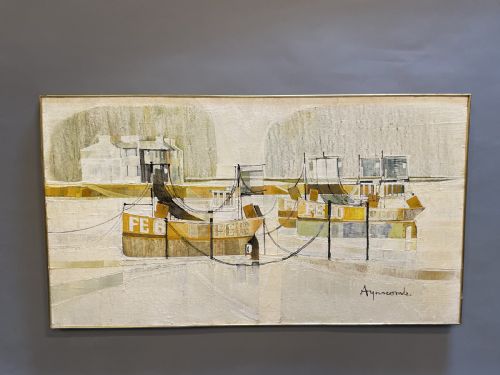

Coastal Fishing Art
Coastal fishing art captures the enduring rhythm of maritime labour and coastal harbours through historic paintings and watercolours.
Coastal Fishing Art
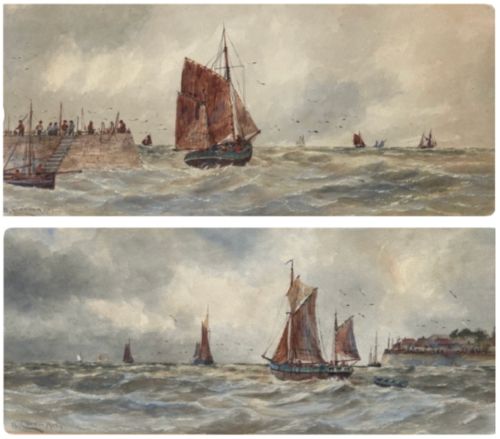
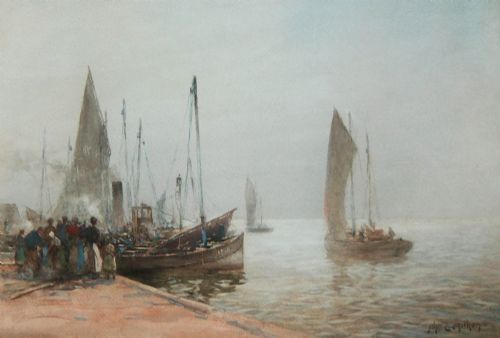
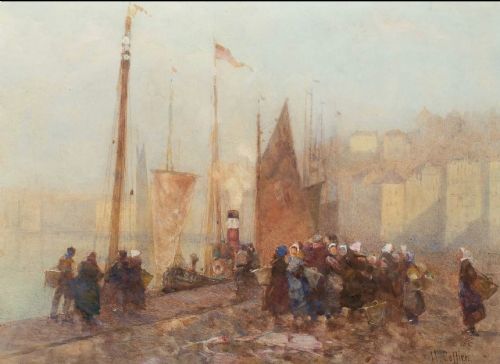
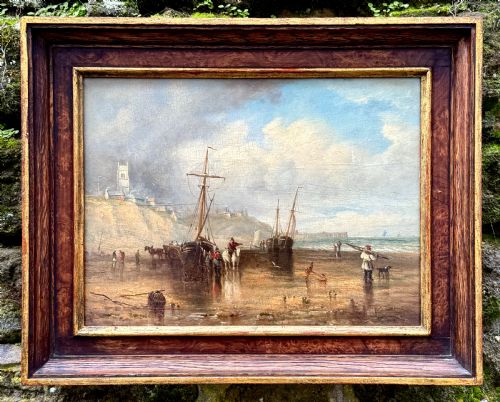
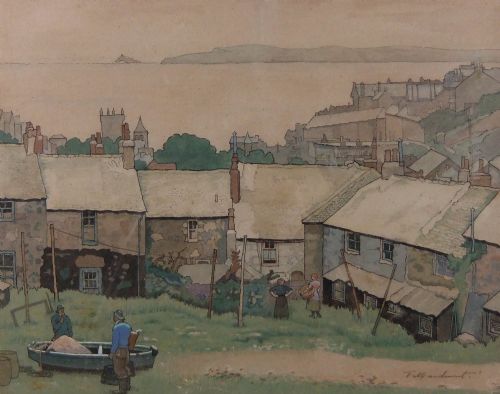
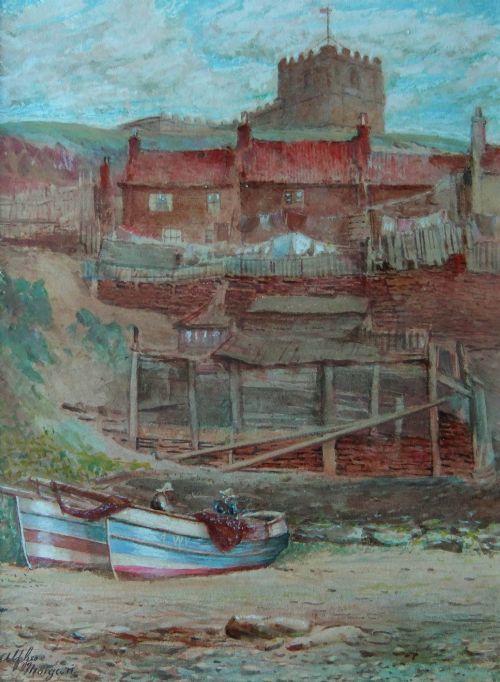
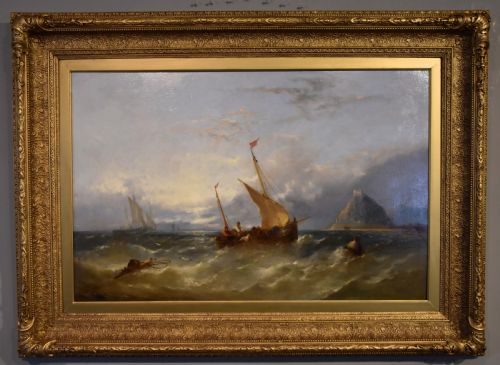
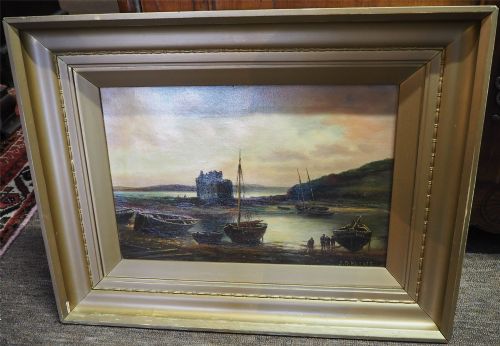
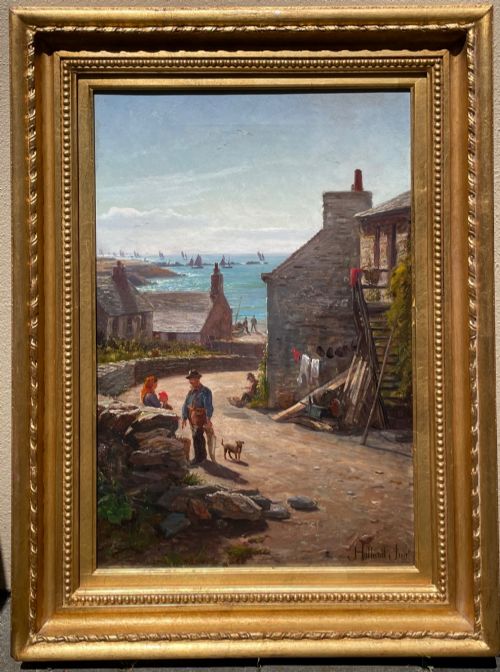
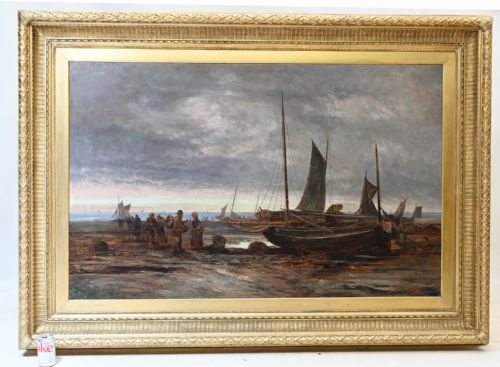
When you search for coastal fishing art, you encounter historical depictions of harbours, vessels, and seafaring communities created across the nineteenth and twentieth centuries. These works record everyday coastal life, from boats resting at low tide in Cornish ports to large oil paintings of turbulent seas.
The pieces on this page are predominantly British and European watercolours and oil paintings ranging from the Victorian era through the mid-twentieth century. You will find detailed studies of harbours like Whitby and St Ives alongside broader marine landscapes executed on canvas, panel, and paper.
Materials and construction methods
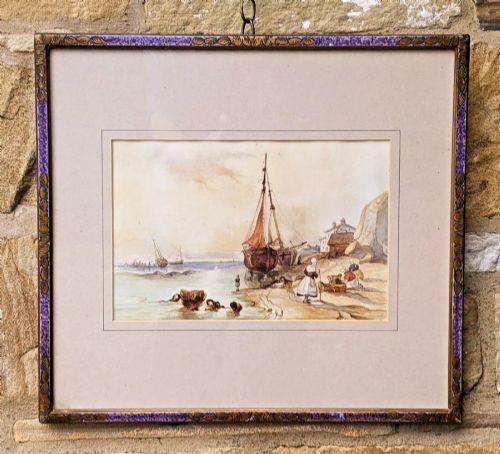
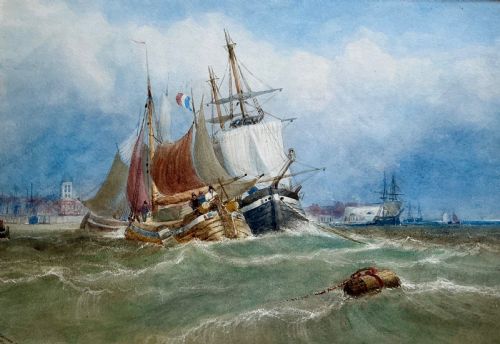
Artists working within this genre relied primarily on oil paint applied to canvas, board, and panel, or watercolour pigment brushed onto heavy paper. Oil works often permit layered textures that capture the heavy movement of water and stormy skies, while watercolours rely on fluid washes to depict translucent light and coastal atmospheres.
Support materials vary from traditional stretched canvas to wooden boards and card, frequently housed within period giltwood or moulded frames. The handling of medium reflects stylistic shifts from Victorian realism towards the freer brushwork of later British impressionism and mid-century modernism.
Listings feature paper, canvas, and wood supports utilised by artists across the nineteenth and twentieth centuries.
Factors determining quality
The distinction between standard works and exceptional examples rests upon the artist's handling of light, atmosphere, and maritime architecture. Superior pieces demonstrate confident brushwork and accurate proportion in rigging and vessel construction, rather than relying on formulaic compositions.
Condition and originality also govern the standing of a piece, particularly the preservation of pigment vibrancy in watercolours and the stability of the surface in older oil paintings. Works that retain their original framing and bear clear signatures by documented painters command closer attention from collectors.
James Orrock·William Cannon·Thomas Creswick·William Henry Williamson·Henry Barlow Carter·Edward Matthew Elliott·Charles Napier Hemy·Gyrth Russell·William Lee Hankey·Pieter Cornelis Dommersen·Thomas Bush Hardy·George Gregory
The Coastal Fishing Art Glossary
- Seascape
- A painting or other work of art that depicts the sea, coastal views, and maritime vessels. These scenes frequently focus on the interplay of weather and water around fishing boats and harbour walls.
- Watercolour
- A painting method in which the paints are made of pigments suspended in a water-based solution. The paper support often remains partially visible to create luminous effects.
- Oil on Canvas
- A traditional painting medium utilising pigments bound in a drying oil, applied to a woven fabric stretched across a wooden frame. This combination allows for rich colour depth and textured impasto.
- Coble
- A traditional type of open fishing boat with a flat bottom and high bow, commonly used along the northeast coast of England. Painters frequently featured these distinct craft in regional harbour scenes.
- Impressionism
- A style of painting that focuses on the immediate visual impression of a scene, paying close attention to shifting light and unblended colour strokes.
Coastal Fishing Art: Frequently Asked Questions
What periods do these paintings span?
The works predominantly date from the Victorian period through to the mid-twentieth century. This timeline covers shifting artistic movements from traditional maritime realism to post-war British approaches.
Earlier examples often celebrate detailed coastal topography, whilst later pieces explore freer interpretations of harbour life and light.
How were these coastal scenes used?
These artworks were created primarily for domestic display in homes, reflecting a Victorian and Edwardian fascination with maritime trade and leisure. Collectors valued them for bringing the atmosphere of the coast into inland rooms.
Many pieces document specific harbours and working vessels that have since changed significantly or vanished entirely.
How should I care for a watercolour painting?
Watercolour pigments on paper require protection from direct sunlight to prevent fading and colour degradation. Framing should utilise conservation-grade materials and acid-free mounts to maintain the paper over decades.
Keep these works in rooms with stable humidity levels to avoid warping or moisture damage to the paper support.
How do I distinguish oil paintings from watercolours?
Oil paintings feature a thicker, textured surface applied to canvas, board, or panel, often exhibiting visible brushstrokes and a slight sheen. Watercolours present a flatter, more translucent finish on paper where the texture of the sheet remains apparent beneath thin pigment washes.
Oils are traditionally displayed without glass protection, whereas watercolours require glazing to shield the paper from environmental wear.