



Cloisonne Enamel Vases
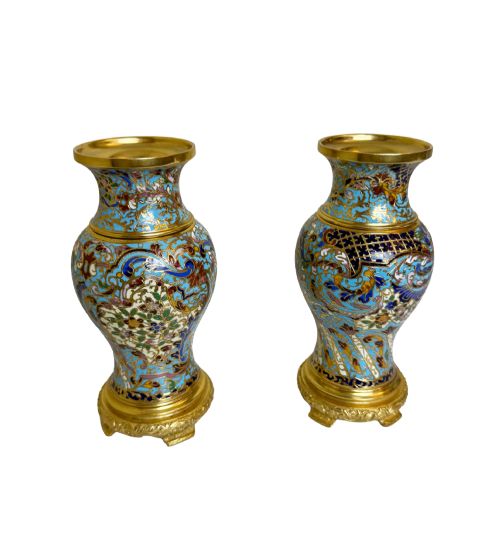
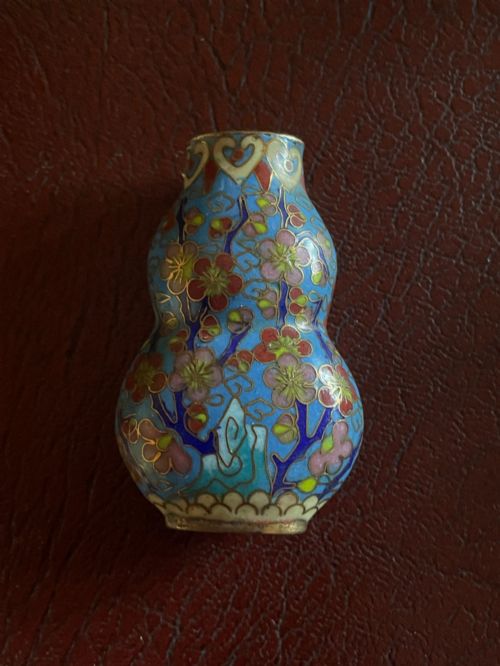
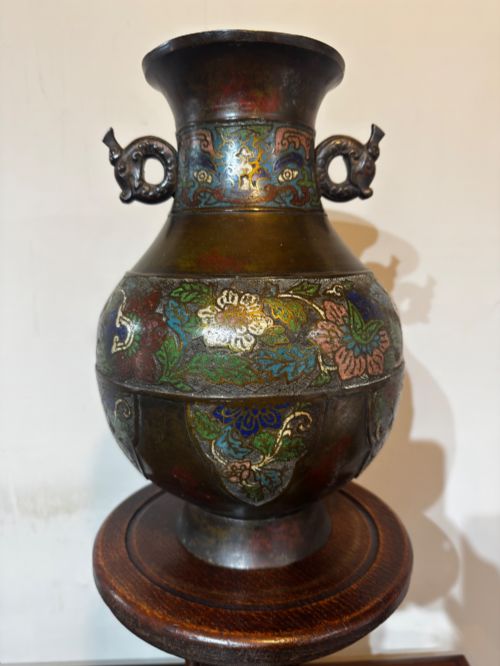
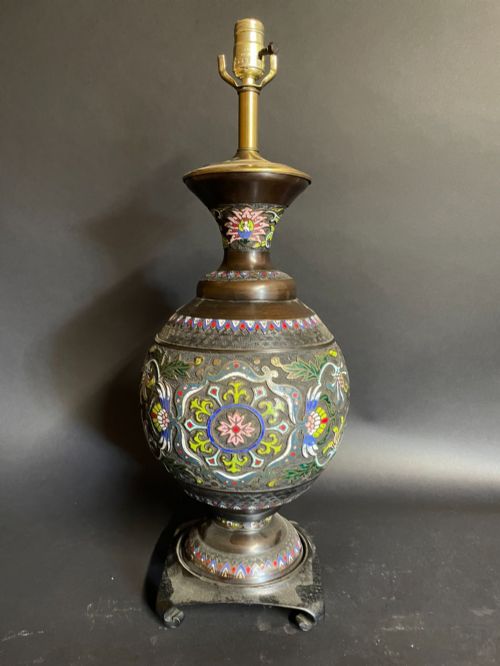
Cloisonne enamel vases bring together intricate metal wirework and vibrant coloured glass to create striking decorative centerpieces.
Cloisonne Enamel Vases
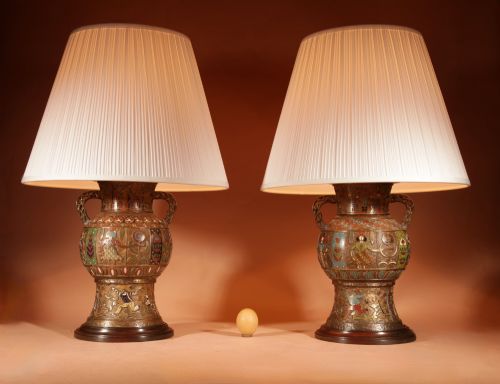
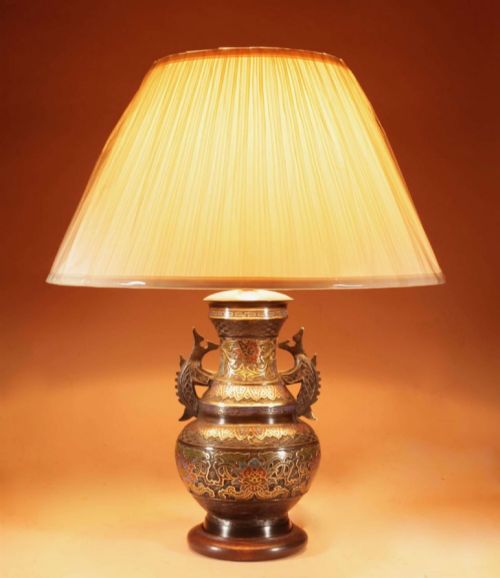
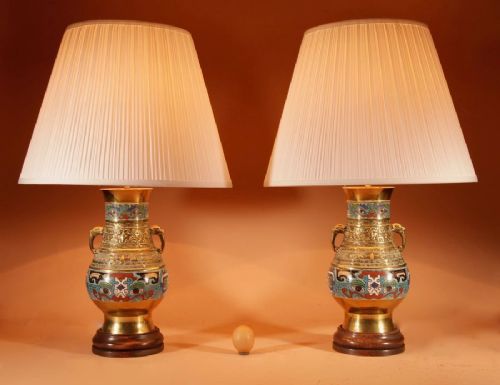
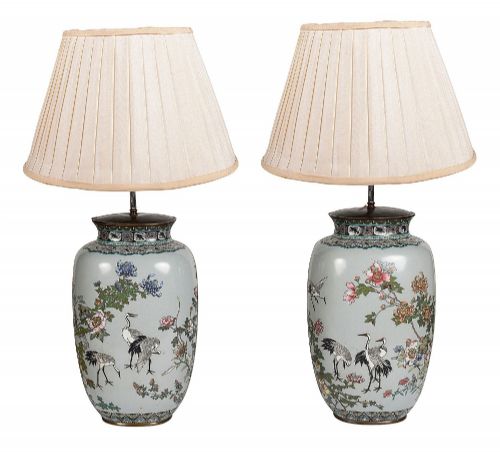
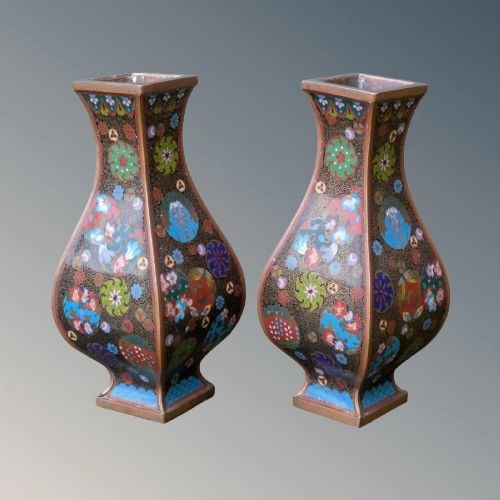
When searching for cloisonne enamel vases, buyers encounter a diverse array of vessels originating primarily from Japanese and Chinese workshops across the nineteenth and early twentieth centuries. The selection spans standard display vases, ginger jars with lids, and monumental palace vessels alongside pieces adapted into table lamps or candelabra.
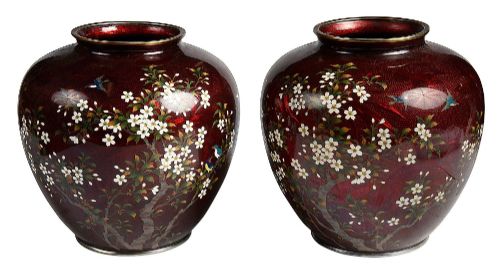
Japanese examples frequently date from the Meiji period, showing meticulous silver or gold wire execution depicting birds, flowers, and natural scenes. Chinese pieces often reflect Qing dynasty traditions and later export styles, employing robust bronze, brass, or copper foundations filled with rich enamels.
How they were made
Artisans constructed these vessels by soldering thin flat metal strips, known as cloisons, onto a metal base of bronze, brass, copper, or silver to form partitioned cells. These individual compartments were subsequently filled with coloured glass paste or enamel powder before undergoing repeated firings in a kiln.
Following the firing process, the surface was ground down and polished until the metal wire rims and hardened enamel became completely flush and smooth. Variations such as ginbari incorporated textured foil beneath transparent enamel layers to create a luminous three-dimensional depth.
Listings feature items spanning the 1860s to the 1950s, utilising bronze, copper, silver wire, and brass.
What varies in quality
The standard of execution depends heavily on the precision of the wirework and the complexity of the design. Finer pieces demonstrate microscopically thin wire grids arranged in intricate pictorial layouts without visible gaps or pooling within the enamel fields.
Materials also dictate the tier of an object, ranging from standard brass and copper foundations to distinguished silver wire constructions and marked pieces by celebrated ateliers. The uniformity of the polished surface and the clarity of the colour separation further distinguish masterworks from commercial export wares.
Ando Jubei·Tamura Yukio·Hayashi Kodenji
The Cloisonne Enamel Vases Glossary
- Cloisonne
- A decorative metalwork technique where thin wires form raised barriers on a vessel body to contain coloured enamel paste before firing.
- Champleve
- A method where troughs or cavities are hollowed directly into a heavy bronze or metal base to hold enamel, leaving thick metal walls between the coloured areas.
- Ginbari
- A Japanese enamelling process involving a textured or patterned foil applied to the metal body underneath translucent coloured enamel to produce depth.
- Basse-Taille
- A technique where the metal ground is hammered or engraved in low relief beneath translucent enamel, allowing light to pass and reflect through the design.
- Meiji Period
- A historical Japanese era spanning from 1868 to 1912 noted for extraordinary advancements in decorative metalwork and export crafts.
Cloisonne Enamel Vases: Frequently Asked Questions
How do I identify Japanese and Chinese cloisonne?
Japanese pieces from the Meiji era frequently utilise exceptionally fine silver or gold wire with naturalistic floral and avian motifs. Chinese examples often employ heavier bronze or brass bases with bolder wirework and traditional symbolic patterns.
Examination of the interior and base can also reveal distinct manufacturing characteristics unique to each regional tradition.
What is the difference between cloisonne and champleve?
Cloisonne relies on soldered wire fixed onto the surface of a vessel to create individual compartments for enamel. Champleve involves carving or casting depressions directly into a thicker metal body to hold the coloured paste.
Both techniques result in durable enamelled surfaces but produce distinct visual textures.
Can these vases hold water for flowers?
Most antique cloisonne vessels are designed primarily as decorative art objects rather than functional containers. Internal metal corrosion or historic repairs mean they are best displayed dry to protect the delicate enamel and wire structure.
Using them for fresh flowers risks moisture seeping into hairline fractures or vulnerable base seams.
How should I clean my enamel vase?
Dusting gently with a soft, dry microfibre cloth is generally sufficient for regular maintenance. Avoid harsh chemical cleaners, abrasive cloths, or immersion in water, which can damage exposed metal components and old finishes.
Professional conservation advice should be sought for pieces requiring deeper cleaning.