
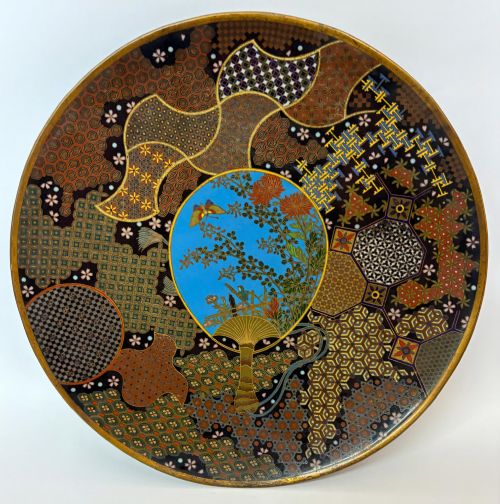


Cloisonne Display Charger
These cloisonne display charger examples bring intricate metalwork and vibrant enamels into interiors, offering striking focal points for a room.
Cloisonne Display Charger
A cloisonne display charger functions primarily as a decorative plate or plaque rather than tableware, designed specifically for visual impact. When searching for a cloisonne display charger, collectors encounter large circular pieces featuring detailed motifs such as dragons, koi, birds, and floral arrangements.
The selections originate predominantly from the Japanese Meiji and Edo periods, alongside examples from the Qing Dynasty and eighteenth century. Most pieces take the form of substantial chargers, trays, and decorative plates measuring significant diameters.
How they were made
Craftsmen built these objects using a foundation of copper, bronze, brass, or porcelain, shaping them into wide plates and trays. Thin metal wires, typically brass, were soldered onto the base to form intricate cellular patterns known as cloisons.
The resulting compartments were filled with coloured enamel paste and fired in a kiln before undergoing extensive polishing to achieve a smooth surface. Certain variations, such as totai shippo, utilised porcelain bases covered in cloisonne decoration that resembled tree bark.
Among the fauna gazing out from the metal wires, a solitary frog manages to share shelf space with mighty dragons and leaping koi.
What varies in quality
The standard of a piece depends on the precision and fineness of the wirework, where thinner lines allow for more complex and detailed pictorial designs. Mastery in firing and polishing ensures an even, glossy surface without pitting or discolouration in the enamel compartments.
Depth and ambition of the subject matter also distinguish the grade of the work, with dynamic scenes of leaping koi, dragons, or figures requiring higher artistic skill than standard floral patterns.
The Cloisonne Display Charger Glossary
- Cloisonne enamel
- A metalwork technique where fine wires create small cells that hold coloured glass paste before firing. This method produces intricate patterns divided by thin metallic outlines.
- Charger
- A large decorative plate or platter traditionally used for display rather than serving food. These items serve as prominent wall or cabinet focal points.
- Totai shippo
- A specific Japanese method where enamel and wire are applied directly onto a porcelain body rather than metal. This technique creates a distinct tactile surface resembling natural textures like tree bark.
- Meiji Period
- A historical Japanese era spanning from eighteen sixty-eight to nineteen twelve noted for technical mastery in metalwork and enamel. Pieces from this time often display refined pictorial narratives.
- Edo Period
- A prior era in Japanese history preceding the Meiji period, representing earlier styles of craftsmanship. Chargers from this time frequently exhibit robust proportions and powerful imagery.
Cloisonne Display Charger: Frequently Asked Questions
What is a cloisonne display charger used for?
These large plates were created purely for visual display rather than functional dining use. They act as centrepieces on walls, cabinets, or tables.
Their substantial size and detailed pictorial subjects allow them to dominate a room's aesthetic focus.
How do I date a cloisonne display charger?
Dating relies on stylistic clues, materials, and documented production periods associated with Japanese Meiji, Edo, or Chinese Qing dynasties. Earlier pieces often display robust forms and specific traditional motifs.
Examining the backing materials and wire thickness also helps determine the era of manufacture.
How should I clean my cloisonne charger?
Dusting gently with a soft, dry cloth suffices for routine maintenance of the enamel and metal surface. Avoid harsh chemical cleaners or abrasive materials that could scratch the delicate glass paste.
Keeping the piece away from direct, prolonged sunlight preserves the vibrancy of the coloured enamels.
What motifs appear on these chargers?
Common subjects include mythical creatures like dragons and Ho-o birds, alongside natural scenes featuring koi, owls, and chrysanthemums. Human figures such as samurai and Buddhas also decorate the surfaces.
These symbols often carry auspicious meanings reflecting traditional beliefs.