



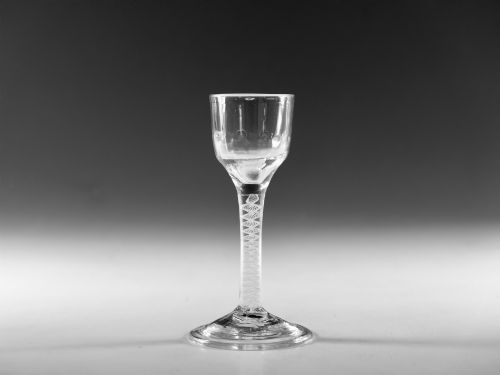
Clear Twist Stem Glass
A clear twist stem glass brings tactile geometry and eighteenth-century drinking customs straight to the modern table.
Clear Twist Stem Glass
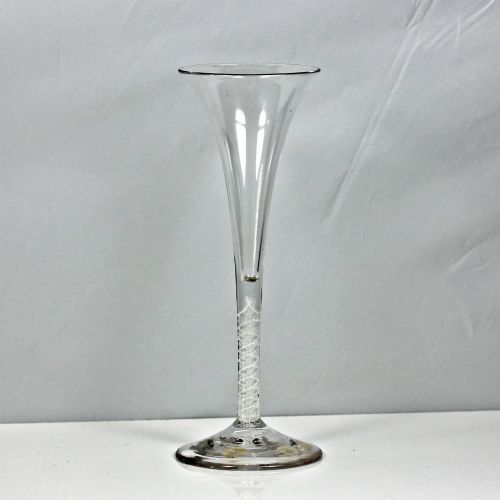
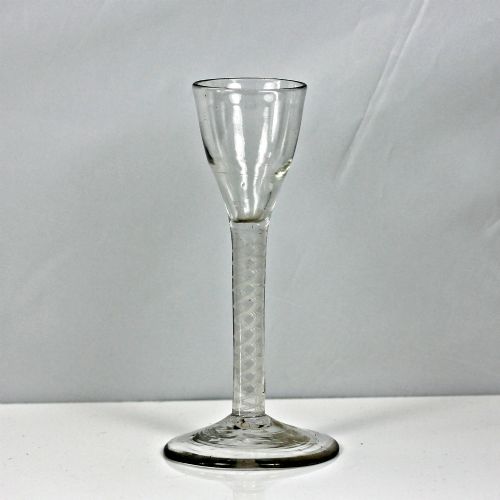
When you search for a clear twist stem glass, you are looking at drinking vessels primarily produced during the Georgian period alongside later twentieth-century revivals. The listings here focus heavily on eighteenth-century English wine and ale glasses, defined by intricate internal threads running through the stem rather than exterior mouldings.
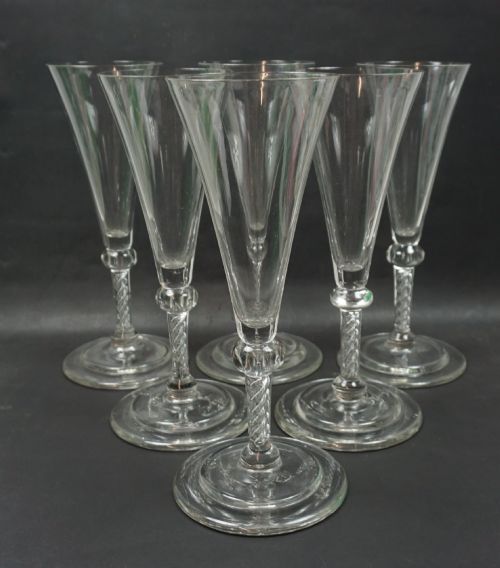
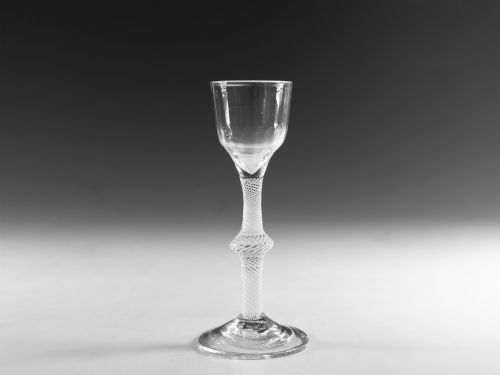
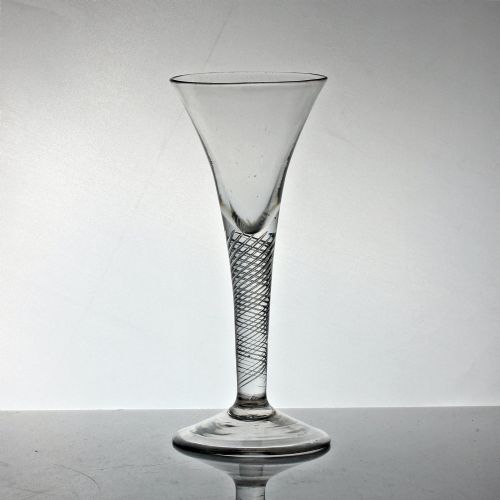
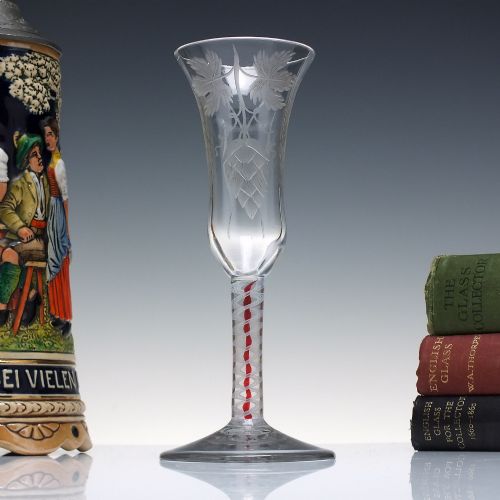
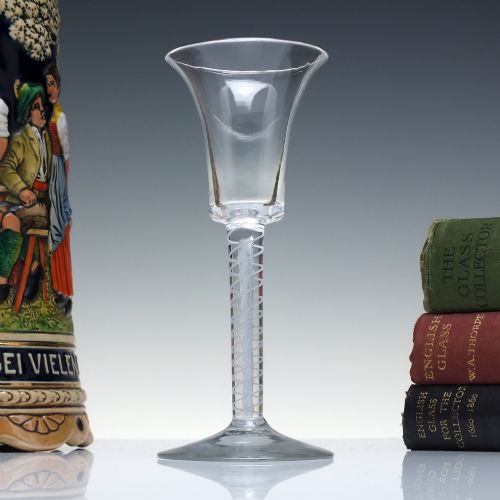
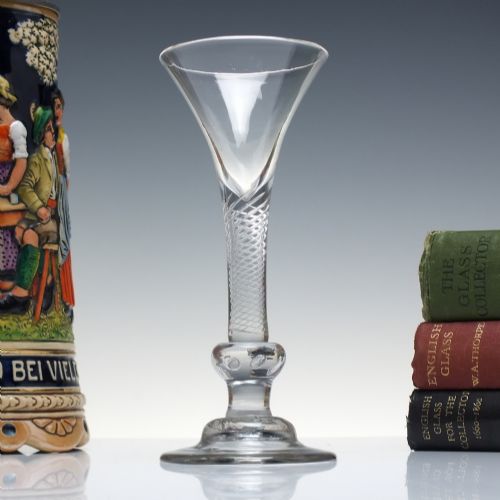
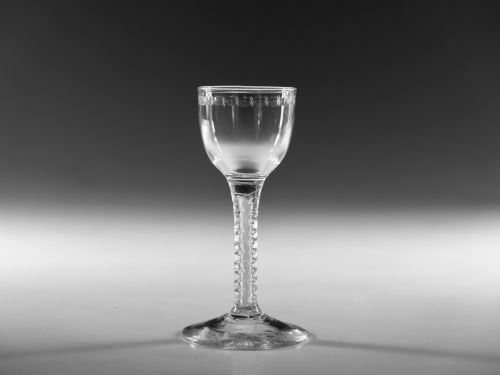
The forms span trumpet, ogee, and bucket bowls mounted on slender stems containing air bubbles or white enamel threads. While most pieces function as wine or cordial glasses, the category extends to champagne flutes, sweetmeat glasses, and occasional candlesticks or oil lamps utilising the same helical stem technique.
Georgian examples dominate the selection, dating from the mid-eighteenth century when glasshouses refined lead metal to achieve high optical clarity. Later interpretations appear from around nineteen-thirty, demonstrating that the fascination with internal glass spirals endured long after the Georgian era closed.
How they were made
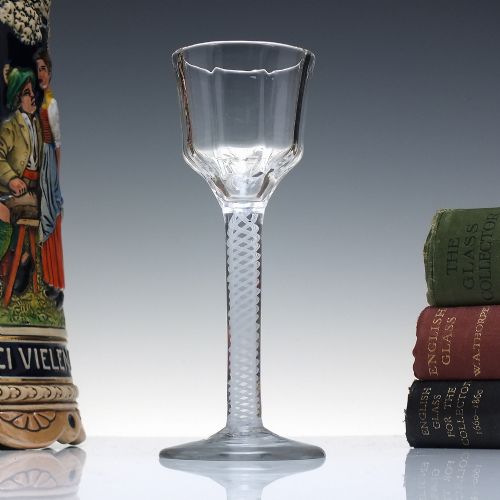
Glassmakers created air twists by forming bubbles within molten metal and drawing them into helical threads as the stem was stretched and twisted. Opaque twists involved trapping white enamel rods inside the glass gather before manipulating the stem into single, double, or multiple spiral configurations.
The metal itself relies heavily on lead glass, flint glass, and lead crystal formulations that provide the requisite density and refractive index. Bowls were often hand-blown and shaped independently before being joined to the prepared stem and finished with a plain, domed, or folded foot.
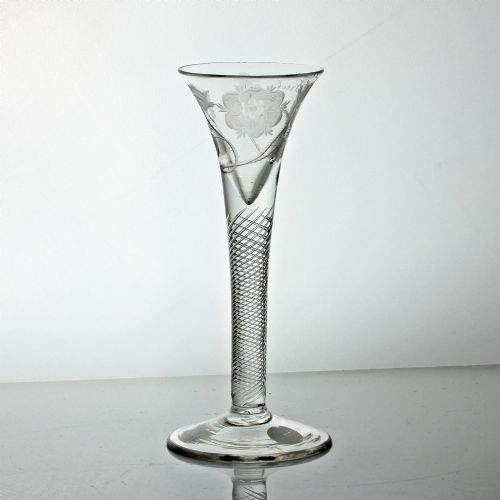
Some eighteenth-century glasses carry hidden Jacobite or anti-Jacobite political loyalty symbols disguised as floral engravings.
What varies in quality
Quality rests upon the precision and regularity of the internal twist, where tight, uniform spirals demand exceptional control from the glassmaker. Heavier metal with superior optical clarity and minimal surface striations elevates a piece above standard domestic output.
The balance between bowl proportion, stem length, and foot diameter dictates the visual harmony of the vessel. Finer examples display crisp wheel engraving upon the bowl, executed with clean lines that complement the complexity hidden within the stem.
The Clear Twist Stem Glass Glossary
- Air twist
- A stem containing elongated internal air bubbles drawn into a spiral thread. This technique creates a delicate refractive pattern inside clear lead glass.
- Opaque twist
- A stem incorporating solid white enamel rods twisted into helical threads. These enamel strands stand out sharply against the surrounding clear metal.
- Ogee bowl
- A bell-shaped drinking vessel profile curving outward at the rim and inward toward the base. This form appeared frequently on eighteenth-century wine and ale glasses.
- Knop
- A swollen, decorative knot or projection formed upon the stem. Multiple knops often add structural rhythm to Georgian stemware.
- Domed foot
- A conical base rising sharply from the outer rim toward the stem attachment. This heavier profile adds stability and visual weight to early glass.
Clear Twist Stem Glass: Frequently Asked Questions
How do air twists and opaque twists differ?
Air twists rely on trapped bubbles drawn into helical channels that catch the light subtly within the clear metal. Opaque twists use white enamel glass rods melted into the core to create bold, visible white threads.
Both techniques require precise manipulation while the glass remains hot, but the visual impact ranges from understated transparency to striking opaque contrast.
Were these glasses used for wine?
Georgian stemware served various drinks depending on the bowl capacity and shape, including wine, ale, cider, and cordials. Smaller bowls suited potent fortified wines, while taller flutes accommodated sparkling beverages.
Ale glasses often featured taller, straighter bowls paired with air or opaque twist stems to display the contents clearly.
How can I tell a Georgian glass from a later revival?
Eighteenth-century metal often displays minor surface imperfections, characteristic tool marks, and a darker grey tone within heavy lead crystal. Pontil marks on the underside of the foot generally show signs of rough snapping and subsequent smoothing.
Later twentieth-century revivals tend to exhibit more uniform industrial clarity, smoother foot rims, and standardised bowl proportions without period wear.