
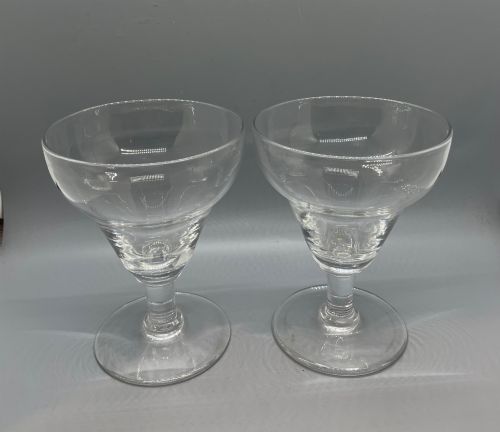
Clear Glass Wine Glasses
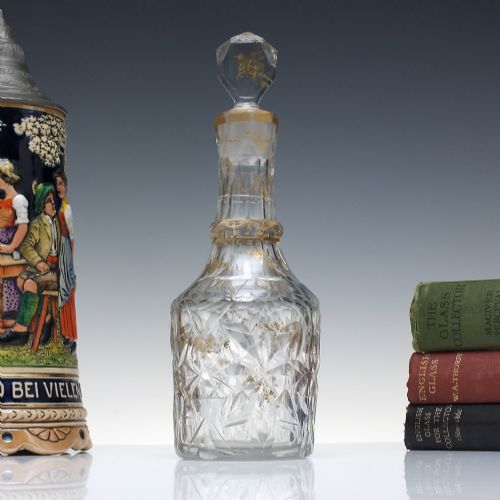
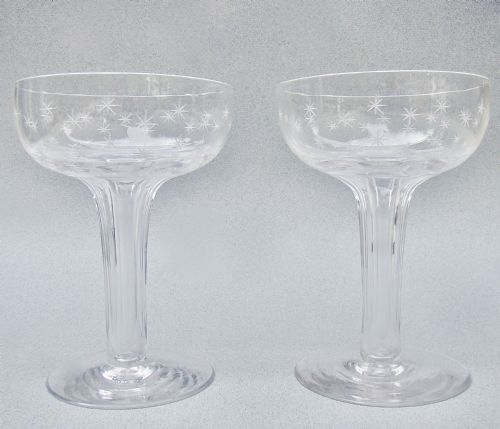
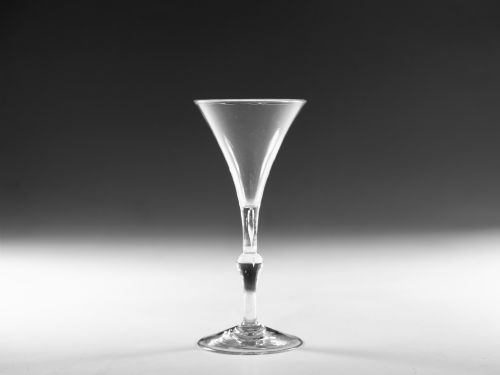
Clear glass wine glasses bring the bright clarity of historic tables forward, holding everything from eighteen-century balustroid stems to Edwardian cut crystal jugs.
Clear Glass Wine Glasses
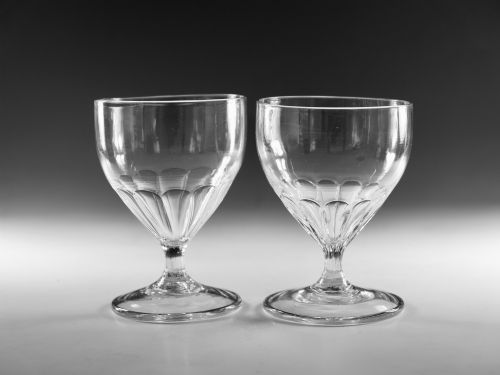
When searching for clear glass wine glasses, buyers encounter a wide span of drinking vessels, carafes, and rummers originating across the eighteenth, nineteenth, and twentieth centuries. These pieces cover forms ranging from early balustroid stem wine glasses to heavy Victorian rummers and tall Edwardian flutes.
The versions most commonly met on this page belong to the Georgian and Victorian eras, alongside Edwardian and Art Deco examples. They capture shifts in social dining, moving from delicate opaque twist stems to robust cut crystal and silver-mounted jugs.
Materials and Techniques
Makers shaped these vessels using lead glass, flint glass, and crystal, often employing hand-blowing techniques that left characterful air bubbles within the stems. Later pieces utilise press-moulding and deep wheel-cutting to achieve sharp facets and prisms.
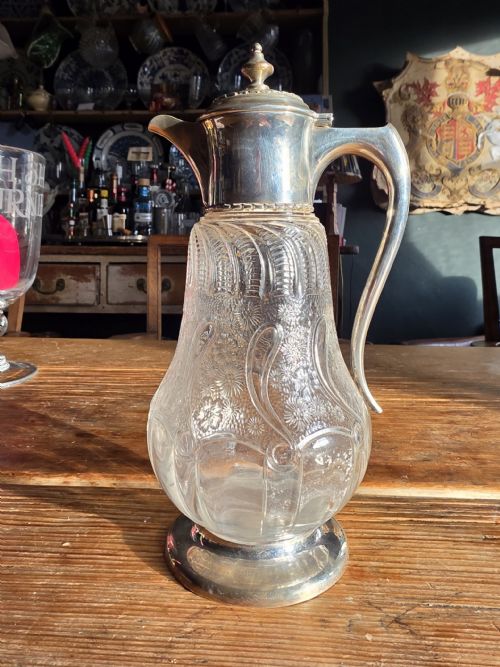
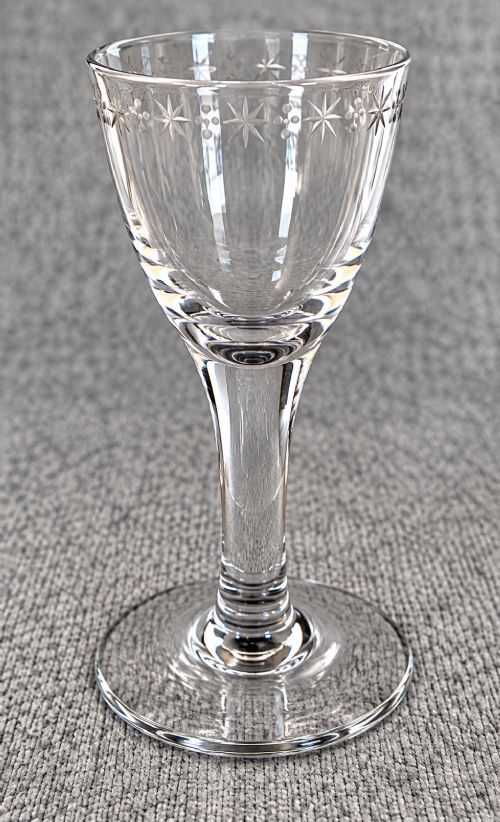
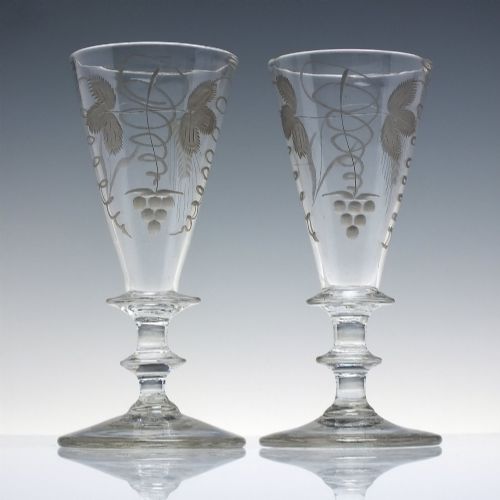
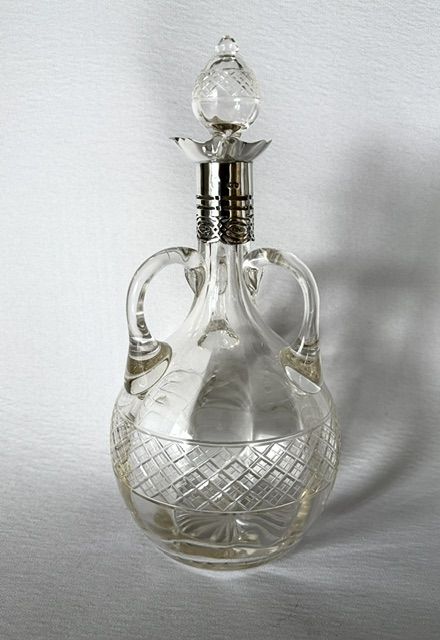
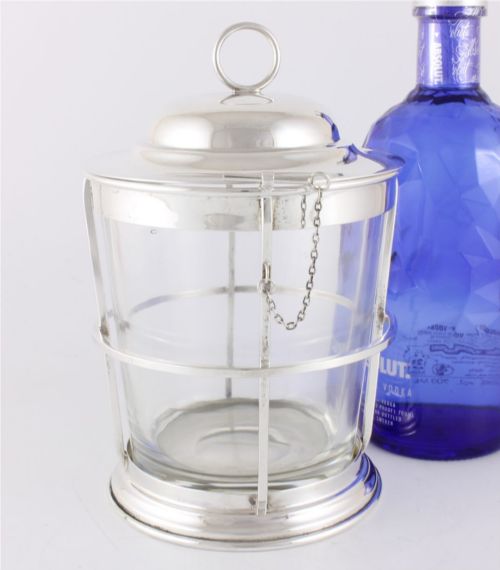
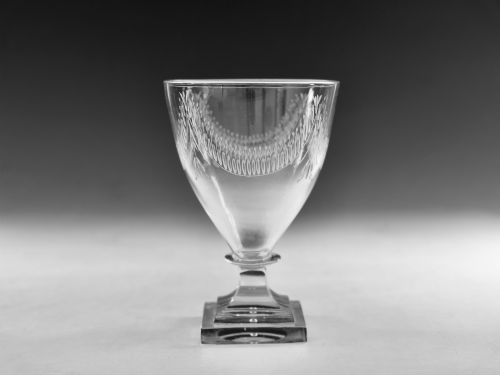
Decoration relied on skilled hand-engraving, star-etching, gilding, and enamel work applied directly to the clear surface. Many domestic jugs and claret jugs incorporate silver-plated or sterling silver collars, mounts, and handles.
Materials recorded across the inventory include clear lead glass, flint glass, coloured enamel overlays, and sterling silver mountings.
Assessing Quality
Quality rests upon the crispness of the cutting, the weight and purity of the metal, and the balance of the form. Finer examples display precise facets, hand-engraved detail with distinct depth, and stems shaped without distortion.
The distinction between standard domestic wares and superior pieces lies in the finishing touch, such as delicate gilding, well-proportioned baluster knops, and securely fitted silver mounts that complement the glass body.
Atelier of James Giles·PH Vogel·Moser Bohemian
The Clear Glass Wine Glasses Glossary
- Opaque twist
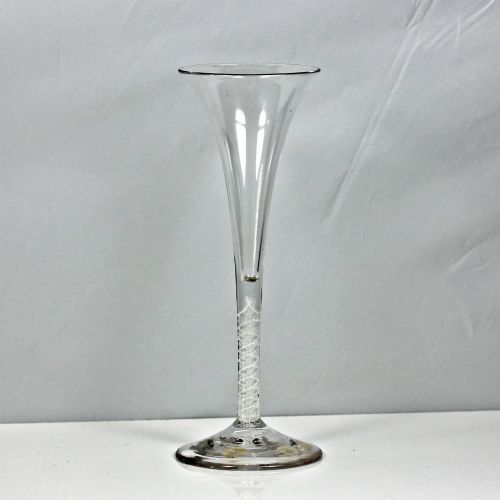
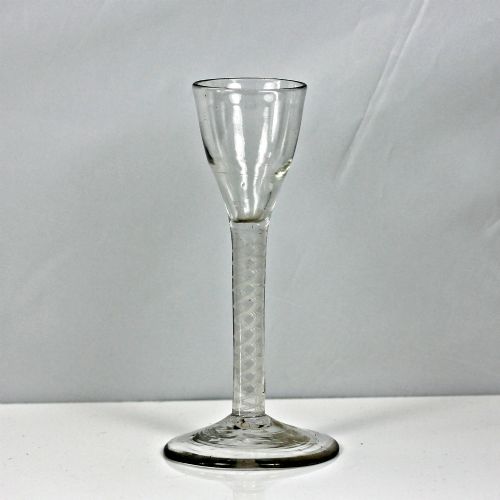
- A decorative stem type containing white or coloured enamel threads twisted through clear glass. This technique gained favour in Georgian drinking vessels.
- Rummer
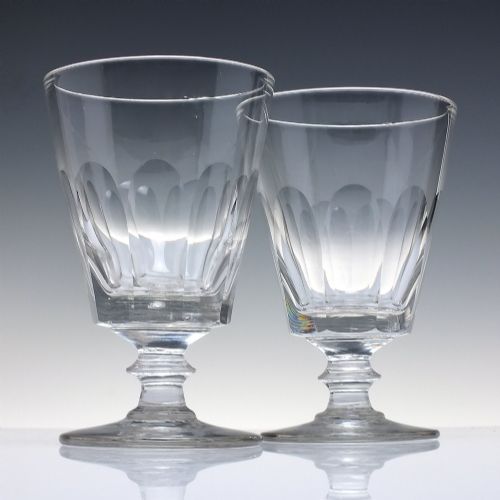
- A large, robust goblet used for wine, ale, or punch during the eighteenth and nineteenth centuries. These typically possess a short stem and a capacious bowl.
- Annular knop
- A ring-like swelling on the stem of a glass. It provides both a decorative accent and a secure grip.
- Pillar and prism cut
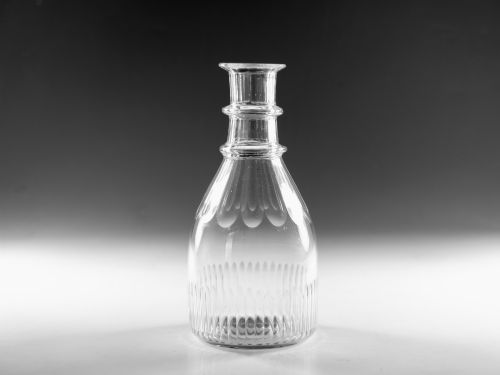
- A heavy geometric cutting style applied to jugs and decanters. It creates deep vertical facets that refract light strongly.
Clear Glass Wine Glasses: Frequently Asked Questions
How do I date an old wine glass?
Dating relies on identifying stem forms, bowl shapes, and manufacturing marks such as pontil scars. Eighteenth-century pieces often display thick lead metal and air twists, while later Victorian examples show press-moulding or deeper wheel-cuts.
Examining the wear beneath the foot base also helps determine age. Natural handling marks indicate genuine historical use rather than modern reproduction.
What is an opaque twist stem?
An opaque twist stem contains fine threads of white enamel encased within the clear glass stem. Makers produced these by twisting glass canes before drawing and forming the vessel.
This technique dates primarily to the Georgian period and remains a favourite among collectors of early English drinking glasses.
How were rummers used historically?
Rummers served as large, everyday drinking vessels for wine, beer, or punch during the Georgian and Victorian eras. Their generous bowl capacity suited communal tables and hearty domestic dining.
Unlike delicate cordial glasses, rummers were built with sturdy feet and thick walls to withstand regular use.
Are antique glass pieces safe for use?
Historic glass remains chemically stable and suitable for holding beverages, provided it receives careful hand washing. Sudden temperature changes should be avoided to prevent thermal shock in older lead metal.
Silver-mounted jugs require special attention to protect both the glass body and the historic metal collar during cleaning.