



Clear Glass Pedestal Bowl
A clear glass pedestal bowl brings height and sparkle to a room, rising on a solid foot to hold fruit or sweetmeats.
Clear Glass Pedestal Bowl
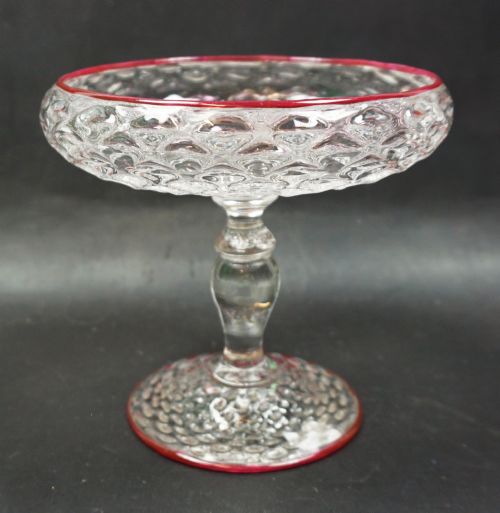
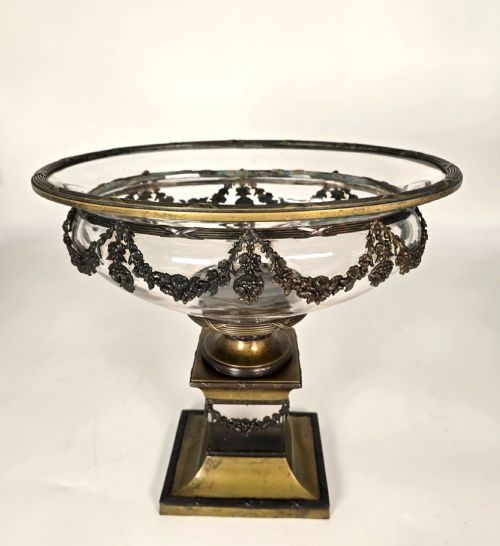
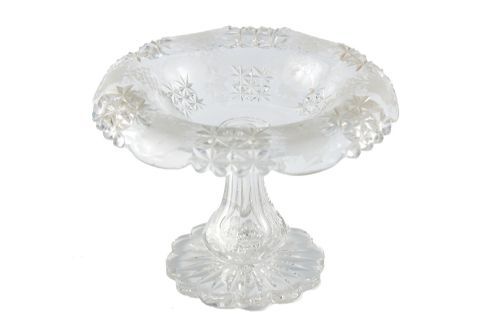
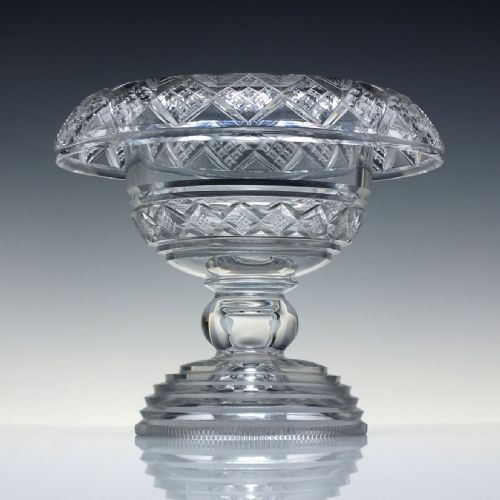
When you search for a clear glass pedestal bowl, you encounter a variety of raised vessels designed to draw the eye upwards on a table or sideboard. These pieces range from substantial Georgian Irish standing bowls and Victorian comports to slender Edwardian tazzas and French bronze mounted showpieces.
The form functions primarily as a decorative centrepiece or a serving dish for fruit and confectionery, elevated so that light passes through the heavy material. On this page, the selection spans distinct eras from the eighteenth century through the art deco period, offering different heights, bowl depths and foot designs.
Materials and construction
Makers utilised lead crystal, cut glass and plain blown glass, often combining heavy metal content with deep wheel cutting to refract light. Many examples incorporate intricate surface work such as hobnail patterns, honeycomb moulding, etching or hand gilding.
Several pieces integrate other materials entirely, mounting glass bowls in gilt bronze, Dutch silver or pairing them with contrasting colour accents like red cane decoration, yellow over crystal, or blue rims.
One sweet bowl comes with Dutch silver, proving that even candy deserved a remarkably secure architectural cage in the nineteenth century.
Assessing quality and character
The weight of the lead crystal and the crispness of the cutting dictate the distinction between standard vessels and exceptional examples. Sharp, deep facets that catch the light cleanly indicate superior workmanship compared to soft or shallow moulding.
Proportion also defines the better pieces, where the height of the stem balances the spread of the bowl above it. Additional artistry, such as delicate hand engraving, applied gold leaf, or secure metal mounts, elevates an ordinary utilitarian dish to a decorative work of art.
Graystan·WMF·Waterford
The Clear Glass Pedestal Bowl Glossary
- Tazza
- A shallow bowl or plate mounted on a pedestal stem and foot, traditionally used for serving fruit or small cakes.
- Comport
- A large standing dish used on the dining table during the nineteenth century for dessert courses.
- Hobnail pattern
- A decorative surface treatment featuring rows of small, pointed projections cut into the glass, resembling the hobnails on boots.
- Lead crystal
- Glass containing lead oxide, which increases the weight, refractive index, and clarity of the material.
- Turnover bowl
- A vessel with a rim turned or folded over during the hot-forming process to create a distinctive shaped edge.
Clear Glass Pedestal Bowl: Frequently Asked Questions
What is a pedestal bowl used for?
These elevated vessels serve primarily as centrepieces on dining tables, sideboards, or mantels. Historically, they held fruit, sweetmeats, or confectioneries for guests to take during dessert courses.
Today, they function well as standalone decorative objects or practical bowls for everyday display. Their raised profile lifts the contents into the light and creates a focal point in a room.
How do I tell an 18th century bowl from a Victorian one?
Eighteenth-century pieces, including Georgian Irish examples, often feature heavier metal with deeper, hand-cut facets and distinct pontil marks underneath the foot. They tend to have a darker, more tactile feel and irregular bubbles trapped within the metal.
Victorian and later pieces frequently display more uniform machine moulding, crisper acid etching, or elaborate stem shapes. Comparing the weight, the style of cutting, and the foot rim usually reveals the period of manufacture.
Are these bowls safe to use for food?
Many of these pieces were originally created as functional serveware for fruit, sweets, or sugar. Their durable glass and crystal construction means they remain physically capable of holding dry or fresh foods.
However, due to age, delicate engraved surfaces, or metal mounts, many modern owners choose to use them exclusively for display. Hand washing in lukewarm water is essential if you decide to use them for dining.
Why do some bowls have bronze or silver mounts?
Metal mounts added stability, status, and decorative contrast to the clear glass body. French makers in particular combined cast bronze with heavy glass to create imposing architectural centrepieces.
Dutch silver and gilt additions were also applied to elevate the status of the object for wealthy households. These mixed-media pieces combine the brilliance of crystal with the sculptural detail of metalwork.