


19th Century Glass Centrepiece
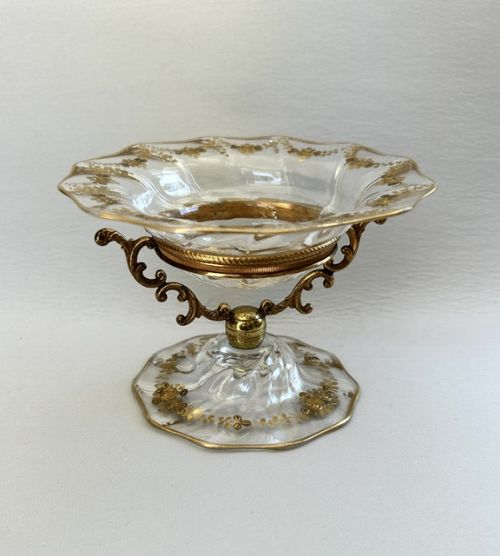
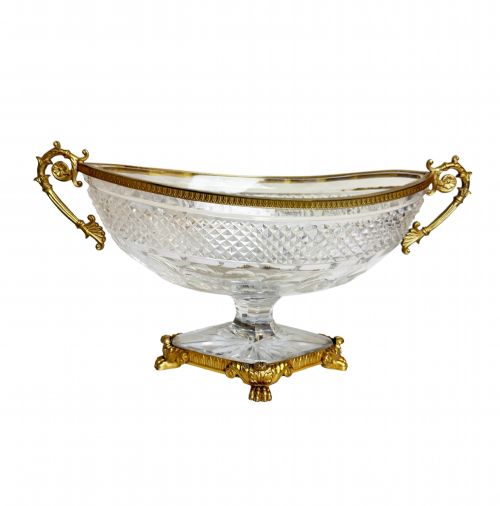
A 19th century glass centrepiece brings table decoration into focus with cut crystal, coloured glass and metal mounts.
19th Century Glass Centrepiece
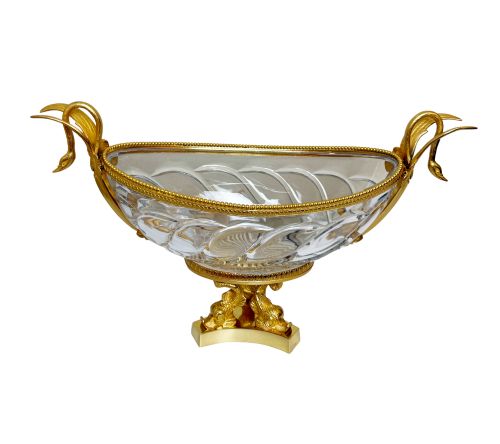
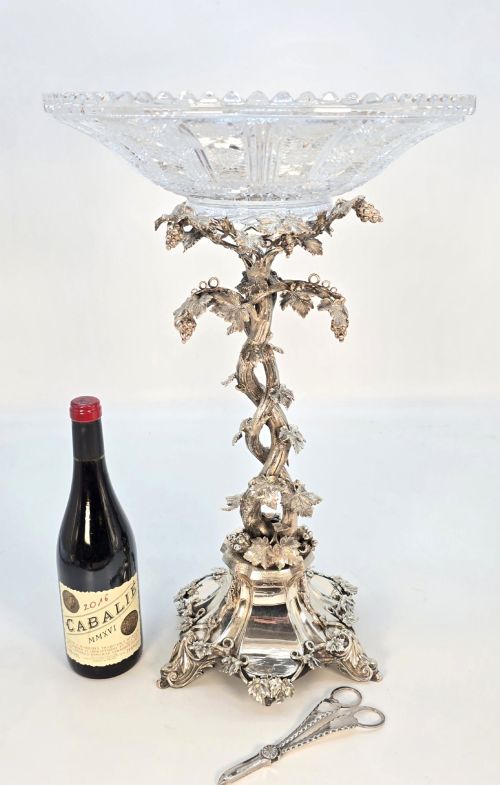
A 19th century glass centrepiece encompasses large pedestal bowls, epergnes, comports and fruit dishes designed to anchor a dining table or sideboard. These objects span periods from the Georgian era through the Victorian decades, with notable examples originating from English, French, and Bohemian workshops.
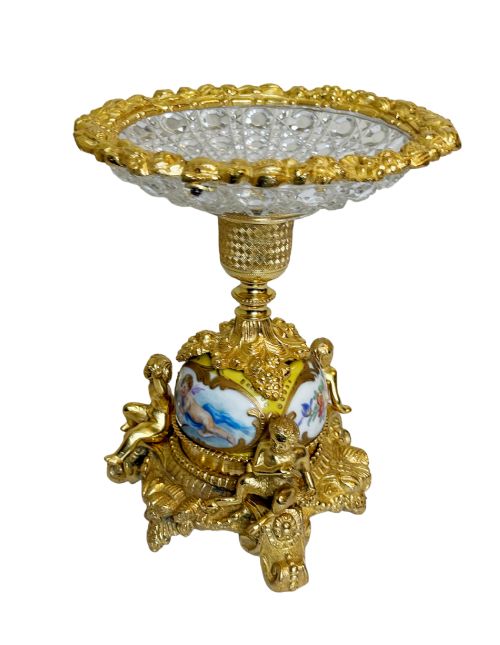
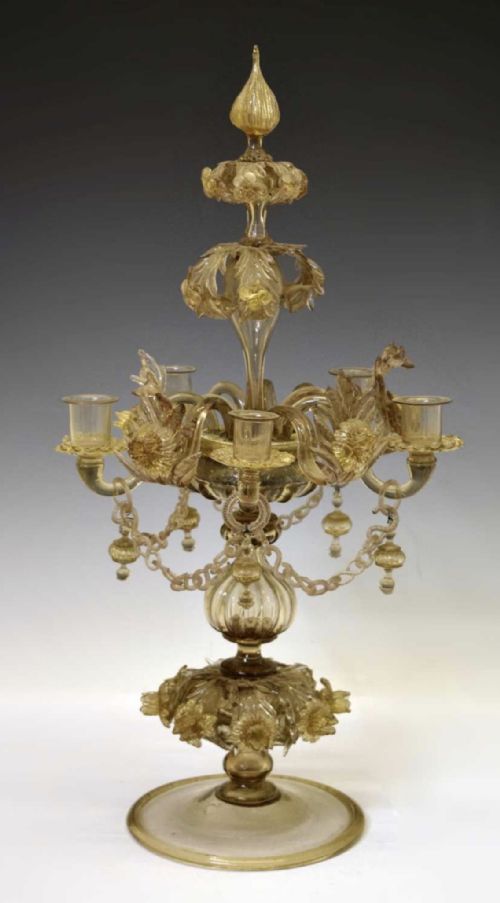
The pieces frequently combine blown or moulded glass vessels with structural supports in silver plate, gilt bronze, ormolu, and carved wood. Buyers encounter hobnail pattern bowls, ruby glass tazzas, and multi-tiered epergnes featuring detachable glass dishes or trumpet vases.
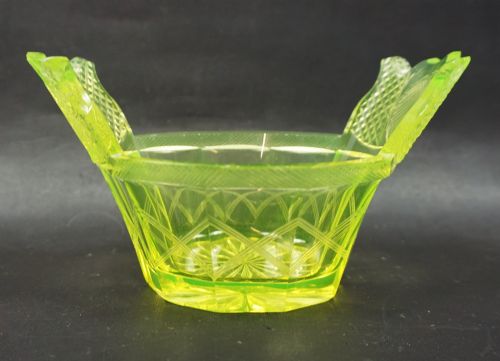
French empire and rococo revival designs sit alongside clean Bohemian Biedermeier pieces and Black Forest woodcarvings mounted with crystal. Cobalt blue, cranberry, uranium, and opaline glass provide strong visual variety across the selection.
Materials and technique
Makers utilised free-blown and mould-blown glass techniques to create heavy pedestals, bowls, and vases, subsequently applying wheel-cutting, engraving, and acid-etching to achieve intricate surface patterns. Overlay techniques allowed workers to cut through a coloured outer layer of ruby or cobalt glass to reveal clear crystal beneath.
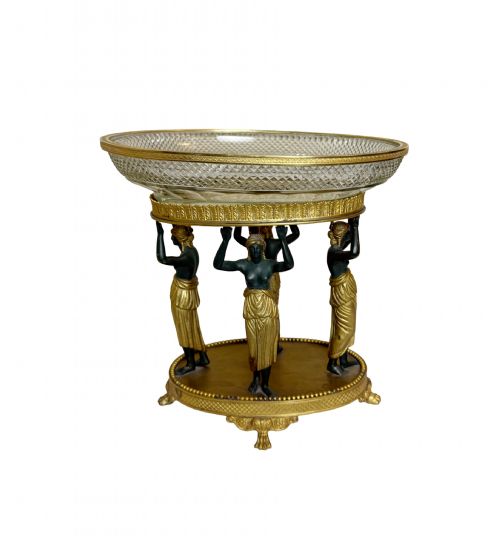
Metal components involve cast bronze, gilt bronze, ormolu, and silver plate, often worked into detailed figures such as cherubs, mermen, and naturalistic plant motifs. Carved wood supports, particularly from the Black Forest region, combine with high-grade Baccarat crystal to form composite epergnes and centrepieces.
Mermen and cherubs regularly hoist heavy crystal bowls aloft, apparently unfazed by the weight of Victorian dining.
Evaluating craftsmanship
Quality separates through the crispness of the glass cutting, the depth of the wheel engraving, and the weight and clarity of the crystal itself. Lead crystal and high-grade opaline or cranberry glass exhibit superior light refraction and resonance compared to standard utility glass.
The integration between the glass vessel and its metal mount determines the standing of a piece, where finely chased ormolu, substantial silver plate, and secure mounting brackets indicate superior workshop production. Pierced silver work and cast bronze detailing require precise alignment and finishing to maintain visual harmony.
Baccarat·Josiah Williams And Co·Wade Wingfield Wilkins·James Dixon·François Eugène Rousseau
The 19th Century Glass Centrepiece Glossary
- Tazza
- A shallow bowl or dish mounted on a stemmed foot, used for serving fruit or sweets on the dining table.
- Epergne
- A large table centrepiece featuring a central bowl with multiple branching arms, baskets, or trumpets attached for displays.
- Ormolu
- Gilt bronze mounted onto furniture and decorative objects, created by applying a mercury and gold amalgam to cast bronze.
- Comport
- A pedestal bowl or dish raised above the table surface, typically utilised for dessert courses.
- Hobnail
- A raised, faceted glass pattern resembling the hobnails used on heavy boots, catching the light across the bowl surface.
19th Century Glass Centrepiece: Frequently Asked Questions
How were centrepieces used?
These pieces sat in the middle of dining tables during formal meals, holding fruit, sweets, or floral displays to impress guests.
Servants moved them between courses or rearranged the detachable trumpets and baskets depending on the food served.
What is cranberry glass?
Cranberry glass gets its rich pink-red hue from the addition of gold chloride to the molten glass mixture during production.
Victorian makers favoured this material for epergnes and bowls due to its warm, glowing tone under candlelight.
How do I clean metal mounts?
Metal mounts require gentle dusting with a soft cloth to protect silver plate or gilt bronze surfaces from abrasive damage.
Moisture must be kept away from glass-to-metal joins to prevent corrosion of adhesives or pins holding the piece together.
Are glass liners original?
Silver pierced baskets and frames often contain fitted glass liners designed to hold water or loose items safely.
Matching liners show minimal wobbling within the frame and share the same age-related wear as the outer metal structure.