




Engraved Clear Glass Vessel
An engraved clear glass vessel carries the history of centuries in its cut and wheel-carved motifs, offering a tangible link to Georgian and Victorian drinking and display traditions.
Engraved Clear Glass Vessel
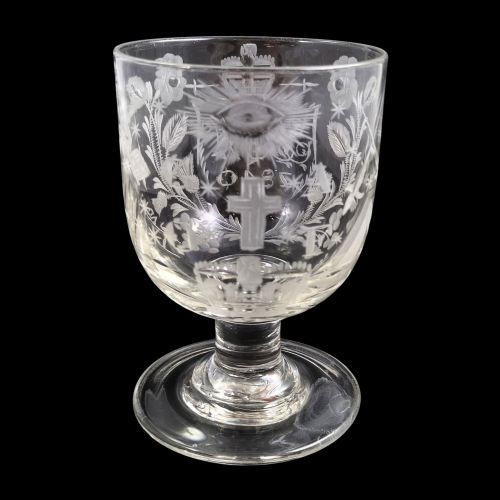
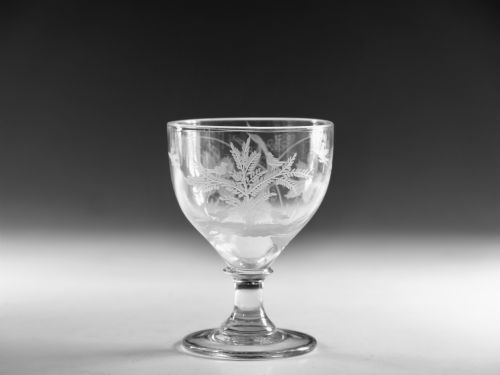
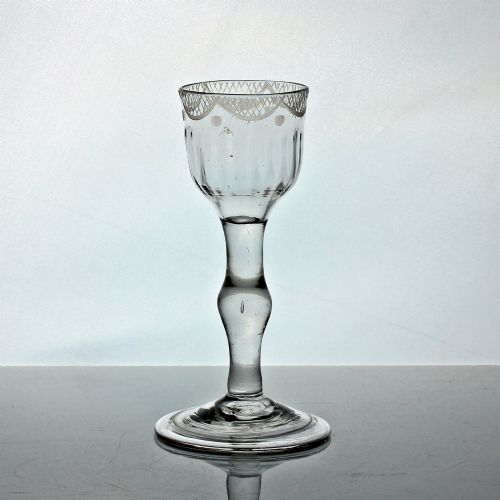
An engraved clear glass vessel encompasses a diverse range of historic drinking and display items found on this page, stretching from eighteenth-century wine glasses and rummers to nineteenth-century vases, decanters, and beakers. Buyers searching this phrase encounter substantial lead-glass rummers, delicate twist-stem wine glasses, and large ceremonial beakers spanning the Georgian and Victorian eras.
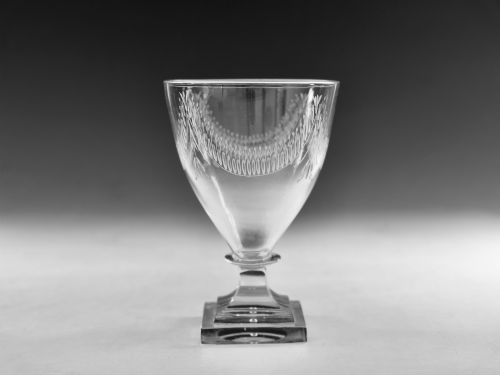
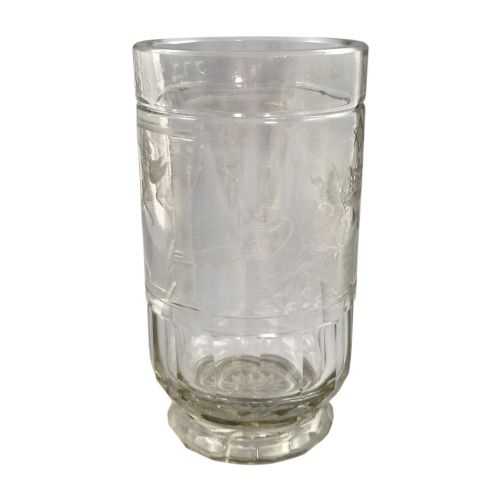
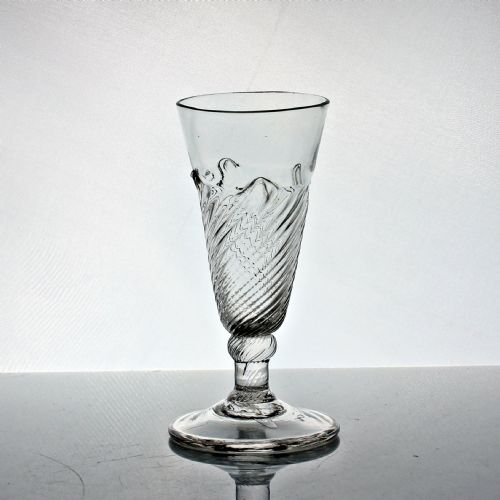
The selection ranges from modest medicine glass measures to massive Regency table rummers, Bohemian ceremonial pieces, and wheel-engraved vases depicting figures such as Socrates. Forms vary from square-based rummer goblets and ovoid bowls to claret jugs and balustroid ratafia glasses, representing centuries of European and English glassmaking skill.
How they were made
These vessels utilise clear glass, lead glass, lead crystal, and flint glass, shaped through blowing and moulding techniques before receiving decorative treatment. Makers applied surface ornamentation using wheels for intaglio engraving, alongside contrasting details in gold leaf and opaque enamel.
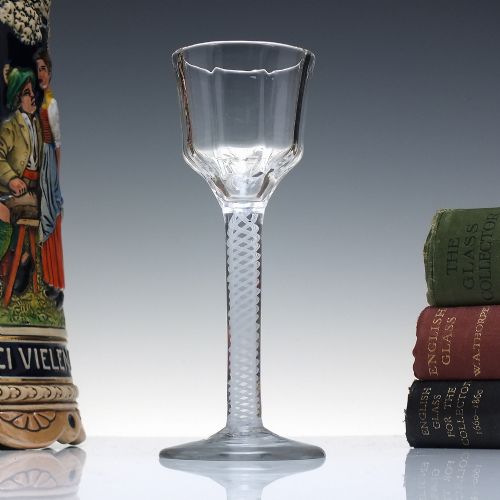
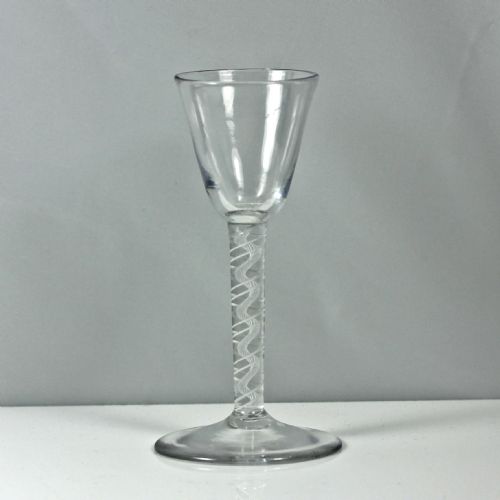
Vessels feature specialised construction traits such as lemon squeezer bases, nut-moulded bowls, and twisted stems formed by air or opaque enamel threads trapped within the glass. Metal mounts and silver plating appear on select jugs and decanters, combining glass bodies with structural hardware.
Object forms documented on the site include wine glasses, claret jugs, decanters, medicine glass measures, and ceremonial beakers.
What varies in quality
Quality rests upon the depth, precision, and complexity of the wheel engraving, distinguishing simple surface etching from deeply carved motifs like hop and barley patterns or philosophical portraits. The clarity and weight of the underlying lead crystal or flint glass further determine the caliber of a piece.
Proportion and form execution separate standard utility items from masterworks, evident in the balance of balustroid stems, the sharpness of square and lemon squeezer bases, and the integration of gilding and enamel work.
The Engraved Clear Glass Vessel Glossary
- Rummer
- A large drinking glass popular in the eighteenth and nineteenth centuries, often featuring a stout bowl on a short stem and foot. These vessels were utilised for ale, wine, or punch.
- Balustroid stem
- A historic glass stem form thickened in the upper portion to resemble an architectural baluster. This style is frequently observed on eighteenth-century wine glasses and ratafia glasses.
- Lemon squeezer base
- A square, moulded glass foot with indented corners that mimics the shape of a domestic juicer. Such bases provide stability to heavy Georgian rummer goblets.
- Opaque twist
- A decorative stem feature containing white or coloured enamel threads pulled into spiral patterns within the clear glass. This technique defines specific eighteenth-century wine glass types.
- Intaglio
- A technique where designs are carved into the glass surface using small rotating wheels. It creates the detailed pictorial and botanical scenes seen on Victorian vases and beakers.
Engraved Clear Glass Vessel: Frequently Asked Questions
How do I date an antique glass vessel?
Dating relies on observing form, manufacturing marks, and decorative styles characteristic of periods like the Georgian and Victorian eras. Pontil marks on the base and the composition of lead glass provide further chronological indicators.
Changes in stem construction, such as the transition from plain stems to air and opaque twists, help narrow the decade of manufacture. Comparing bowl shapes and engraving subjects against documented examples confirms the likely age.
What were rummer glasses used for?
Rummers served as robust drinking vessels for ale, beer, wine, and punch during the Georgian and Victorian periods. Their generous capacity made them tavern and dining table staples.
Heavy lead-glass construction allowed these vessels to withstand daily use. Their large surfaces also provided ample space for detailed wheel engraving depicting hops, barley, or Masonic symbols.
What is the difference between flint glass and lead glass?
Flint glass originally contained high amounts of silica and lead oxide, giving it exceptional brilliance and weight. Over time, the term became synonymous with lead crystal.
This dense material allowed glassmakers to cut deep facets and fine engravings without fracturing the vessel. It produces a clear, resonant ring when tapped.
Are engraved glass vases fragile?
Historic glass vessels require careful handling due to their age and material composition. While lead glass is relatively durable, thin walls and applied handles remain vulnerable to impact.
Displaying pieces away from high-traffic edges prevents accidental knocks. Supporting the base when lifting ensures safe transport.