

Clear Glass Carafe Jug
A clear glass carafe jug brings sparkle to a table, combining utilitarian function with the fine craftsmanship of past decades.
Clear Glass Carafe Jug
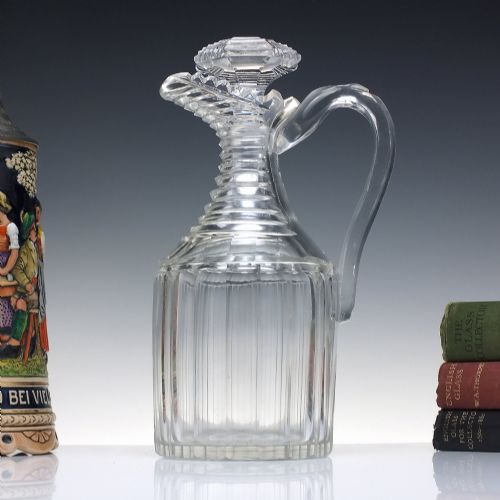
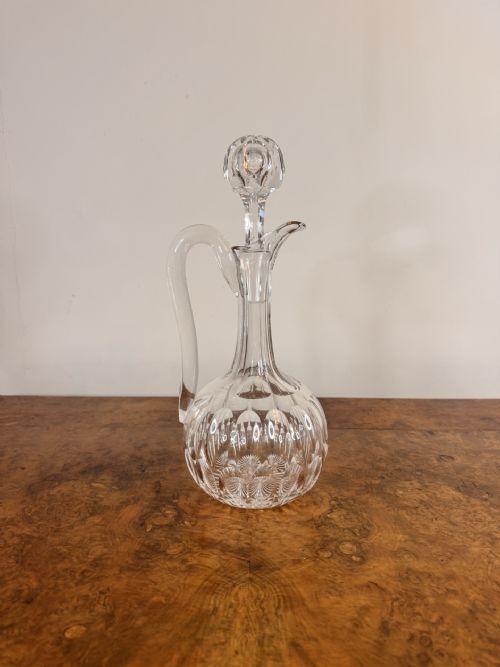
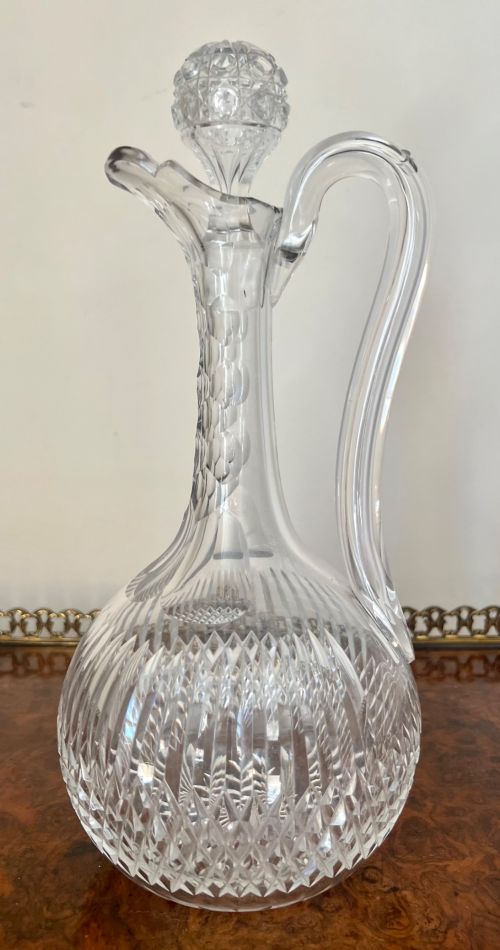
When searching for a clear glass carafe jug, buyers encounter vessels designed for serving wine, water, claret, or whisky at the dining table. These items span periods from the Victorian and Edwardian eras through to the Art Deco movement and mid-century French workshops.
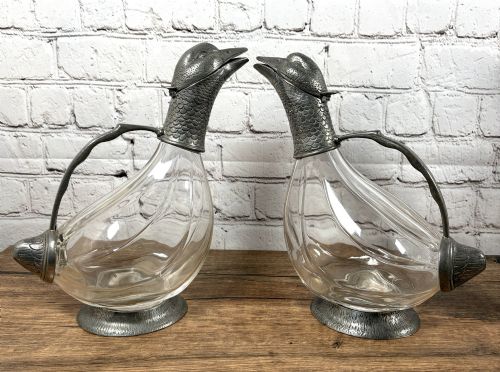
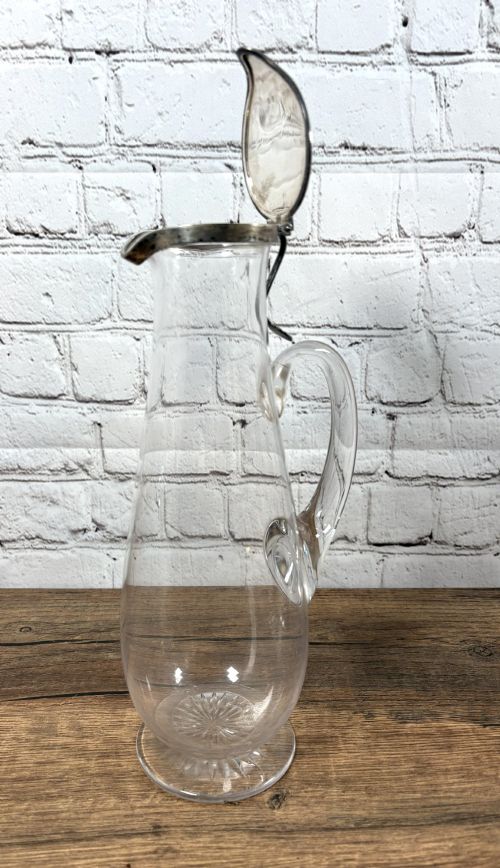
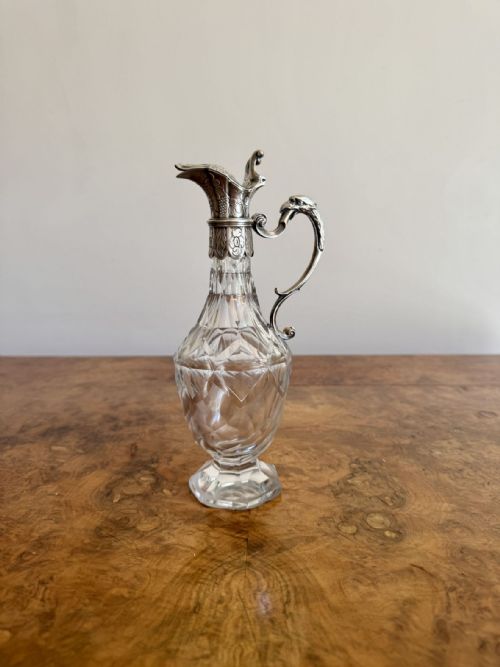
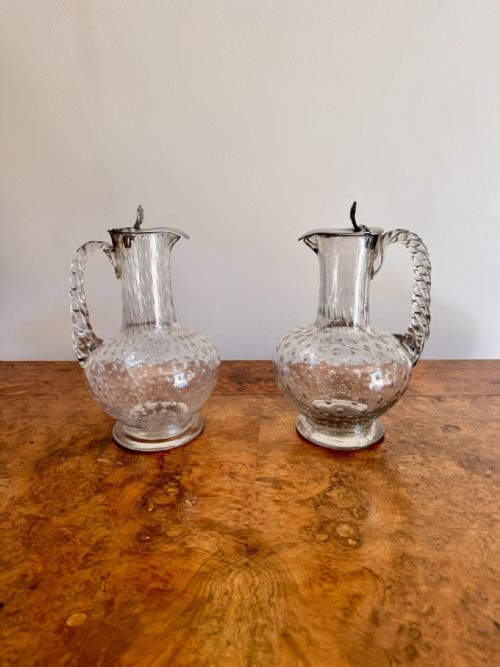
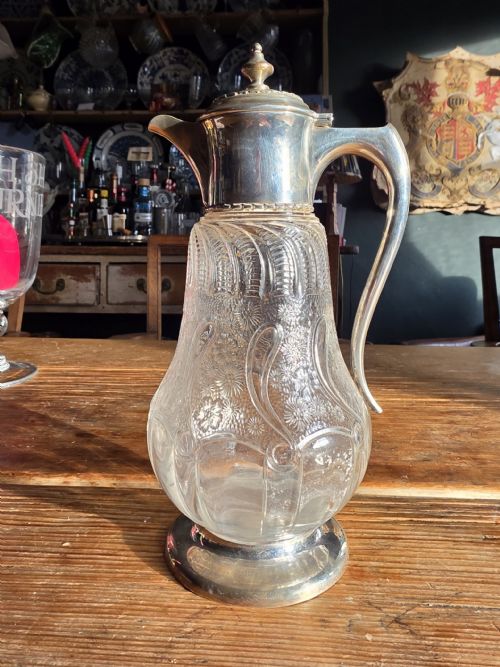
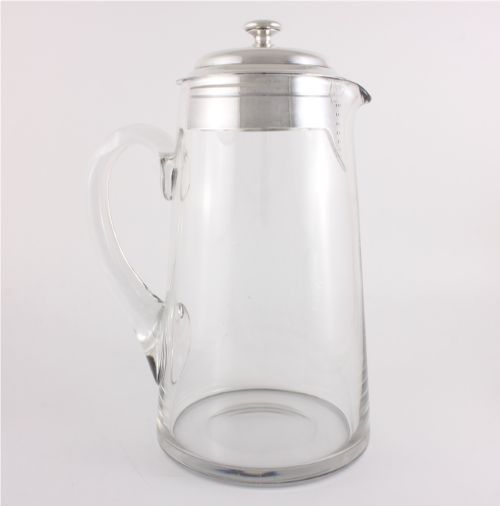
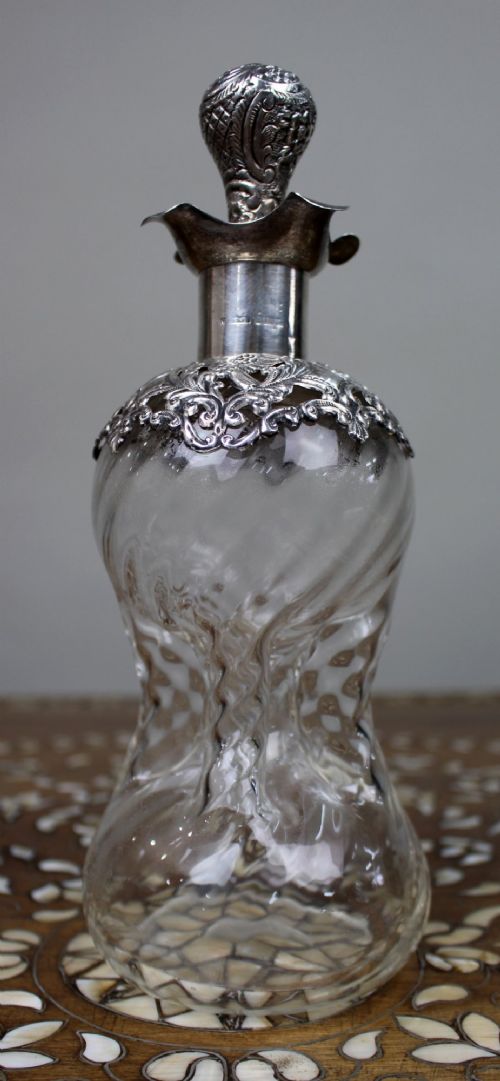
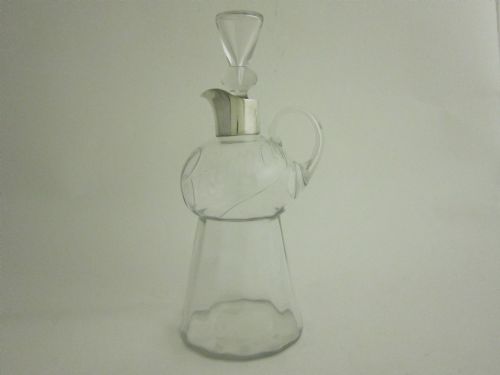
The selections on this page encompass various forms including claret jugs, ewers, decanters, pitchers, and whisky noggins. Common configurations feature transparent glass bodies paired with mounts, handles, and lids made from sterling silver, silver plate, or pewter.
English and continental makers dominate the offerings, showcasing styles from ornate nineteenth-century engraving to clean modernist lines. Buyers most frequently meet Edwardian and Victorian examples incorporating cut glass, lead crystal, and silver-plated hardware.
How they were made
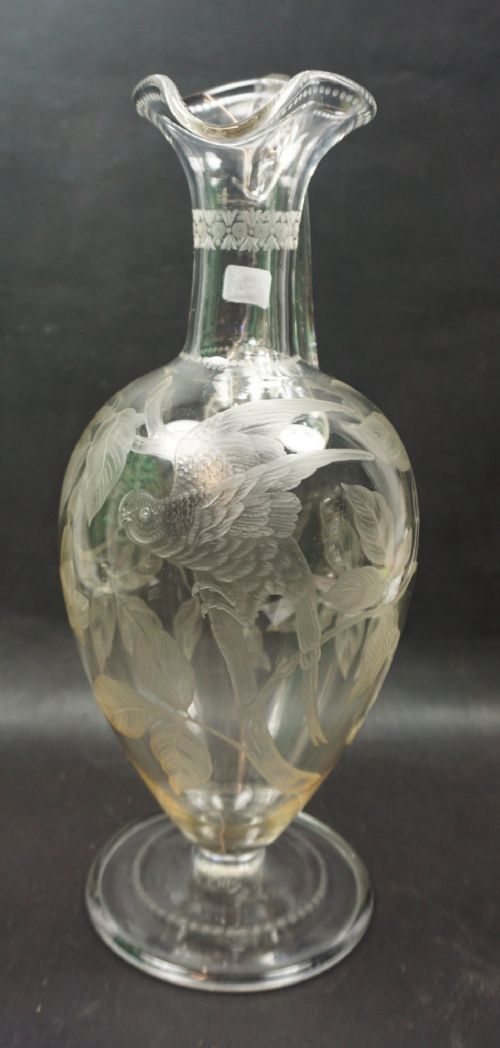
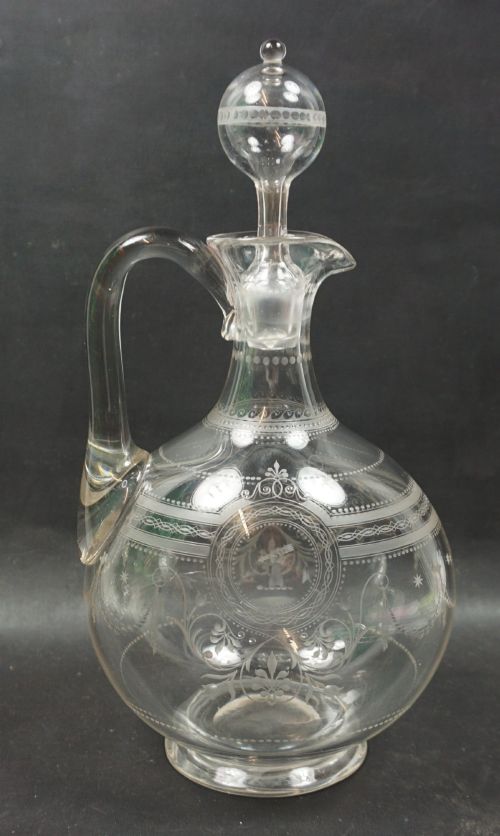
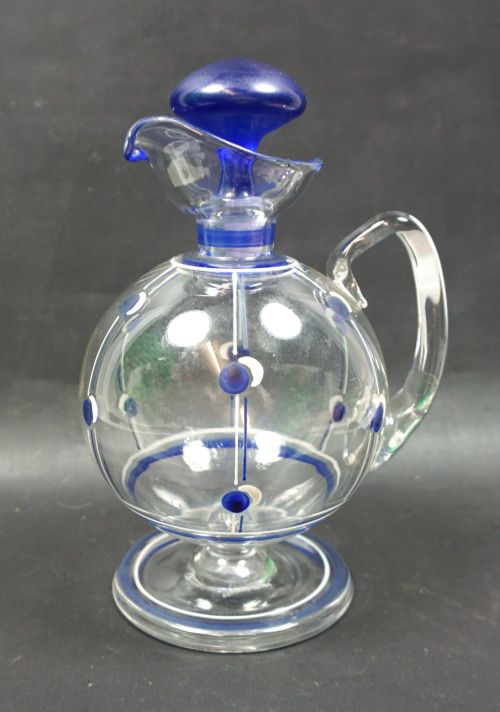
Vessels are constructed primarily from blown or moulded glass, utilising techniques such as deep cutting, overshooting, and acid etching to create surface patterns. Artisans also applied coloured glass overlays, blue enamel decoration, and gilding to enhance the visual depth of the transparent material.
Metal mounts, collars, and hinged lids required specialist silversmithing and metalworking skills. Pewter, white metal, silver plate, and sterling silver components were cast, chased, or engraved before being securely fitted to the glass necks.
Clear Glass Carafe Jug Retail Price Guide 2026
Typical asking prices for clear glass carafe jug among the pieces listed under this phrase on Sellingantiques today, from the lower quarter to the upper quarter. They describe what is for sale here now, not the wider market.
Listings feature items spanning the Victorian, Edwardian, Art Nouveau, and Art Deco periods, utilising cut glass, sterling silver, and silver plate.
What varies in quality
The distinction between standard items and superior pieces rests on the crispness of the glass cutting and the weight of the metal mounts. Heavy lead crystal with precise geometric facets reflects light differently than lightweight moulded glass.
Artistry in decoration separates basic vessels from exceptional examples, seen in finely hand-engraved motifs like parrots, dolphins, and family crests. Maker attribution and the substantial gauge of the silver or silver-plated fittings further elevate a piece.
William Comyns·Christofle·Mappin and Webb·Richardsons·Hukin and Heath
The Clear Glass Carafe Jug Glossary
- Claret jug
- A specialised vessel created for serving red wine at the table. These typically feature a handle, a pouring spout, and a hinged metal lid.
- Ewer
- A large jug with a wide spout and a decorative handle, historically used for pouring water. Victorian and Edwardian examples often combine cut glass bodies with silver mounts.
- Whisky noggin
- A small spirit jug designed for personal use, usually supplied with a matching silver-mounted stopper and a star-cut base.
- Overshot glass
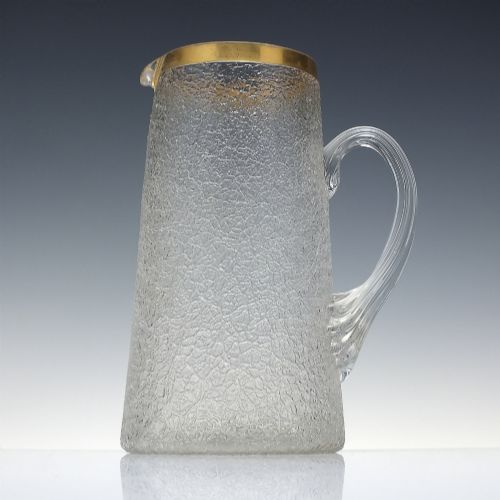
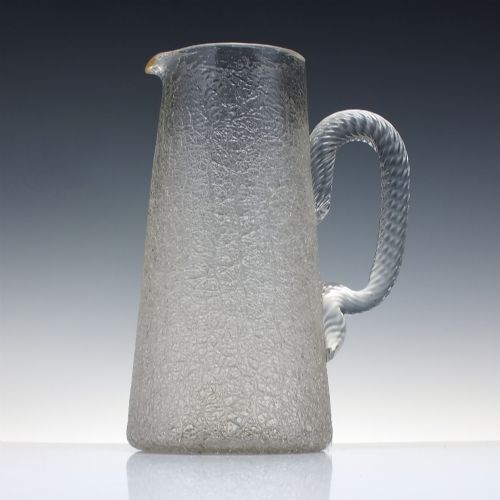
- A technique where fine glass threads are trailed across the surface of a blown vessel to create texture and a frosted appearance.
- Lead crystal
- A high-clarity glass containing metal oxide that increases refractive index and weight, allowing for deep, sharp wheel-cutting.
Clear Glass Carafe Jug: Frequently Asked Questions
What is a claret jug used for?
These vessels were traditionally filled from a larger wine bottle and placed on the dining table for serving claret. The hinged lid kept the contents fresh and protected during meals.
Today, they function both as decorative dining accessories and as practical containers for serving water or wine to guests.
How do I distinguish Victorian from Edwardian pieces?
Victorian examples often display heavier, more ornate ornamentation with deep relief cutting and elaborate floral or heraldic engraving. The mounts frequently feature robust silver-plate or substantial sterling silver work.
Edwardian pieces tend to adopt lighter proportions and cleaner outlines, reflecting evolving aesthetic preferences at the turn of the twentieth century.
What is an ice tube in a lemonade jug?
An ice tube is a hollow metal cylinder suspended from the rim of the jug down into the liquid. It allowed hosts to chill beverages like lemonade without diluting the contents as ice melted.
This practical innovation appears frequently in quality nineteenth-century silver-plated and glass pitchers.
Are silver-plated mounts less desirable than solid silver?
Silver plate was widely used by premier manufacturers of the nineteenth and twentieth centuries to produce durable and elegant tableware. The quality of the underlying base metal and the thickness of the plating matter more than the presence of hallmarks alone.
Many fine antique vessels feature silver-plated mounts by esteemed makers without diminishing their appeal to collectors.