

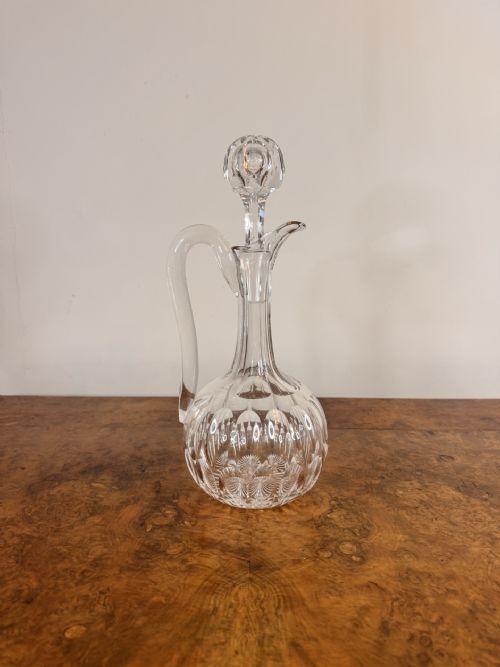
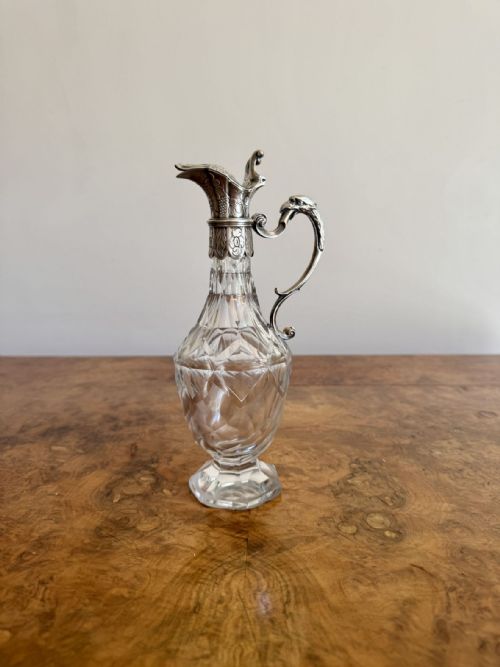


Clear Crystal Wine Ewer
A clear crystal wine ewer brings brilliance to a table, combining faceted glass with silver plate or white metal mounts.
Clear Crystal Wine Ewer
A clear crystal wine ewer serves as a sophisticated vessel for pouring wine at the dining table, taking forms such as claret jugs, serving jugs, and dessert wine vessels. These pieces combine translucent vessels with decorative mounts, fulfilling both a practical pouring function and an ornamental role.
The selection centres primarily on Victorian and Edwardian examples, alongside nineteenth-century Continental pieces. Makers and workshops from England and France produced these serving jugs during the nineteenth and early twentieth centuries, spanning the Victorian, Edwardian, and French Second Empire styles.
Buyers will most frequently encounter cut glass ewers from the Edwardian and Victorian periods, often fitted with silver plate or white metal mounts. Forms range from straightforward glass pitchers to elaborately decorated vessels featuring latticinio decoration or gold leaf accents.
How they were made
Glassmakers utilised clear glass, crystal, and lead crystal, shaping the vessels through blowing and pressing before applying intricate cut glass patterns. These deep facets catch the light, enhancing the brilliance of the material.
Metalworkers added mounts in silver plate and white metal to provide secure handles, hinged lids, and decorative collars. Some continental pieces incorporate specialised techniques such as white glass latticinio decoration or delicate applications of gold leaf.
Clear Crystal Wine Ewer Retail Price Guide 2026
Typical asking prices for clear crystal wine ewer among the pieces listed under this phrase on Sellingantiques today, from the lower quarter to the upper quarter. They describe what is for sale here now, not the wider market.
Some nineteenth-century French makers concealed tiny signatures within the crystal facets, rewarding close inspection with a hidden maker detail.
What varies in quality
The crispness and depth of the cut glass decoration distinguish finer examples from standard production, as deeper and more precise cutting requires greater skill from the artisan. The weight and clarity of the crystal itself also indicate the standard of manufacture.
The quality of the metal mounts, whether silver plate or white metal, influences the overall character of the ewer. Securely fitted hinges, well-balanced handles, and refined casting on the collars demonstrate superior craftsmanship.
Baccarat
The Clear Crystal Wine Ewer Glossary
- Crystal
- A high-clarity glass often containing lead oxide, which increases the weight, refractive index, and brilliance of the material. This allows for deep and sharp cutting.
- Ewer
- A large jug with a wide spout and a handle, traditionally used for holding and pouring wine or water at the table. Victorian and Edwardian examples frequently feature metal mounts.
- Latticinio
- A decorative glass technique involving fine opaque white glass threads twisted within the clear crystal body. This method originated in Murano and was utilised in nineteenth-century French production.
- Silver Plate
- A thin layer of silver bonded to a base metal, commonly utilised for the handles, lips, and hinged lids of serving ewers. It provided the appearance of solid silver at a more accessible cost.
- White Metal
- An alloy of various non-precious metals used for mounts and fittings on glassware. It offered durability and a bright finish suitable for nineteenth-century serving vessels.
Clear Crystal Wine Ewer: Frequently Asked Questions
What is a wine ewer?
A wine ewer is a pouring vessel designed to hold and serve wine at the dining table, featuring a handle and a shaped spout. These pieces combine glass bodies with decorative metal mounts.
Historically utilised during formal meals, they allowed hosts to decant and serve wine with elegance. Today, they function as decorative dining accessories.
How do I clean a crystal ewer?
Cleaning requires warm water and mild detergent, avoiding harsh abrasives that could scratch the glass surface or damage metal mounts. Rinsing thoroughly prevents water spots from forming on the clear crystal.
For pieces with narrow necks, specialised cleaning brushes help reach interior surfaces. Metal mounts should be polished gently with appropriate cloths to preserve the finish.
How do I date a glass ewer?
Dating relies on stylistic markers, cutting techniques, and the composition of the metal mounts. Victorian examples often display heavier, deep-cut patterns, while Edwardian pieces can exhibit lighter proportions.
Maker marks, where present on the metal mounts, provide definitive evidence of origin and period. Comparing the form to documented nineteenth-century styles helps narrow the timeframe.
Can I use these for serving wine?
These ewers remain fully functional vessels suitable for serving wine or water during dining occasions. Ensuring the interior is clean makes them ready for table use.
Careful handling is advised due to the delicate nature of nineteenth-century crystal and the historical silver-plated mounts. Hand washing preserves both the glass and the metal components.