
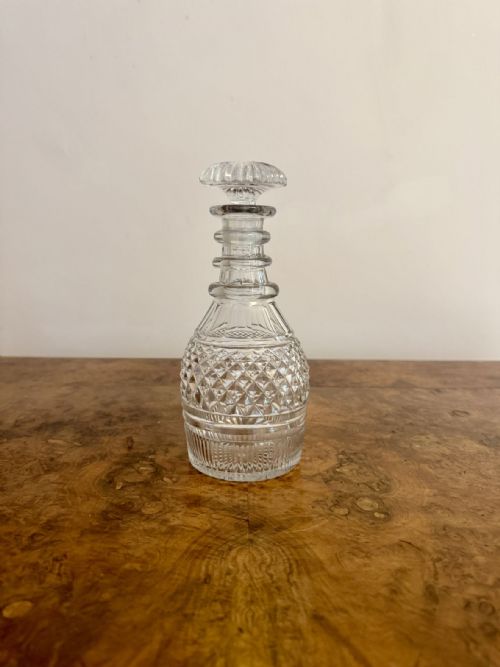
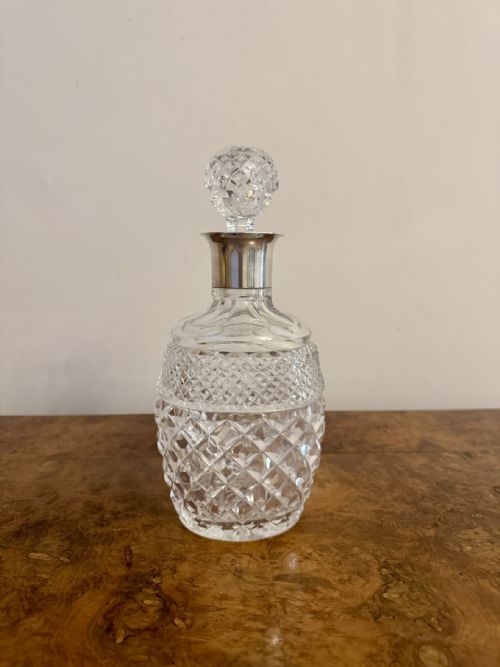
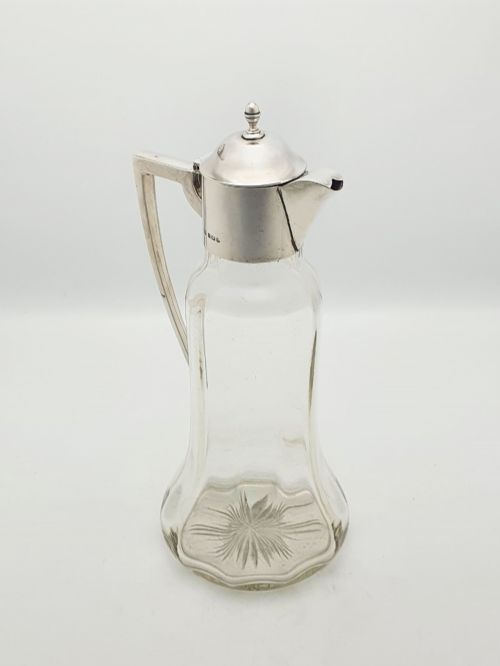
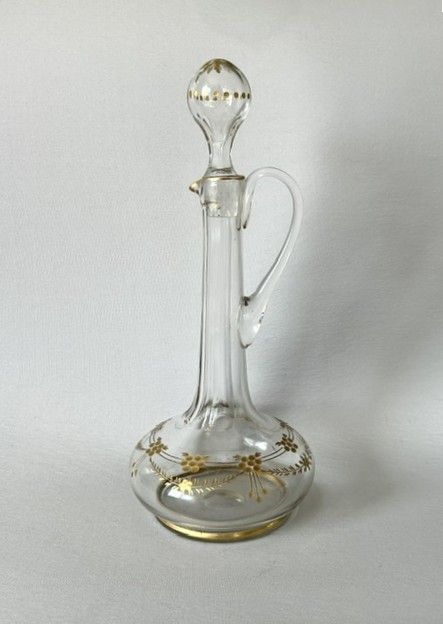
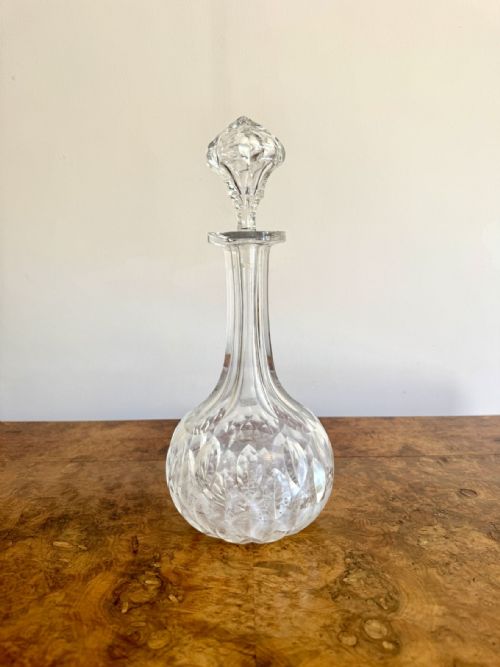
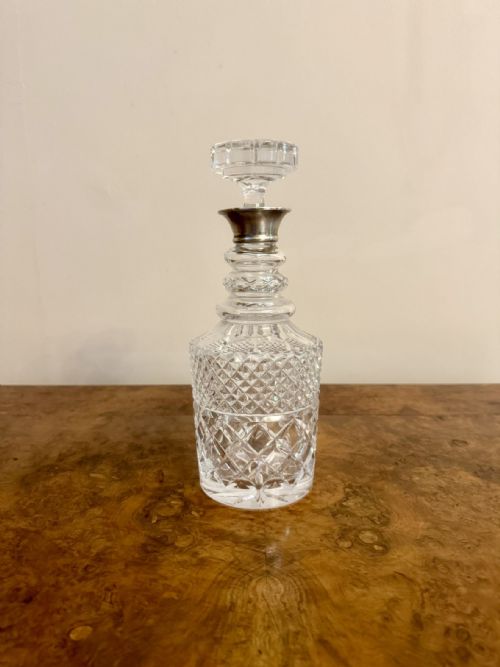
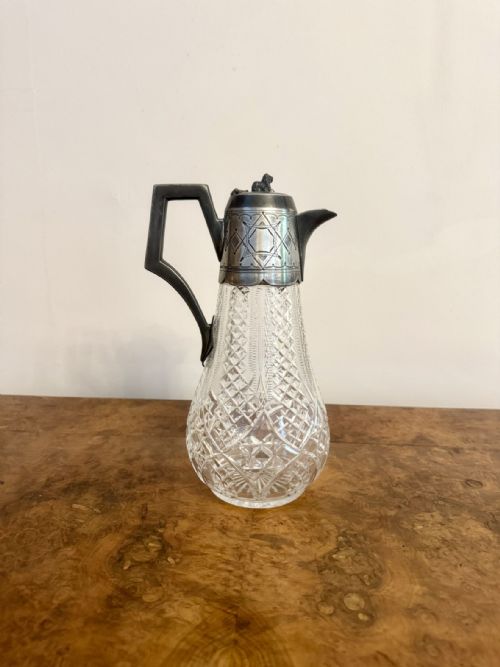
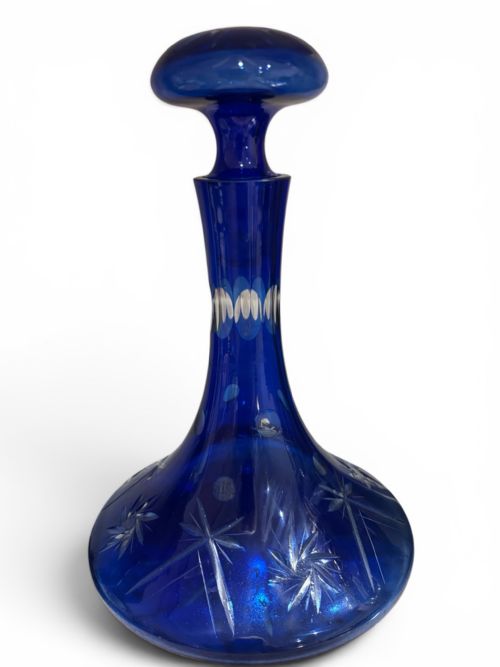
Clear Cut Glass Carafe
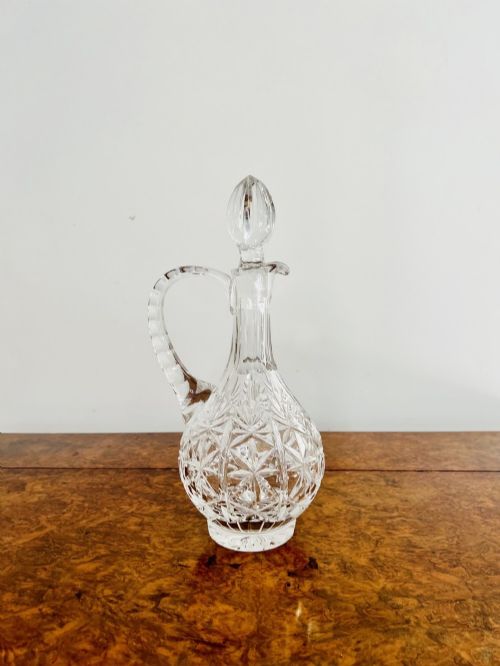
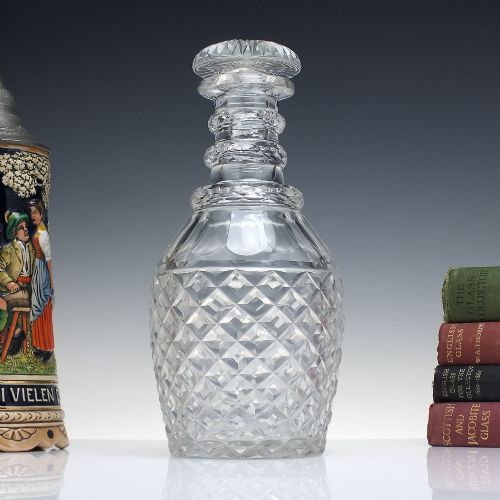
A clear cut glass carafe brings weight and sparkle to the table, uniting Georgian pillars with Edwardian silver collars.
Clear Cut Glass Carafe
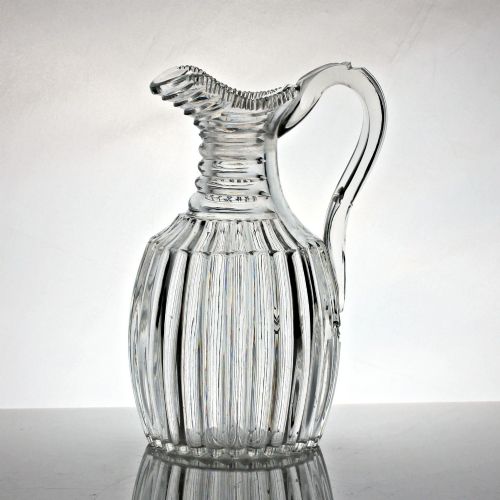
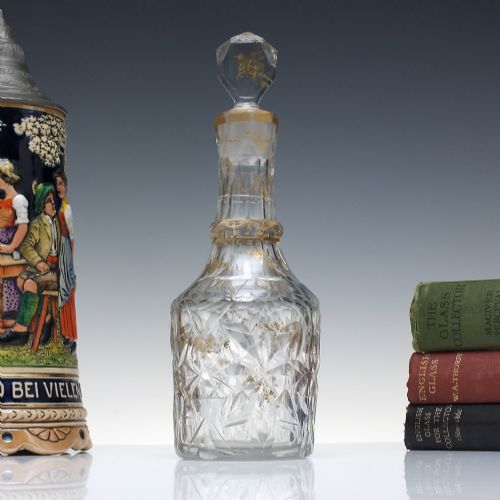
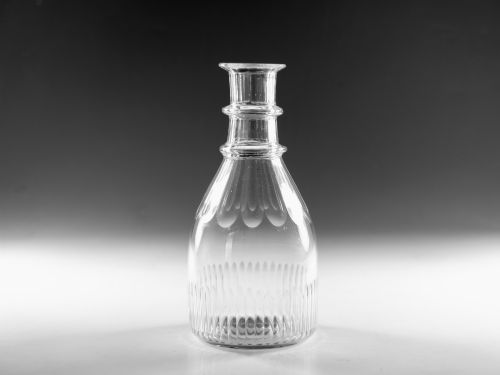
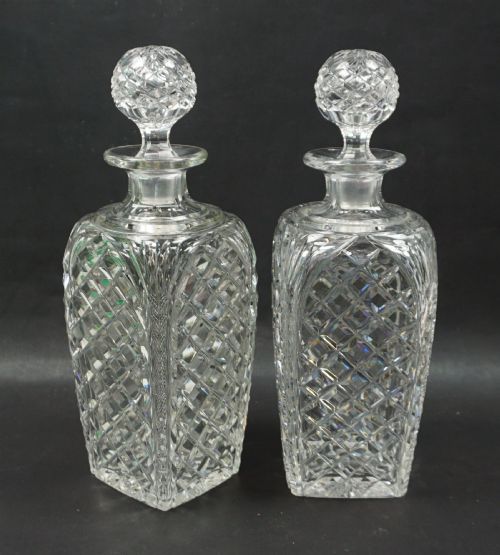
When you search for a clear cut glass carafe, you encounter vessels designed for serving water, wine, claret, and spirits. These functional containers range from simple Georgian jugs to ornate Victorian wine decanters and Edwardian spirit bottles.
The pieces appearing on this page span several eras, with Edwardian examples occurring most frequently alongside Victorian, Georgian, and Regency productions. Makers across England, Ireland, and Bohemia shaped these serving vessels into tapered squares, bells, and pillars.
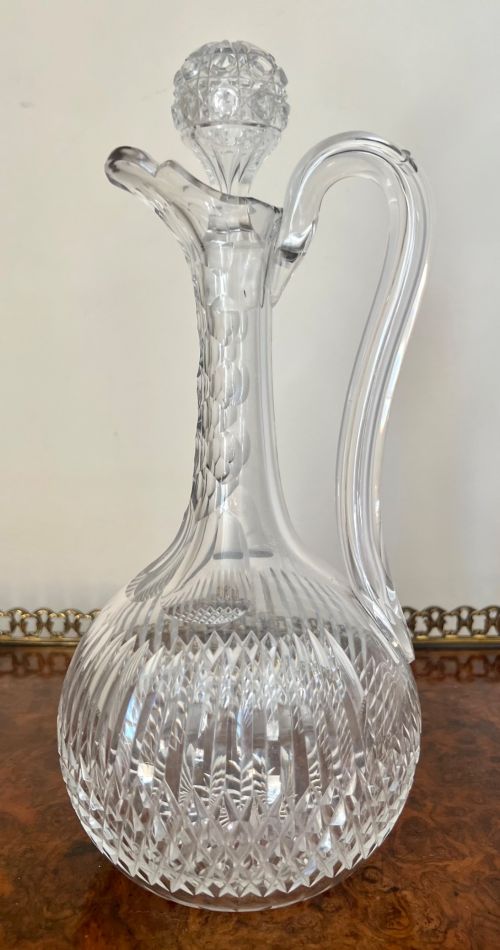
Forms vary widely from straightforward water pitchers to elaborate claret jugs fitted with silver plate, sterling silver collars, or internal ice tubes. Many pieces integrate matching tumblers or feature heavy lead crystal construction designed to refract light.
Materials and manufacture
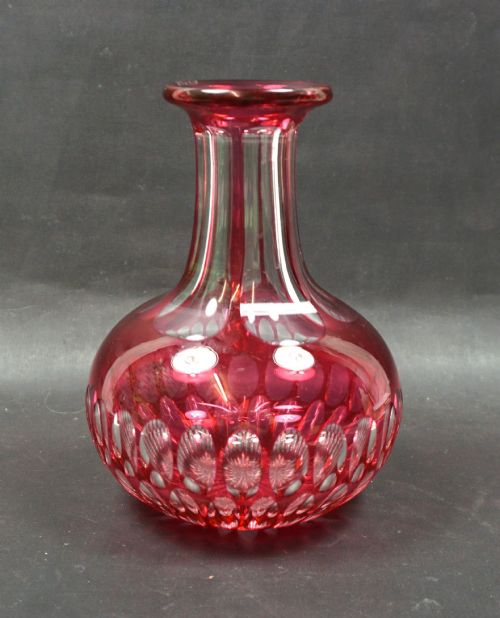
The primary material is heavy lead crystal or clear glass, sometimes overlaid with cranberry, amethyst, cobalt, or green glass before cutting. Artisans shaped these vessels by blowing molten glass into moulds or free-blowing before executing deep surface cuts.
Some Victorian hosts deployed internal metal ice tubes within their lemonade jugs, ensuring the drink stayed chilled without dilution.
Judging quality in cut glass
The distinction between ordinary and superior pieces rests on the crispness of the wheel-cut facets and the weight of the metal. Sharp, deep cutting creates distinct refraction, whereas softer facets indicate rushed production or later smoothing.
Proportion and symmetry define the better examples, particularly in how the body relates to the neck and stopper. The integration of metal mounts, such as securely fitted silver collars and functioning hinged lids, further separates standard vessels from finer workshop output.
Atelier of James Giles·Mappin & Webb
The Clear Cut Glass Carafe Glossary
- Carafe
- An open-topped glass vessel traditionally used for serving water or wine at the table. These pieces often lack stoppers and may accompany a matching drinking tumbler.
- Claret jug
- A specialised pouring vessel designed for red wine, typically featuring a handle, a hinged metal lid, and a spout. Many surviving examples date from the Victorian and Edwardian periods.
- Lead crystal
- Glass containing a high proportion of lead oxide, which increases the weight, clarity, and refractive index of the material. This composition allows for deeper and sharper wheel-cutting.
- Pillar and prism cut
- A decorative surface treatment featuring vertical columns and angled facets that catch and multiply light. This style is frequently observed on Georgian and Regency drinking vessels.
- Silver plate
- A layer of silver fused to a base metal foundation, commonly utilised for the handles, collars, and hinged lids of Edwardian and Victorian serving jugs.
Clear Cut Glass Carafe: Frequently Asked Questions
What is the difference between a carafe and a decanter?
A carafe generally functions as an open-topped vessel meant for immediate table service, often accompanying a glass tumbler.
Decanters usually include a fitted stopper to preserve the contents of wine or spirits over a longer duration.
How do I identify a Georgian piece?
Georgian vessels typically display heavier metal content, distinct pillar or prism cutting, and hand-blown characteristics such as pontil marks on the base.
The overall silhouette tends to be robust, reflecting the drinking habits of the late eighteenth and early nineteenth centuries.
Were these vessels used for water or wine?
Historical evidence shows these containers served multiple purposes, functioning as water ewers, wine decanters, and spirit bottles.
Larger jugs with ice tubes were specifically adapted for lemonade and mixed drinks during the Victorian era.
How do I care for antique cut glass?
Wash these pieces by hand using lukewarm water and mild detergent, avoiding sudden temperature changes that can crack old glass.
Polish the clear surfaces with a lint-free cloth to maintain the reflective quality of the crystal facets.