




Claw Foot Armchairs
Claw foot armchairs bring a grounded authority to a room, resting on carved grips of wood or cast brass that anchor heavy timber frames.
Claw Foot Armchairs
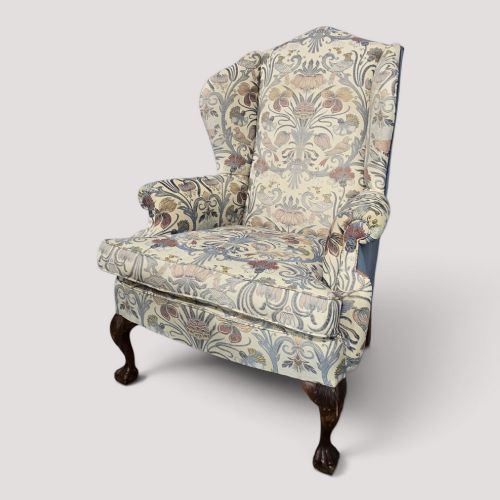
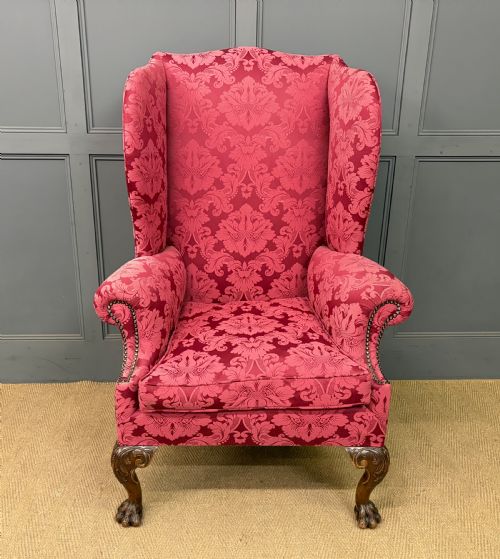
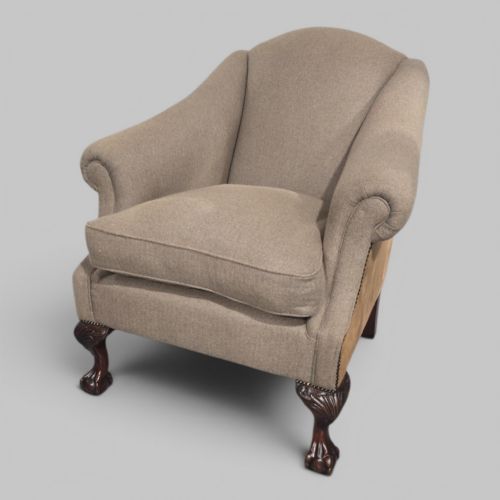
Claw foot armchairs span library chairs, dining carvers, and club seating built across the eighteenth, nineteenth, and early twentieth centuries. When searching for claw foot armchairs, buyers encounter heavy timber frames supported by carved talons grasping spheres or cast brass paws.
The selections here range from formal eighteenth-century Chippendale styles to Victorian leather club chairs and twentieth-century revival pieces. Mahogany and walnut form the backbone of these frames, often upholstered in leather, damask, velvet, or heavy woven fabric.
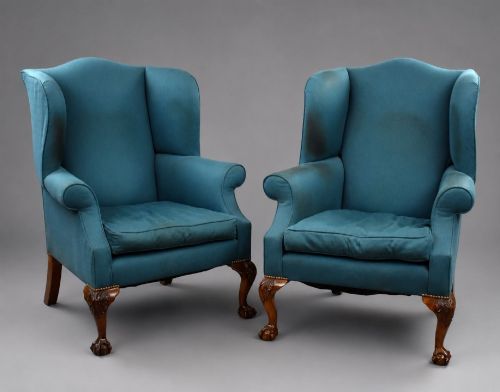
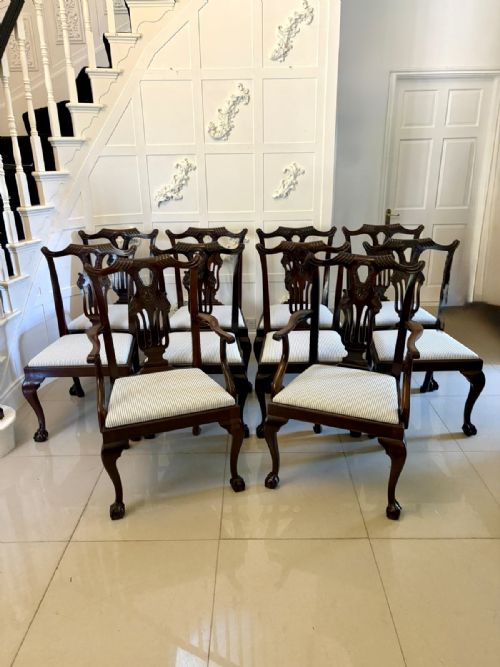
Dining suites and pairs of library armchairs appear frequently alongside individual lounge seating and occasional tub chairs. Regional variations emerge through Irish carved mahogany and English country house proportions.
How they were made
Cabinetmakers shaped these frames primarily from dense hardwoods like mahogany, walnut, and oak, often carving intricate details directly into the solid timber legs. Joinery relied on traditional mortise and tenon construction to support the heavy stresses placed on the armrests and legs.
Upholstery techniques progressed from horsehair stuffing held by webbing to deep-sprung interiors finished with leather, velvet, or damask secured by brass tacks. Feet were formed either by hand-carving the wood into ball and claw motifs or by fitting cast brass terminals.
Listings feature mahogany, walnut, oak, and burr birch alongside leather, damask, velvet, and standard upholstery.
What varies in quality
The crispness of the foot carving distinguishes exceptional examples from simpler production, particularly in how deeply the talons grip the ball and how sharply the knuckles are defined. Timber selection also dictates grade, with figured mahogany and burr birch indicating superior workshops.
Structural integrity depends on the original tightness of the frame joints and the survival of the timber without excessive dry rot or historic worm damage. Original upholstery materials and leather patination add substantial weight to an example's overall desirability.
Howard and Sons·George Bullock·George Smith·Morison
The Claw Foot Armchairs Glossary
- Ball and claw
- A furniture foot motif representing a bird's talon gripping a sphere, popular in eighteenth-century and revival designs. This detail draws from Chinese motifs transmitted via trade through Dutch design influence.
- Carver chair
- An armchair designed with open sides, historically used at the head of a dining table or as a desk chair. These pieces match larger dining chair sets while providing armrests for the host.
- Library chair
- A heavy, comfortable armchair intended for reading rooms, frequently upholstered in dark leather. These seating forms often feature wide armrests and sturdy timber frames built for long periods of study.
- Chippendale style
- A furniture design idiom inspired by Thomas Chippendale's mid-eighteenth-century pattern books, characterised by carved mahogany and classical motifs. Revival versions of this style appeared across the nineteenth and twentieth centuries.
- Tub chair
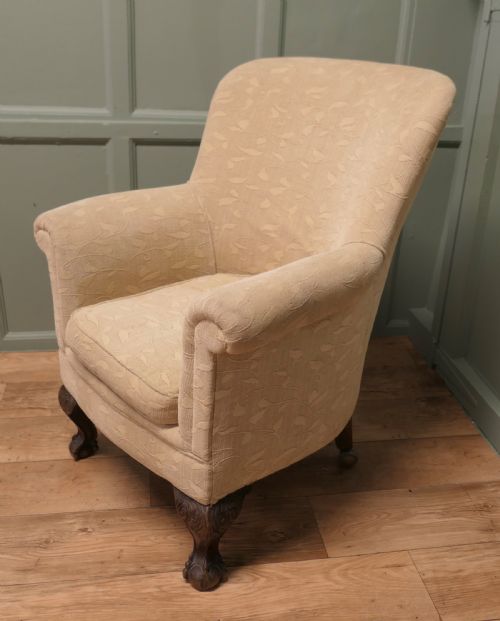
- An upholstered armchair with a rounded back enclosing the sides in a continuous curve. This compact form appears frequently in nineteenth-century occasional seating.
Claw Foot Armchairs: Frequently Asked Questions
How do I date a claw foot armchair?
Dating relies on timber species, construction methods, and stylistic cues present in the leg carving and frame profile. Earlier pieces from the eighteenth century show different joinery habits and proportions compared to Victorian or Edwardian revivals.
Examining the secondary woods beneath the upholstery or inside the seat rails often reveals the period of manufacture more accurately than surface decoration alone.
Were these chairs used for dining?
Many claw foot armchairs functioned as carvers accompanying a larger set of dining chairs around a formal table. Pairs of these chairs also served in libraries, drawing rooms, and country house reception spaces.
Heavier leather and upholstered variants were designed primarily for relaxation rather than table use.
What is the difference between ball and claw and lion paw feet?
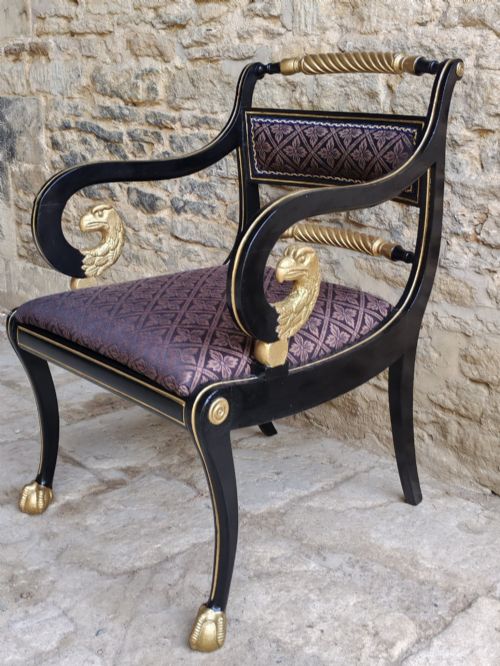
Ball and claw feet depict a bird of prey's talons clasping a wooden sphere, a motif derived from eastern design traditions. Lion paw feet present a heavy mammalian foot, often cast in brass or carved directly from the timber leg.
Both styles provide a visually grounded termination to heavy mahogany and walnut frames.
How should I care for leather upholstery on vintage chairs?
Leather upholstery requires regular dusting and occasional treatment with appropriate conservation balms to prevent the hide from drying and cracking. Keeping the leather away from direct sunlight and heat sources preserves the natural patination.
Professional consultation is recommended before applying any heavy cleaning agents to antique hides.