



Biedermeier Armchairs
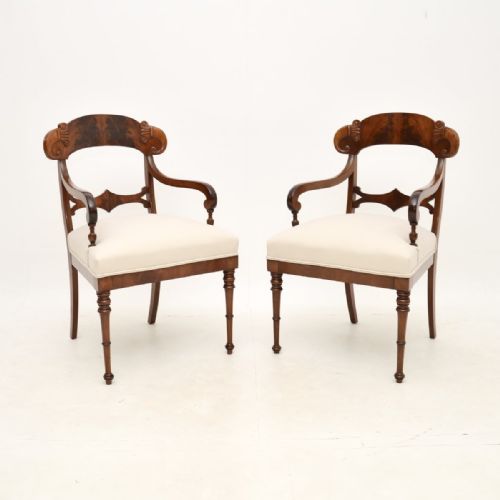
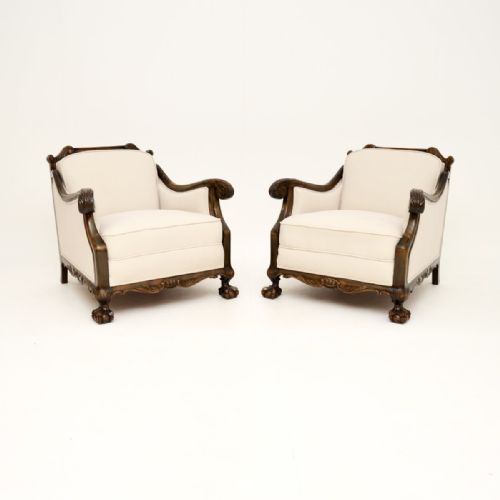
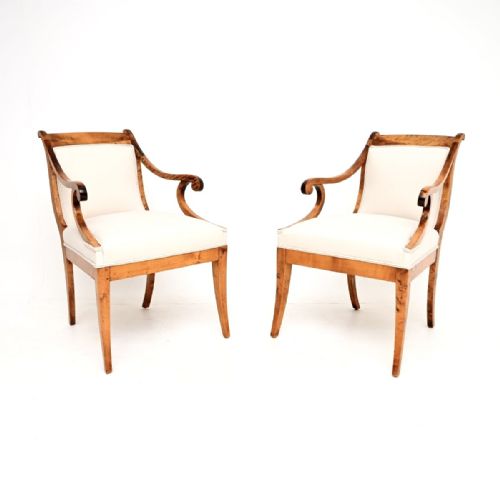
These biedermeier armchairs bring structural clarity and rich timber figure to an interior, combining restraint with comfort.
Biedermeier Armchairs
Biedermeier armchairs embody a domestic design movement focused on comfort, clean lines and timber grain, emerging primarily through the nineteenth century. When you search for biedermeier armchairs, you encounter seating designed for parlours and salons that prioritises structural balance over superfluous ornamentation.
The pieces appearing on this page originate largely from Swedish and Austrian workshops, spanning the mid nineteenth century into early twentieth century revivals. Satin birch, mahogany and walnut form the primary timber vocabulary of these chairs, often finished with polished surfaces that highlight natural figuring.
How They Were Made
Cabinetmakers utilised solid timbers and selected veneers, placing figured satin birch, tiger birch, and mahogany over stable secondary woods. Construction relied on traditional joinery to support curved armrests and raked backrests without heavy framing.
Upholstery techniques involved supportive internal webbing and springs covered in durable fabrics or leather, secured to accommodate upright sitting postures.
Biedermeier Armchairs Retail Price Guide 2026
Typical asking prices for biedermeier armchairs among the pieces listed under this phrase on Sellingantiques today, from the lower quarter to the upper quarter. They describe what is for sale here now, not the wider market.
Listings feature timbers including satin birch, tiger birch, mahogany, satinwood and walnut alongside fabric and leather upholstery.
What Varies in Quality
The distinction between tiers rests upon timber selection and the precision of the veneer work. Superior examples display symmetrical figuring across the curved crest rails and arm facades, utilising master-selected satin birch or mahogany.
Structural integrity and the retention of original upholstery lines also divide ordinary pieces from finer ones. Chairs maintaining crisp joinery around the seat rails and arm attachments command greater attention from collectors.
The Biedermeier Armchairs Glossary
- Satin birch
- A light-coloured timber with a lustrous sheen, frequently utilised in Scandinavian furniture production to create warm, reflective surfaces.
- Tiger birch
- A distinct variant of birch timber featuring striking vertical striping that resembles feline markings, highly prized by period makers.
- Karl Johan style
- A Scandinavian design phase bridging neoclassical severity and early Victorian curves, influencing nineteenth-century seating silhouettes.
- Ebonised
- Wood treated with chemical or pigment processes to resemble ebony, providing dark contrast against lighter birch or mahogany elements.
Biedermeier Armchairs: Frequently Asked Questions
Where were biedermeier armchairs made?
Production centred largely in Sweden, Austria and northern European workshops during the nineteenth century, continuing through later stylistic revivals.
Craftsmen in these regions adapted classical forms into domestic seating tailored for comfortable middle-class parlours.
How do I identify satin birch?
Satin birch presents a pale golden hue with a natural chatoyant shimmer that catches light across the grain.
This timber differs from standard birch through its high lustre and decorative figure when polished.
Are these chairs comfortable for daily use?
Most examples provide an upright, supportive seating posture designed for parlour conversation rather than deep lounging.
Modern buyers often place them in studies or reading corners where structural form complements daily sitting.
What periods do these armchairs span?
The pieces range from original nineteenth-century items to early twentieth-century revivals influenced by empire and neoclassical tastes.
Stylistic shifts appear through changing arm curvature and timber treatments across these decades.