
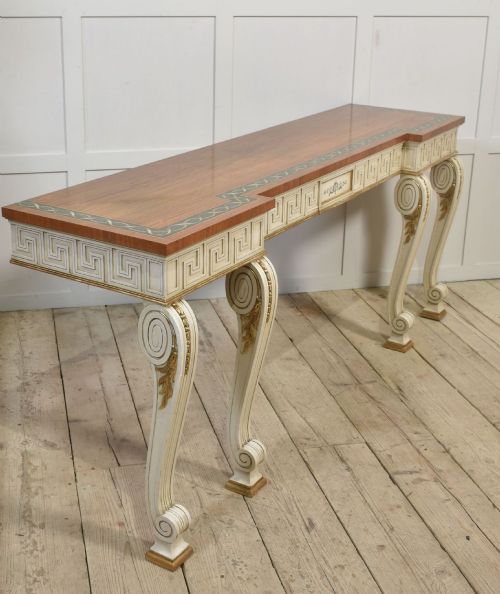

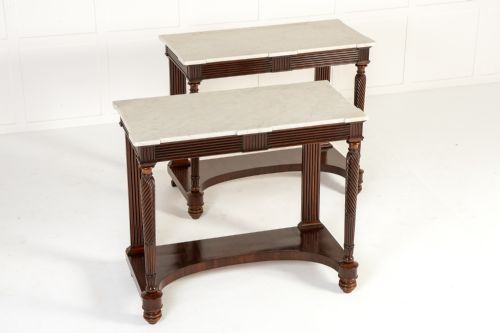


Classical Wall Consoles
Classical wall consoles bring architectural symmetry to a room, offering firm surfaces of marble and giltwood designed to anchor grand interiors.
Classical Wall Consoles
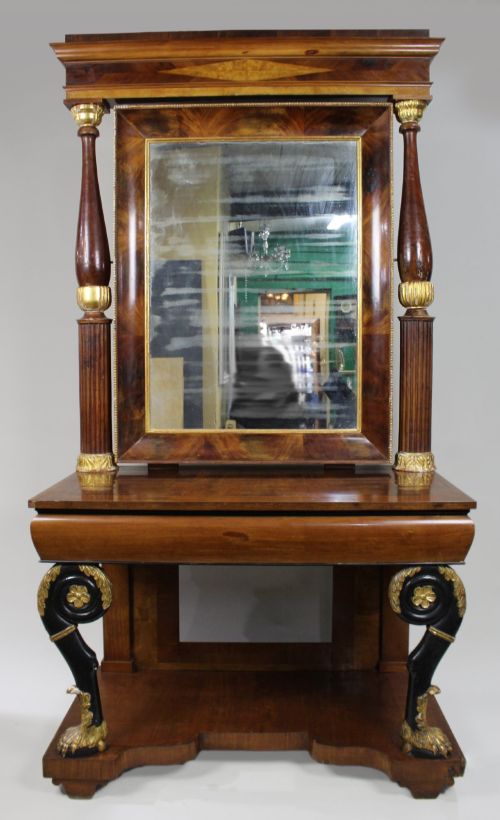
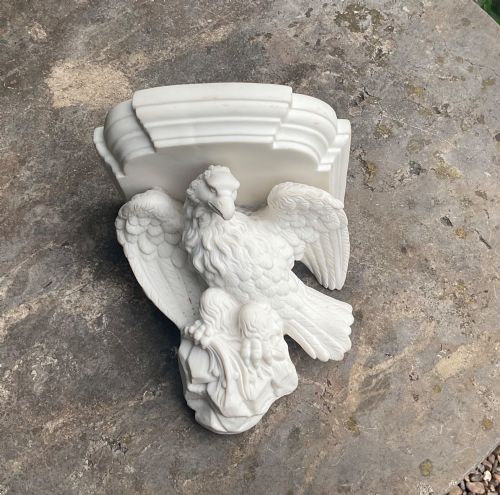
Classical wall consoles comprise console tables, wall brackets, and pier mirrors originating primarily from the eighteenth and nineteenth centuries. These pieces reflect Neoclassical, Regency, Victorian, and French Empire styles, often designed to fit flush against a wall.
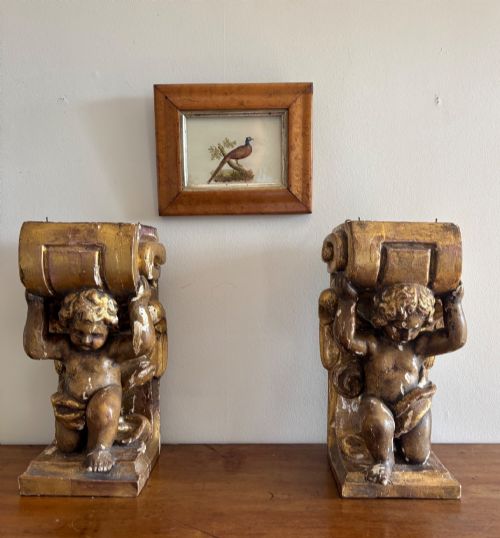
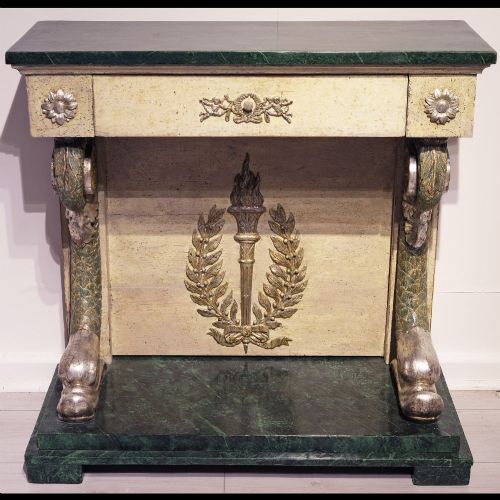
You will encounter mahogany and painted wood tables alongside gilded wood brackets and mirrors. Many examples incorporate marble tops, combining solid timber frames with stone surfaces intended for display.
Origins stretch across British, Italian, French, and Gustavian workshops. The selection ranges from compact wall brackets to tall pier mirrors and substantial console tables.
How they were made
Carpenters shaped mahogany, walnut, and pine to form the structural carcasses of these tables and brackets. Carvers then applied gesso layers to wood before adding gold leaf or water gilding.
Marble and faux porphyry provided durable surfaces for console tops, while glass formed the plates for pier and overmantel mirrors. Metal elements such as brass or bronze occasionally reinforced structural joints or decorated mounts.
Ram heads and maiden figures stare steadily from nineteenth-century mahogany frames, guarding the hallway with stony expressions.
What varies in quality
The crispness of carved detail in giltwood and gesso dictates the visual success of a piece. Deeper, sharper carving on acanthus leaves, rams' heads, and centaur designs shows greater workshop skill.
The choice of materials alters the character, from figured flame mahogany veneers to thick slabs of marble and genuine gold leaf application. Faux finishes executed with care achieve a convincing imitation of stone.
The Classical Wall Consoles Glossary
- Giltwood
- Wood covered with a thin layer of gold leaf. This finish reflects light and protects the carved surface underneath.
- Console
- A table supported by wall brackets or scroll legs rather than four independent floor legs. It stands flush against a vertical surface.
- Pier Mirror
- A tall glass mirror designed to hang on the wall space between windows. It frequently pairs with a console table placed directly below.
- Gesso
- A plaster mixture applied to wood frames to create a smooth surface for gilding and carving. It allows crisp ornamental details to be moulded.
Classical Wall Consoles: Frequently Asked Questions
Where should I place a wall console?
Position console tables and brackets in hallways or reception rooms against flat wall spaces. They fit well beneath matching pier mirrors to create a unified vertical arrangement.
Ensure the wall construction supports the weight of heavier marble-topped designs or large gilded frames.
What is a pier mirror?
A pier mirror is a tall vertical glass plate framed in wood, built to hang on the narrow wall pillar between two windows. They reflect natural light deeper into nineteenth-century rooms.
Many listings pair these mirrors with matching console tables positioned at the base.
Are marble tops original?
Marble and faux porphyry tops are typical for eighteenth and nineteenth-century console tables. They provided a stable, heat-resistant surface for displaying decorative objects.
Inspect the seating of the stone within the wooden frame to understand how the top integrates with the base.