

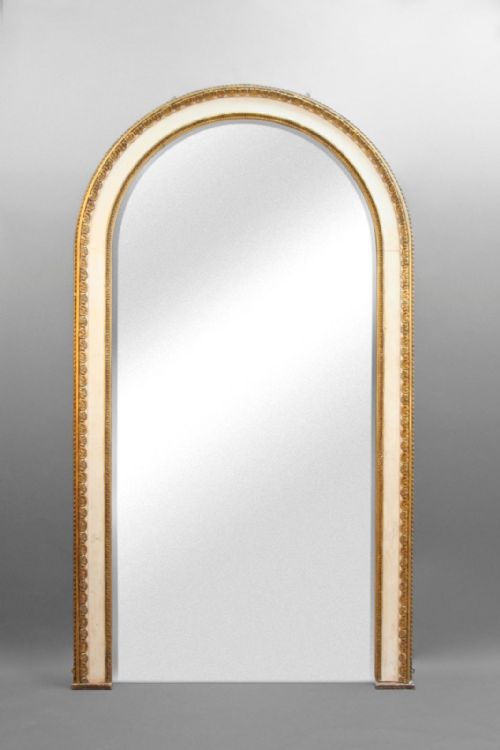


Classical Style Wall Mirror
These classical style wall mirror examples bring architectural symmetry and reflective depth to a room, ranging from grand overmantels to slender pier glasses.
Classical Style Wall Mirror
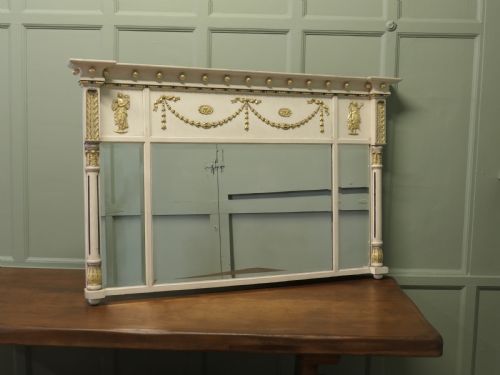
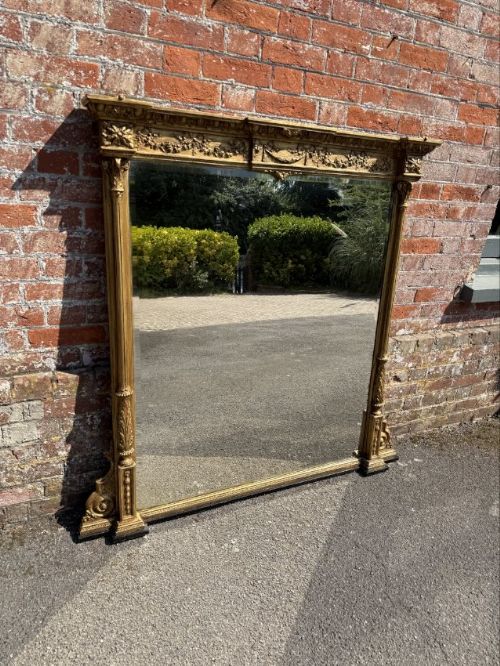
A classical style wall mirror draws upon historical vocabularies, primarily Georgian, Regency, and Victorian interpretations of ancient Roman and Greek design. Buyers encounter substantial overmantel mirrors designed to sit above a fireplace, alongside tall pier mirrors intended for the wall space between windows.
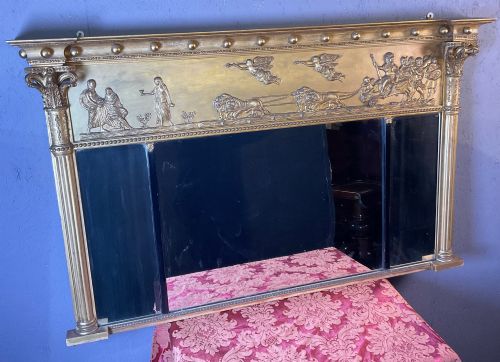
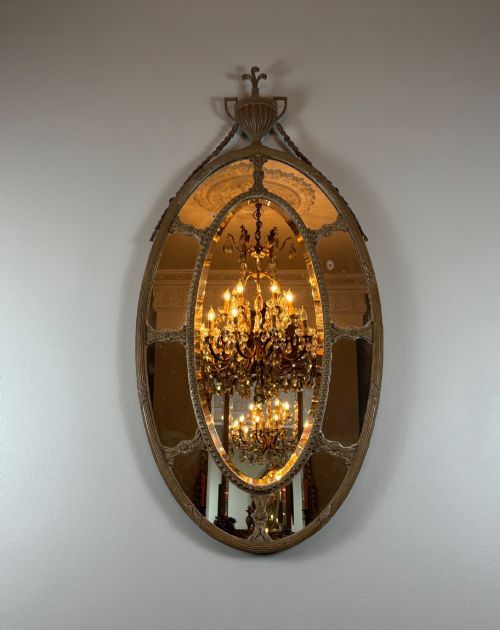
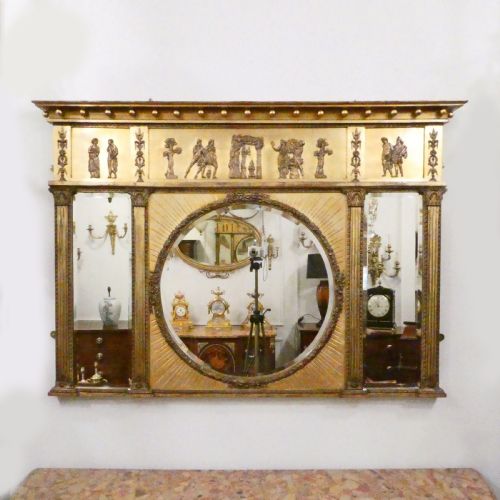
The selection spans the eighteenth through to the twentieth centuries, capturing periods of revival such as Adam and Regency. Forms range from triple-plate configurations and oval border glass pieces adorned with urns and swags to French Empire trumeau mirrors with painted panels.
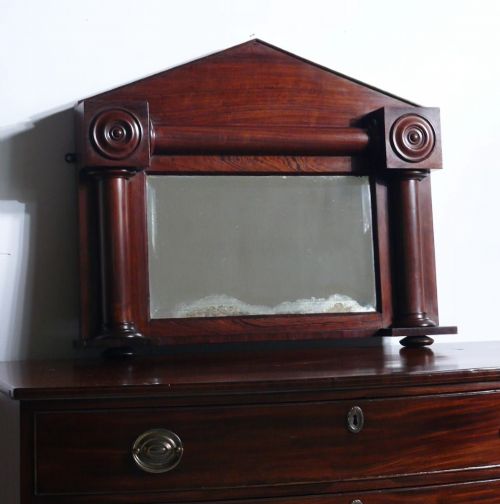
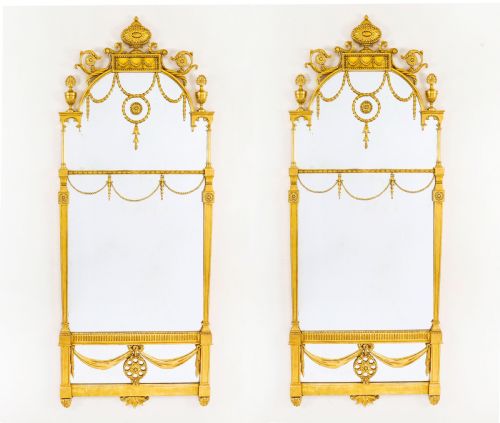
Origin points across the listings include English, French, and Italian workshops. Pieces vary from rectangular architectural frames with carved columns to arched top designs and marginal mirrors.
Materials and construction
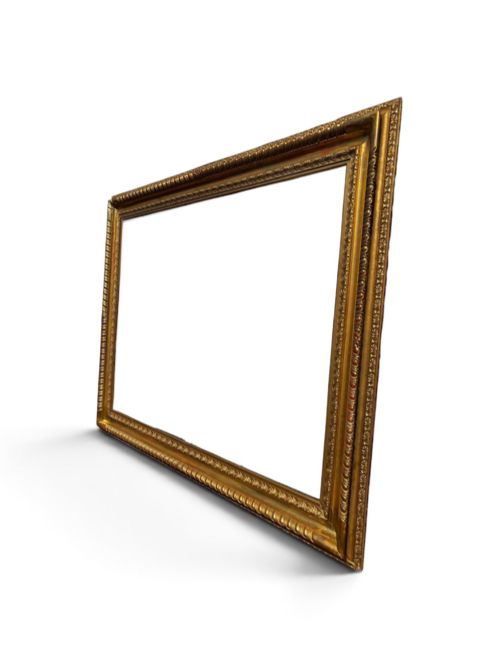
Carved wood and gesso form the foundation for much of the gilding seen across these pieces, providing a stable base for detailed ornamentation. Artisans applied gold leaf or composition to the carved wooden frames to achieve a luminous, reflective surface.
Makers utilised alternative timbers such as rosewood and walnut alongside traditional giltwood and painted finishes. Mirror glass is set into frames either as a single large sheet or divided into multiple plates, sometimes with crackle finishes or marginal plates.
Listings feature pieces spanning the 18th, 19th, and 20th centuries, including Victorian, Regency, and Georgian periods.
Quality variations
The depth and crispness of the carved wood and gesso ornamentation distinguish finer examples from simpler production. Superior pieces exhibit well-defined swags, urns, and columns that retain their structural sharpness beneath the gilt layers.
The integrity of the original mirror glass and the application of gold leaf or parcel-gilt details indicate the level of craftsmanship involved. Consistency in the frame joinery and the survival of secondary woods further separate standard decorative items from exceptional examples.
The Classical Style Wall Mirror Glossary
- Overmantel mirror
- A large mirror specifically proportioned to hang on the wall directly above a mantelpiece or fireplace. These often feature wide horizontal formats and multiple glass plates.
- Gesso
- A plaster-like mixture applied to wood frames and carved or moulded into decorative relief details before gilding. It allows for intricate ornamentation such as classical swags and urns.
- Pier mirror
- A tall, narrow mirror designed to fit the wall space between two windows, known as the pier. They often reflect additional light into darker corners of a room.
- Trumeau mirror
- A decorative wall mirror incorporating a painted panel or an oil painting within the upper section of the frame. Originating in France, these combine art and reflection.
- Giltwood
- Wood that has been coated with gold leaf or gold paint. This finish defines the appearance of many classical and revival mirrors.
Classical Style Wall Mirror: Frequently Asked Questions
Where should I hang an overmantel mirror?
These large mirrors are traditionally mounted directly above a fireplace mantel in a reception room or dining space. Their width naturally anchors the proportions of the hearth below.
Ensure the wall fixings are substantial enough to support the weight of carved wood and gesso frames. Positioning them opposite a window also helps maximise natural light in the room.
What is a pier mirror used for?
Pier mirrors were originally placed on the narrow strip of wall between windows to bounce daylight back into the interior. Their tall, vertical proportions suit narrow wall spaces.
Today, buyers frequently utilise them in entrance halls or narrow corridors where standard horizontal mirrors would feel out of scale.
How do I identify a Regency mirror?
Regency pieces often incorporate classical motifs influenced by ancient Rome and Greece, including ebonised details, reeded columns, and convex or triple plates. The frames frequently display bold architectural lines.
Check for construction methods and timber types typical of the early nineteenth century to confirm the period.
What is an Adam revival mirror?
Adam revival mirrors draw inspiration from the neoclassical designs of Robert Adam, featuring delicate urns, swags, ribbons, and classical urn motifs. These pieces gained popularity during the Victorian era.
The ornamentation is typically rendered in crisp gesso on carved wood frames, offering a lighter visual feel than heavier Baroque styles.