
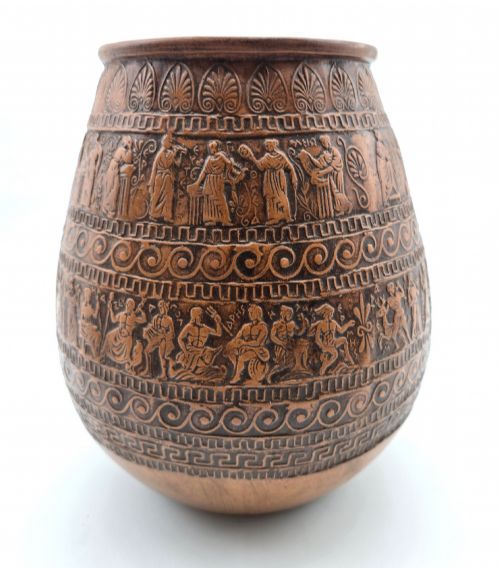


Classical Relief Urns
Classical relief urns bring ancient architectural dignity into a room through cast metal and moulded ceramic.
Classical Relief Urns
Classical relief urns draw upon Greco-Roman forms to serve as decorative centrepieces, planters and table lamps within domestic interiors. These pieces emerge chiefly across the nineteenth century, shaped by neoclassical revival movements and the fashion for the Grand Tour across Europe. Buyers meet campana shapes, ewers and pedestal urns carrying figurative or botanical bas-relief decoration.
The objects take many functional forms, functioning as lidded vessels, wine-coolers, inkwells and lighting fixtures mounted on marble bases. French and Italian workshops dominate the origin points found on this page, alongside English ceramic manufactories. Collectors select these items to anchor a room with sculptural silhouette and historical allusion.
How they were made
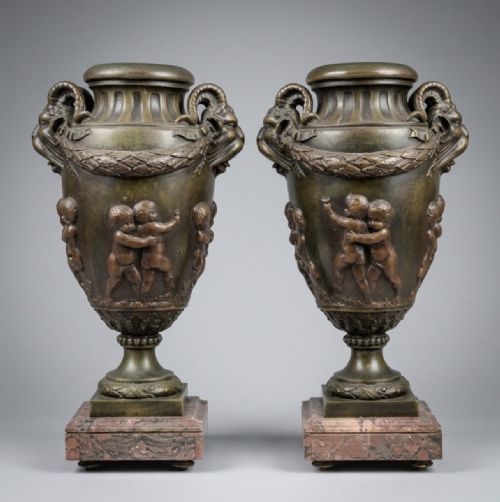
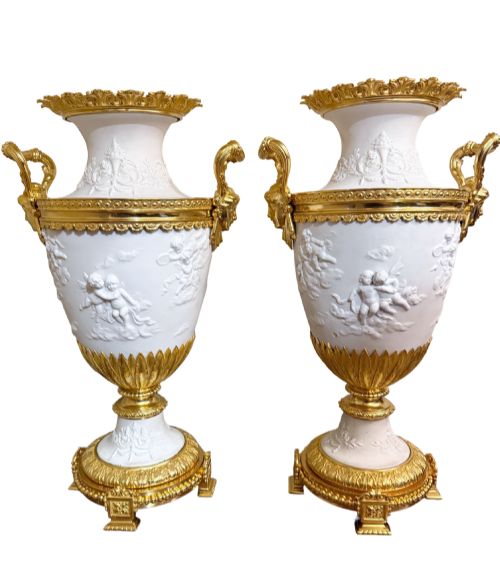
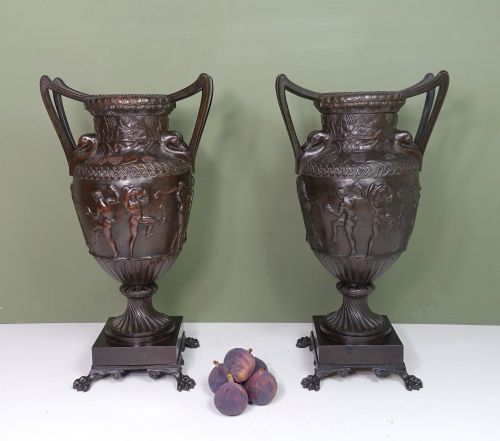
Makers utilised cast bronze, brass, spelter and gilt metal alongside porcelain, terracotta and jasperware to achieve crisp surface detail. Metal components undergo casting, chasing and surface finishing such as patination, gilding or silvering to mimic ancient archaeological finds. Ceramic pieces employ moulding techniques to raise white bas-relief motifs against coloured stoneware and porcelain bodies.
Plinths and bases frequently incorporate contrasting materials like white or dark marble to elevate the primary vessel. Assembly methods combine threaded metal rods, pins and adhesives to secure handles, mounts and decorative friezes to the main body.
One Copenhagen bisque vase depicts the Angel of the Night floating quietly after a design by Thorvaldsen.
What varies in quality
Surface treatments demonstrate craftsmanship through the durability and tone of the patination, ormolu gilding or enamel colours. Well-executed handles, spouts and lid fittings align precisely with the vessel body without visible gaps or coarse seams.
Sevres·P. Ipsens Enke·Wedgwood·Barbedienne
The Classical Relief Urns Glossary
- Campana urn
- A bell-shaped vessel with an everted rim and a fluted body rising from a pedestal foot. This classical silhouette originates from ancient marble garden vases.
- Jasperware
- A fine-grained, unglazed stoneware developed by Josiah Wedgwood, characterised by contrasting white raised reliefs against coloured clay bodies. Blue remains the most commonly encountered shade.
- Grand Tour
- A traditional travel itinerary through France and Italy undertaken by European gentry to collect antiquities and souvenir art. Pieces from this context often translate monumental ruins into cabinet-scale bronzes.
- Bas-relief
- A sculptural technique where figures and ornaments project slightly from a flat background surface. This method creates depth without detaching the motif from the vessel wall.
- Ormolu
- Gilt bronze ornamentation applied to furniture, clocks and decorative vessels. The technique involves fusing a mercury and gold amalgam to a bronze base through heat.
Classical Relief Urns: Frequently Asked Questions
What rooms suit classical relief urns best?
These pieces integrate naturally into libraries, studies and formal reception rooms where architectural details predominate. They sit well upon mantelpieces, sideboards and pedestals.
Their substantial metallic or ceramic presence allows them to function as focal points or balanced pairs framing a mirror or fireplace.
How were these urns used originally?
Many nineteenth-century examples served purely decorative roles reflecting classical antiquity, while others doubled as wine-coolers, inkwells or garden planters. Grand Tour souvenirs commemorated travels through Italian archaeological sites.
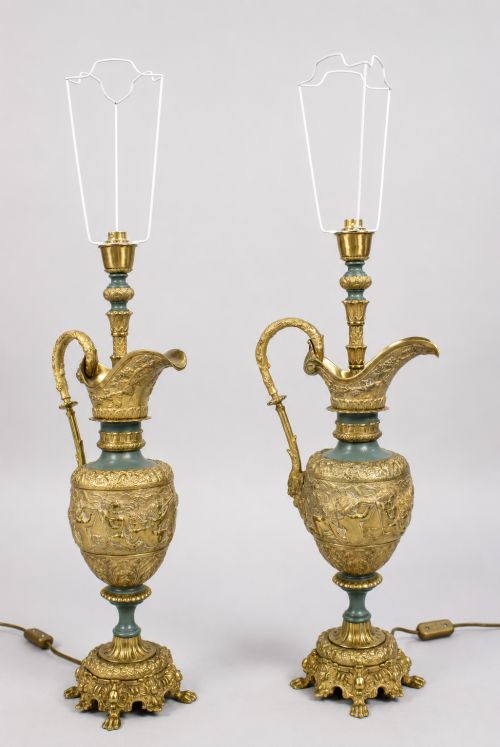
Later adaptations converted several forms into table lamps to serve domestic lighting needs.
How do I identify a Grand Tour piece?
Grand Tour pieces typically feature patinated or gilt bronze construction depicting famous antique vases, such as the Warwick or Townley vessels. They often incorporate polished marble bases designed for portability.
Their scale suits domestic display cabinets and desks rather than gardens.
Are these pieces functional as lamps?
Several items on the page arrive converted into table lamps with fitted shades mounted above ewer or urn bodies. These conversions utilise existing vessel forms without altering the primary antique body.
Wiring methods vary, so inspection of the internal components ensures safe modern operation.