




Antique Campana Planters
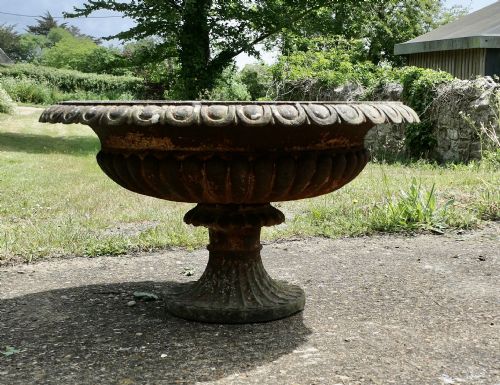
Antique campana planters bring classical form to garden spaces, shaped as flared pedestals dating from Georgian to Victorian eras.
Antique Campana Planters
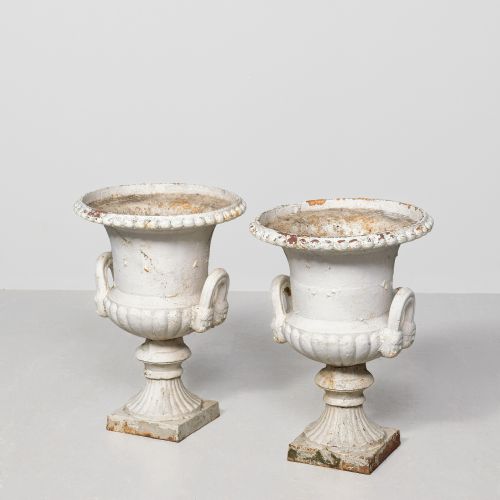
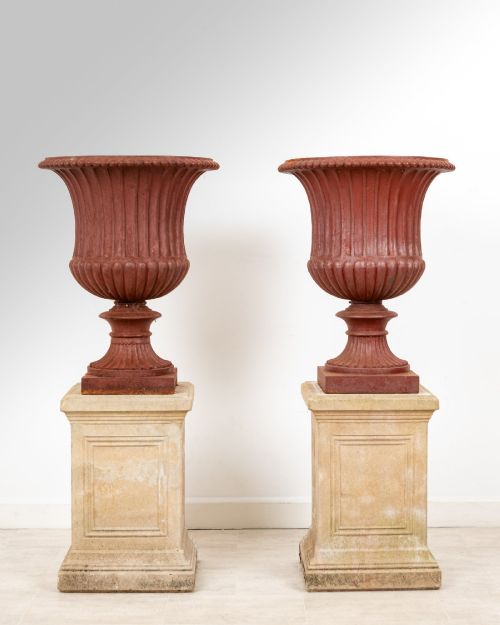
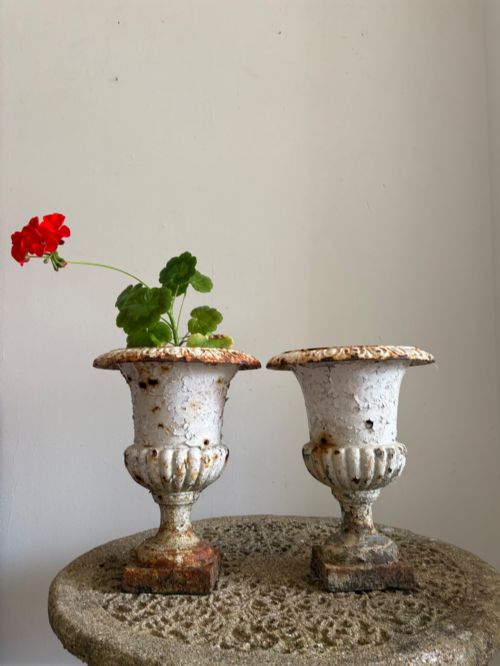
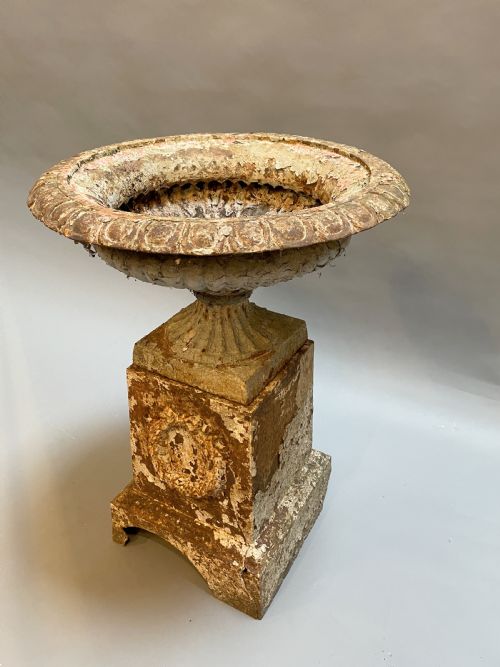
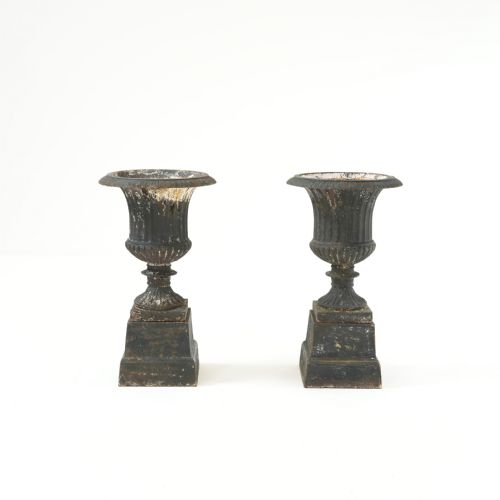
Antique campana planters take their name from the inverted bell shape derived from classical antiquity, often standing upon square bases or dedicated stone plinths. When searching for antique campana planters, buyers encounter vessels primarily configured as garden urns, table vases, and terrace jardiniere displays.
The pieces appearing here span from the Georgian and Regency periods through the Victorian era into the early twentieth century. Cast iron examples dominate the selections, accompanied by variants fashioned from stone, terracotta, bronze, marble, and porcelain.
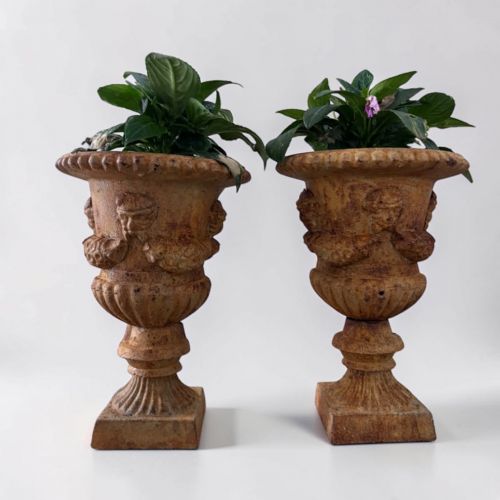
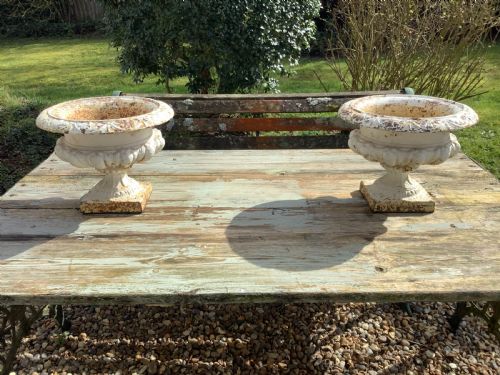
Stylistic expressions lean heavily towards the neoclassical and classical revival, encompassing French country aesthetics alongside English garden furniture. Many of these vessels appear in matched pairs, suited for framing doorways or garden pathways.
Materials and construction methods
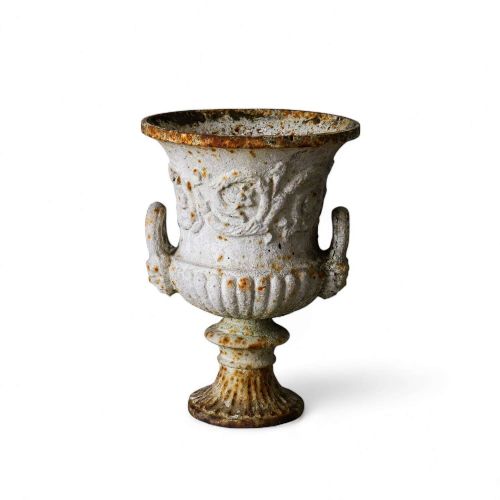
Foundry work defines the majority of these pieces, utilising cast iron poured into moulds to achieve crisp classical details like gadrooning and foliate reliefs. Iron surfaces frequently show layers of original or weathered paint, recording decades of outdoor exposure.
Masons and carvers shaped alternative versions from natural stone, limestone, and marble, introducing subtle variations in the grain and texture of each vessel. Terracotta examples demonstrate the manipulation of fired clay, sometimes featuring hand-carved heads upon the handles.
Some nineteenth-century terracotta examples feature small carved heads staring out from the handles, keeping a silent watch over the garden.
Assessing quality in campana vessels
Depth and sharpness of the casting distinguish superior iron and bronze pieces, where classical motifs retain crisp relief rather than softening into the surrounding metal. The integrity of the original form, whether a shallow campana profile or a grander neoclassical vessel, dictates structural balance.
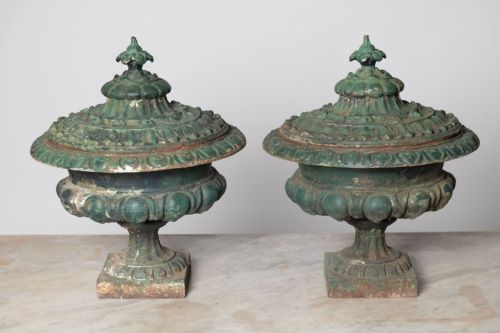
Surface patination plays a significant role, separating items with genuine weathered paint or aged oxidation from later alterations. The presence of matching plinths, pedestals, or original lids elevates the completeness of a pair.
Andrew Handyside
The Antique Campana Planters Glossary
- Campana
- A bell-shaped vessel with a flared rim, sweeping body, and narrow stem resting on a footed base. This ancient Roman form inspired centuries of garden ornamentation.
- Gadrooning
- A decorative carved or cast band of convex curves or flutes running along the rim or body of an urn. It adds textural richness to neoclassical designs.
- Plinth
- A heavy square block or pedestal supporting the base of an urn, elevating the vessel above ground level. Many larger garden pieces incorporate these stands.
- Neoclassical
- A style reviving classical Greek and Roman artistic elements during the eighteenth and nineteenth centuries. It governs the symmetrical proportions and decorative motifs seen on these planters.
- Grand Tour
- A cultural journey undertaken by wealthy young Europeans in the eighteenth and nineteenth centuries, bringing home small-scale classical art and antiquities.
Antique Campana Planters: Frequently Asked Questions
Where should I place an antique campana planter?
These vessels suit prominent garden focal points, terrace edges, and flanking positions beside entranceways or garden steps. Their classical silhouettes also allow smaller versions to function as interior table displays.
Heavier cast iron and stone variants require stable ground or dedicated plinths to support their substantial weight safely outdoors.
How do I care for cast iron garden urns?
Cast iron endures outdoor elements well, developing a stable layer of surface oxidation or retaining weathered paint over decades of exposure. Regular gentle cleaning prevents debris accumulation in the relief details.
Ensuring proper drainage prevents standing water from freezing inside the bowl during colder months, protecting the metal structure.
Are these planters frost resistant?
Cast iron, bronze, and dense stone versions generally withstand winter conditions when drainage holes remain clear. Terracotta and porcelain pieces require more caution during freezing temperatures.
Moving vulnerable ceramic or terracotta planters under shelter prevents moisture absorption and subsequent cracking in severe frost.
How can I tell the age of a campana urn?
Examination of the casting seams, surface paint layers, and material composition helps indicate the manufacturing period. Nineteenth-century examples often display specific foundry techniques and heavier metal density.
Stylistic cues such as neoclassical proportions and traditional mounting styles further separate Victorian and Georgian pieces from twentieth-century reproductions.