

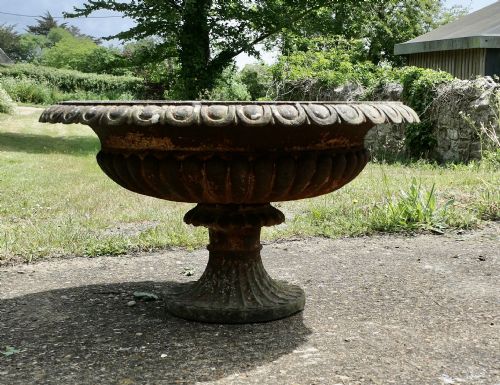


Garden Pedestal Planters
Garden pedestal planters elevate outdoor greenery using classical forms shaped from cast iron, terracotta and stone across the nineteenth and early twentieth centuries.
Garden Pedestal Planters
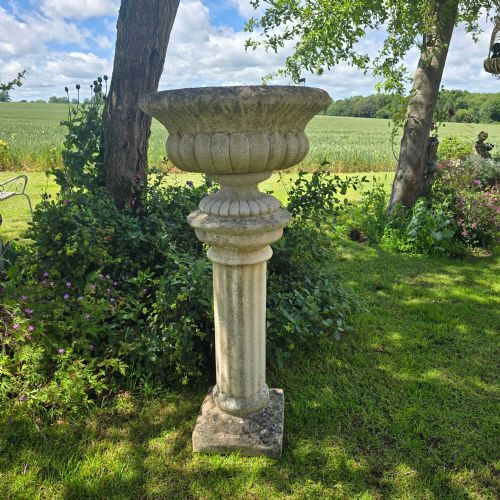
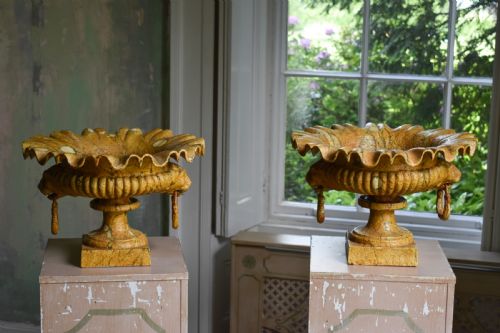
Garden pedestal planters combine an elevated base with a vessel designed to display outdoor flora. Buyers seeking these items encounter campana urns, classical tazzas and jardiniere stands dating from the Regency era through the Victorian period and into the early twentieth century.
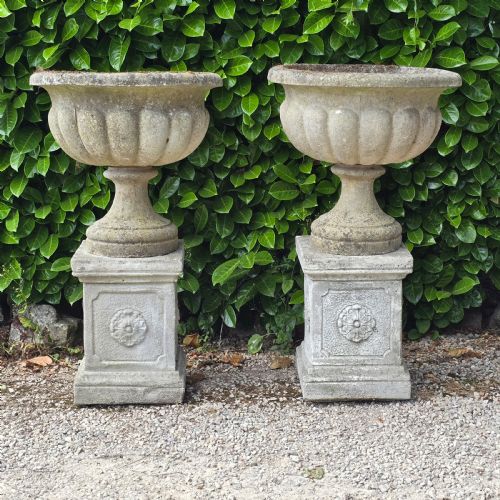
The inventory on this page consists largely of nineteenth century examples, alongside pieces from the Edwardian era and the nineteen-twenties and thirties. These objects originated as formal architectural garden ornaments, often cast or carved in matched pairs to frame pathways or terrace steps.
Materials and Casting
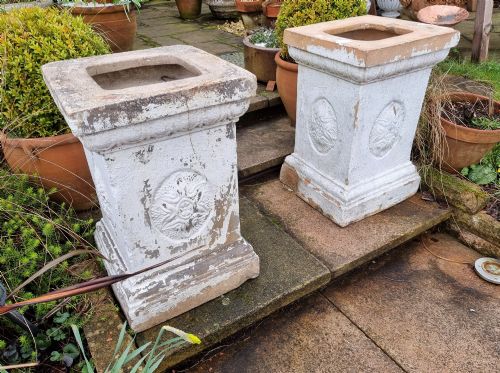
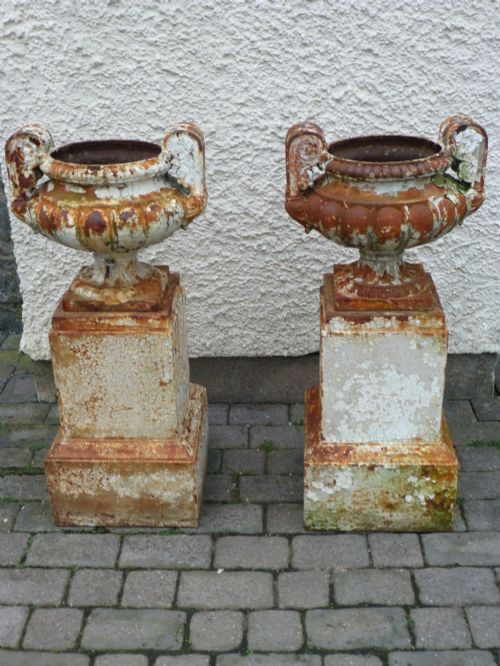
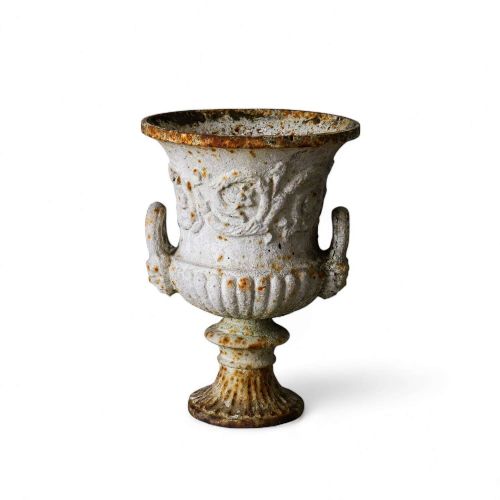
Foundries utilised heavy cast iron, often poured by renowned makers into detailed moulds featuring acanthus leaves and classical motifs. Other pieces employ durable terracotta, salt-glazed stoneware, limestone and composite stone.
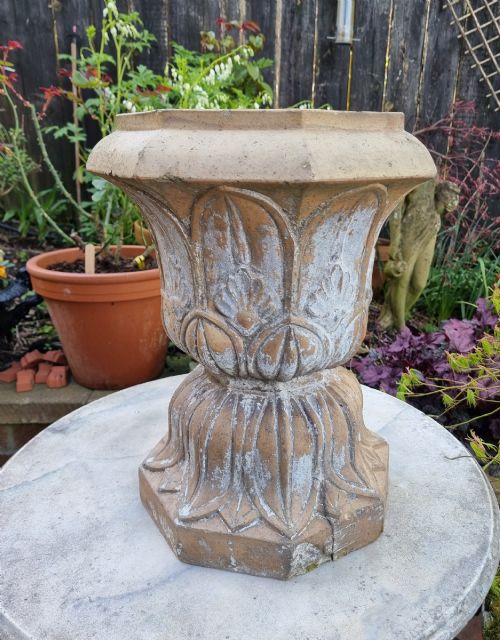
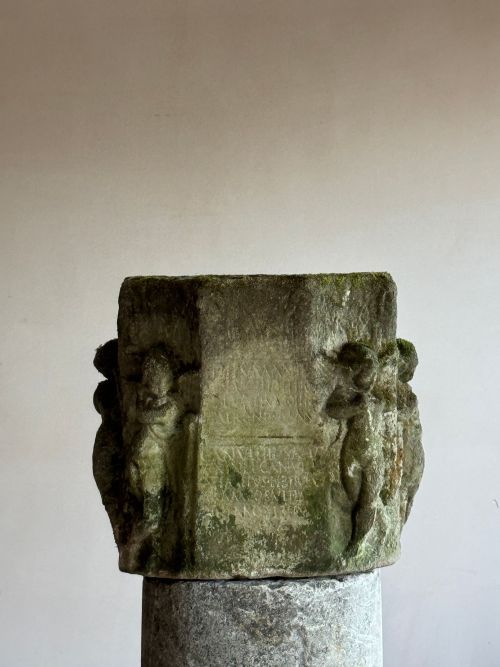
Weathering patterns develop naturally on these dense materials over decades of outdoor exposure. Iron surfaces display accumulated layers of paint and oxidisation, while stone and terracotta acquire organic patination.
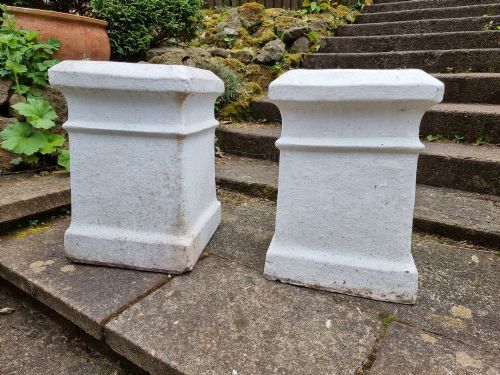
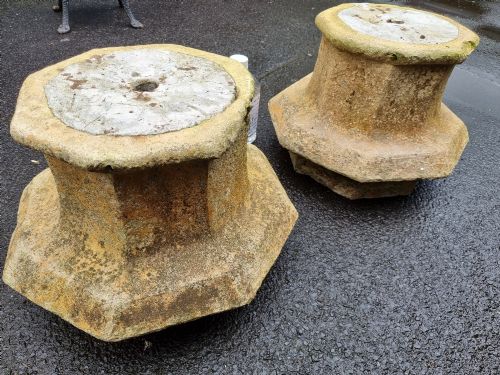
Chimney pots occasionally served as improvised garden pedestals when resourceful Victorians repurposed architectural salvage for the lawn.
Design and Proportion
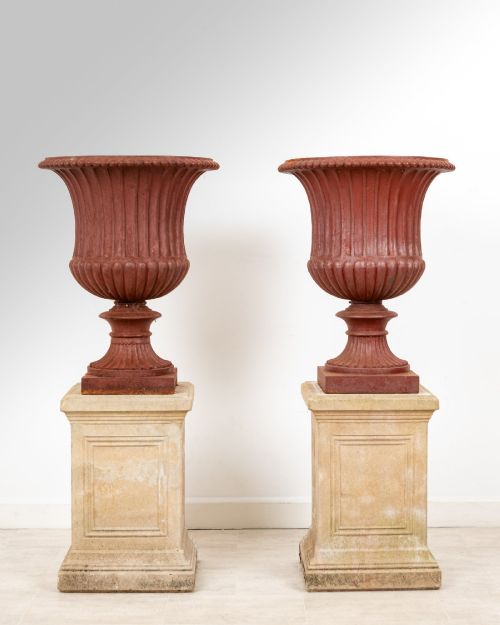
Quality rests in the crispness of the cast or carved detail, particularly on complex ornament such as gadrooning and classical friezes. Superior examples retain their original matching plinths and display harmonious proportions between the vessel and the supporting column.
The integrity of the material dictates longevity, with sound iron castings and well-fired terracotta representing the higher tier of production. Condition is defined by structural stability rather than the absence of surface weathering.
Dunfermline Clay Company·Falkirk Carron foundry·Coalbrookdale·Andrew Handyside
The Garden Pedestal Planters Glossary
- Campana urn
- A bell-shaped garden vessel with an everted rim, frequently mounted upon a matching pedestal base.
- Plinth
- A heavy rectangular or square block supporting an urn, column or statue.
- Jardiniere
- An ornamental pot or stand intended for holding plants or flowers.
- Gadrooned
- Decorated with a series of convex vertical curves or flutes carved into the body of the urn.
- Tazza
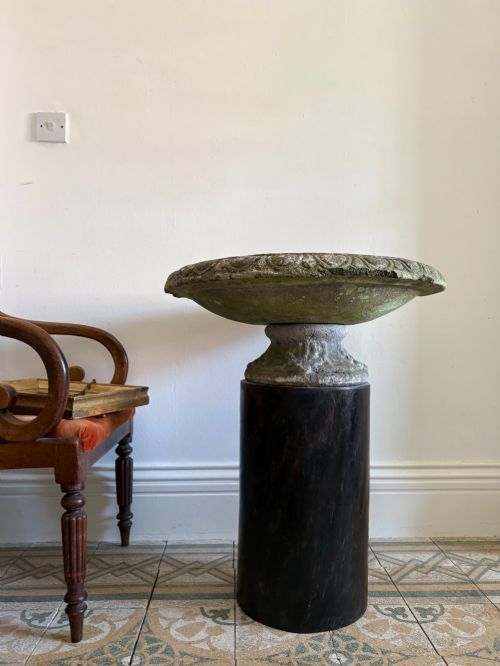
- A shallow cup or bowl set on a high foot and pedestal, inspired by classical antiquity.
Garden Pedestal Planters: Frequently Asked Questions
Are garden pedestal planters frost proof?
Most cast iron and heavy stone examples withstand winter conditions outdoors without issue. Terracotta vessels require closer attention during hard freezes to prevent moisture expansion from cracking the clay.
Positioning planters on feet or stable plinths allows proper drainage, which protects the material from standing water during freezing weather.
How do I secure a heavy urn to its plinth?
Many historical pieces rely on their substantial weight and gravity to remain stable on the base. Some designs incorporate a central locating pin or socket that locks the urn into the plinth.
Placing lead shims or mortar between uneven stone surfaces ensures the vessel sits level without rocking in high winds.
Can these planters be used indoors?
Cast iron and stone planters function effectively inside homes or conservatories when placed on appropriate protective flooring. Their considerable weight requires careful floor load assessment before interior placement.
Utilising a suitable saucer or liner inside the vessel prevents moisture from damaging interior surfaces.
How do I date a cast iron garden urn?
Nineteenth century pieces often display registration marks, foundry stamps or distinct casting seams that indicate Victorian or Regency production methods. The composition of the iron and the depth of the decorative relief provide further clues to the period.
Heavily weathered surfaces with multiple accumulated coats of old paint typically point toward prolonged outdoor exposure dating back to the Victorian era.