



Antique Metal Garden Vases
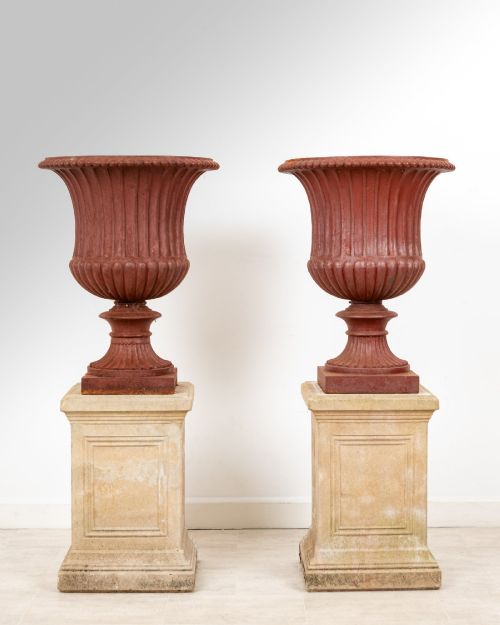
Antique metal garden vases bring classical weight and architectural presence to a terrace, and the cast iron campana urn is what you meet most often here.
Antique Metal Garden Vases
When you search for antique metal garden vases, you are looking at substantial vessels designed to anchor a terrace, lawn or path. These pieces range from classical campana urns to Japanese bronze temple vases, shaped to hold planting or stand alone as architectural focal points.
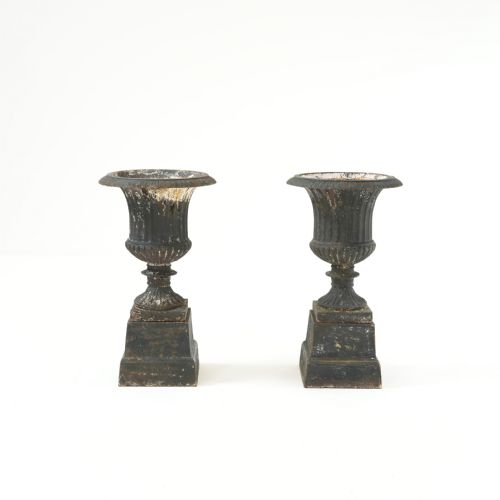
Cast iron examples from the nineteenth century dominate this selection, frequently appearing in pairs complete with matching stone pedestals or plinths. Alongside iron, you encounter heavier lead vessels and patinated bronze forms that bring a different texture and colour palette to an outdoor setting.
The styles lean heavily towards the neoclassical and Victorian revivals, drawing on ancient Greek and Roman motifs like acanthus leaves. You also find Meiji period Japanese works that introduce distinct eastern forms and patinations to the traditional garden landscape.
How they were made
Foundries cast these heavy iron and bronze vessels in moulds, capturing crisp decorative details such as foliate bands and fluted bodies. Lead urns were typically cast in sections and soldered or jointed together, yielding a softer, heavier body that takes a natural grey weathering over decades.
Many iron pieces received layers of paint for initial protection against rust, while others rely on natural patination or deliberate verdigris treatments on bronze surfaces. Stone pedestals often accompany the metal vessels, providing a stable architectural base designed to elevate the piece above ground dampness.
Listings feature cast iron, lead, and bronze materials spanning the eighteenth, nineteenth, and early twentieth centuries.
What varies in quality
Quality in these vessels rests upon the crispness of the casting and the proportion of the classical design. Finer pieces display sharply rendered acanthus leaves and well-balanced profiles, whereas lesser examples can feel heavy-handed or lack definition in the ornament.
The integrity of the material and the survival of matching pairs or original pedestals elevate certain pieces above standard garden furniture. Surface age, whether through original paint layers or stable patination, also dictates how successfully the metal integrates into a planting scheme.
The Antique Metal Garden Vases Glossary
- Campana urn
- A bell-shaped garden vessel with an everted rim, tapering body and a footed base. This classic form stems from antiquity and remains a staple of nineteenth-century garden design.
- Acanthus leaf
- A classical ornament carved or cast in imitation of the Mediterranean plant of the same name. It frequently decorates the lower body or handles of urns.
- Verdigris
- A green patina that forms naturally on copper, bronze and brass through atmospheric exposure. On garden bronzes, it provides a protective and visually appealing surface layer.
- Plinth
- A heavy rectangular or square block supporting an urn or statue. These stone or iron bases lift the vessel to improve its visual weight in a garden scheme.
Antique Metal Garden Vases: Frequently Asked Questions
How do I care for cast iron urns?
Cast iron garden vessels withstand the elements well, but they benefit from occasional cleaning to remove debris and moss. Applying a fresh coat of suitable exterior paint when the surface begins to weather will protect the metal from deep corrosion.
Ensure that drainage holes remain clear so water does not pool inside the vessel during freezing winter months, which can crack the metal or split internal linings.
Are these urns heavy to move?
These pieces possess substantial weight, particularly the monumental cast iron and lead examples that often require more than one person or mechanical assistance to position safely. The matching stone pedestals add further heft to the overall assembly.
Plan the final placement carefully before installation, as moving a large metal urn once filled with soil and plants becomes an arduous task.
Can I leave lead urns outside all winter?
Lead handles cold and wet weather exceptionally well without suffering the rust issues that affect untreated iron. Over time, lead develops a dense protective surface layer that shields the metal from further atmospheric wear.
While frost-resistant, ensure the interior is clear of trapped standing water that might expand upon freezing and strain the structural joints of the vessel.
What is a Japanese bronze usubata?
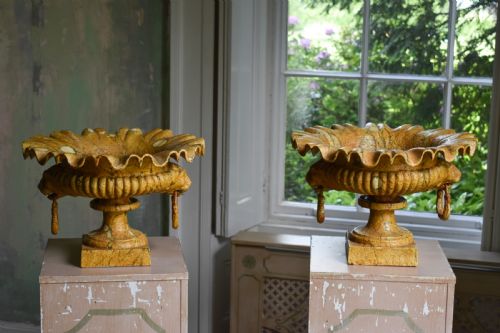
An usubata is a traditional Japanese bronze vessel featuring a wide basin atop a slender stem, originally designed for traditional flower arrangements. In a garden setting, these striking forms serve as dramatic sculptural focal points.
Meiji period examples showcase sophisticated metalworking techniques and deep patination that contrast sharply with standard European garden ironwork.