


Classical Nude Male Figure
A classical nude male figure captures the heroic ideals of antiquity through enduring bronze castings and detailed academic drawings.
Classical Nude Male Figure
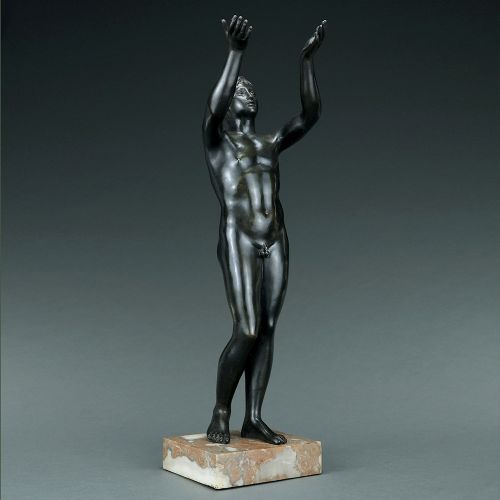
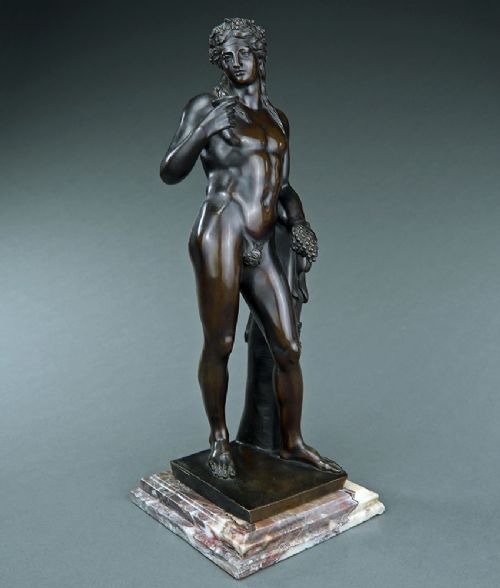
A classical nude male figure represents a tradition rooted in ancient Greek and Roman sculpture, translated through later European revivals. Buyers seeking this subject encounter a rich selection of bronze statuary, marble figures, terracotta, and framed works on paper.
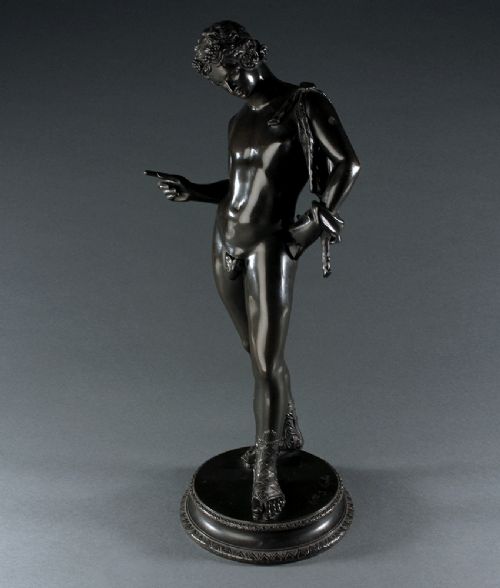
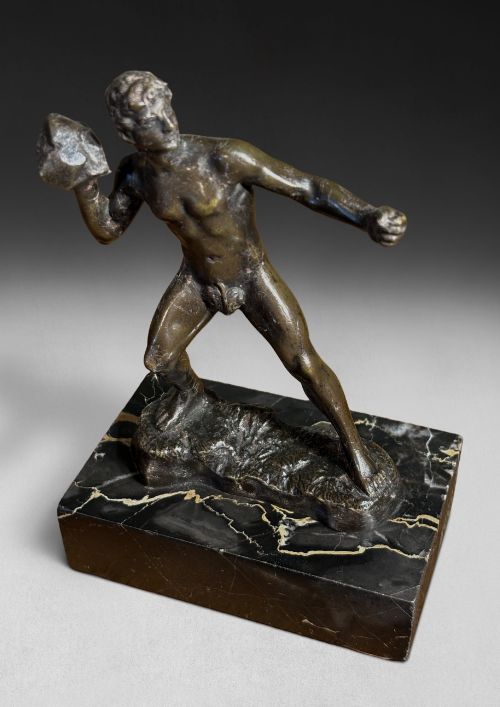
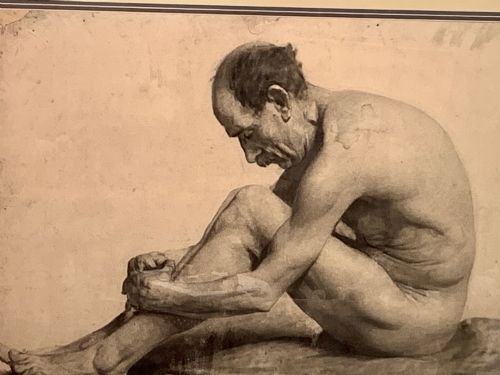
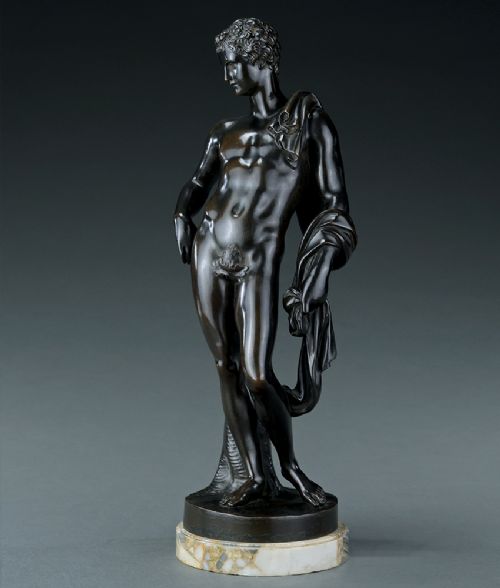
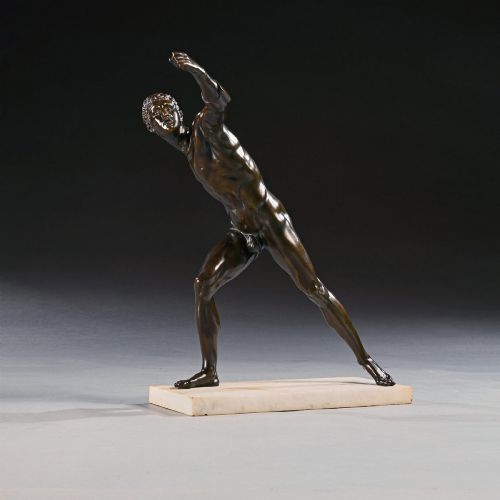
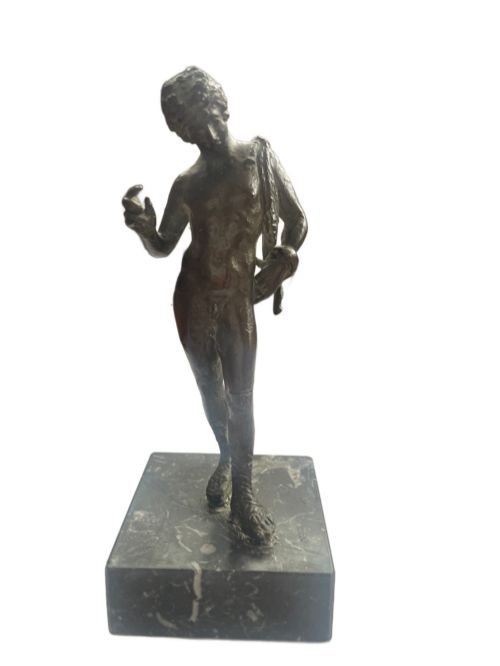
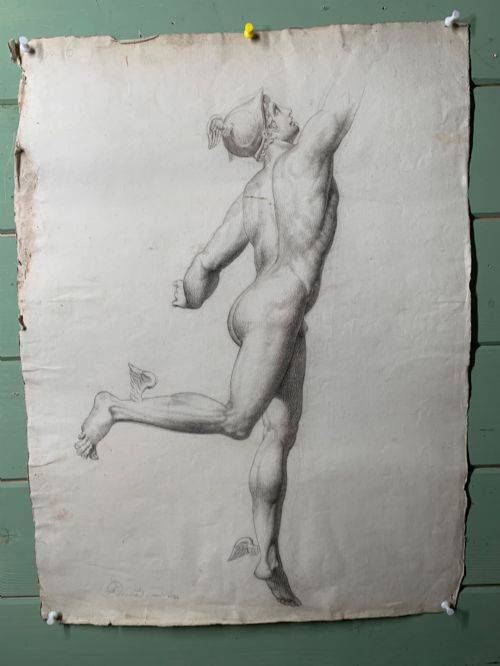
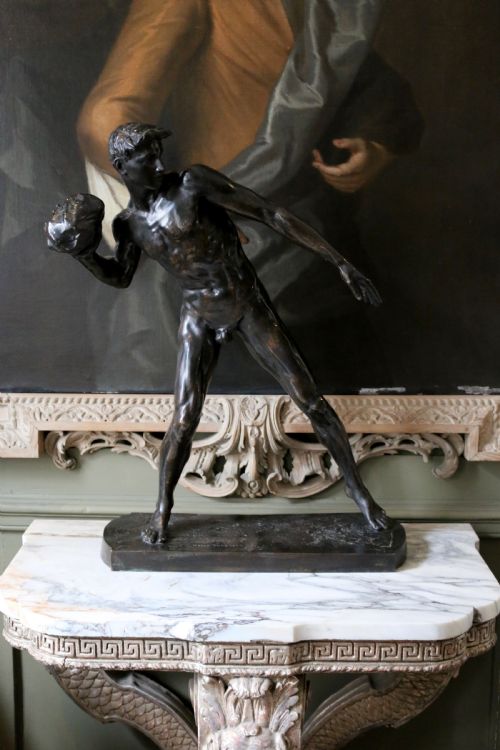
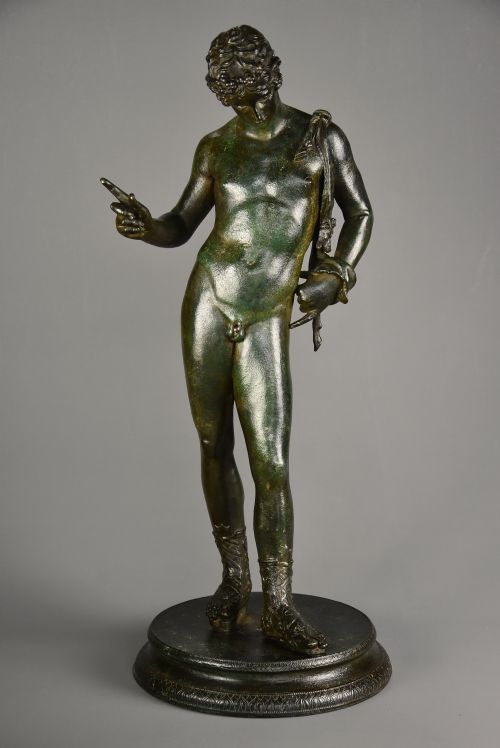
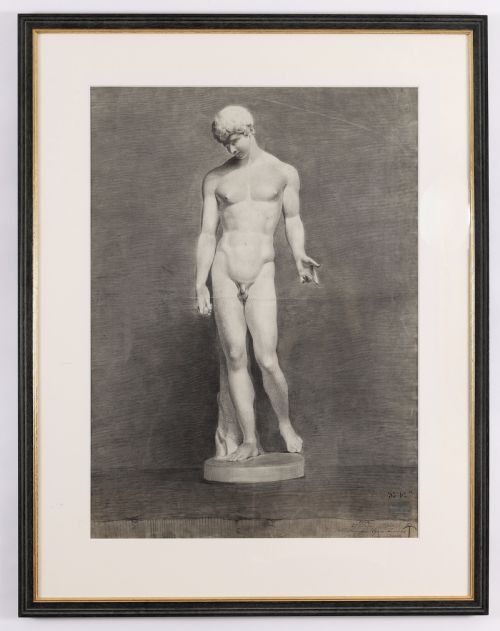
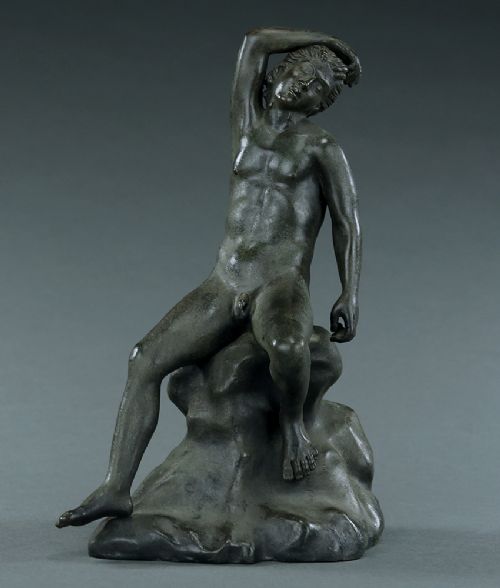
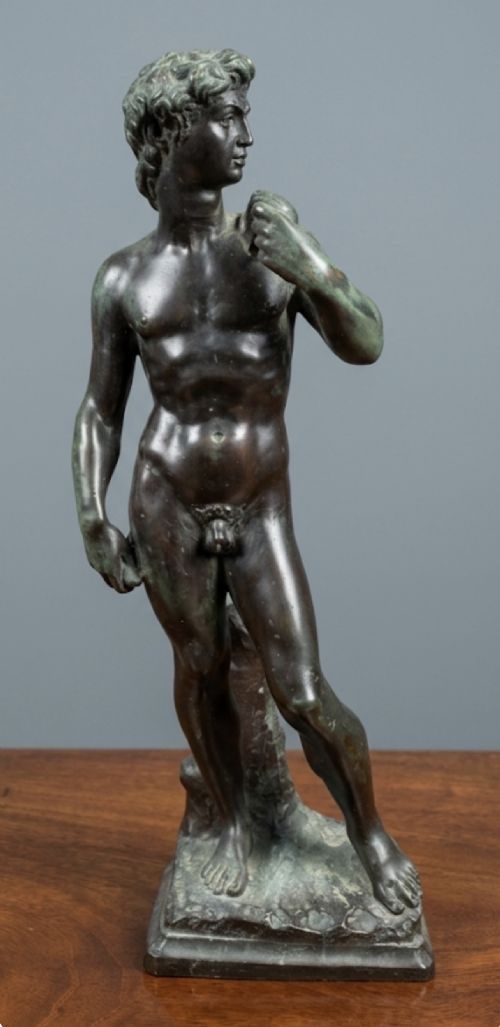
The material record on this page leans heavily toward Grand Tour bronzes produced in nineteenth-century Italy and France. These reductions of canonical antiquities range from library-scale bronzes of Narcissus and the Borghese Gladiator to detailed life studies in graphite and charcoal.
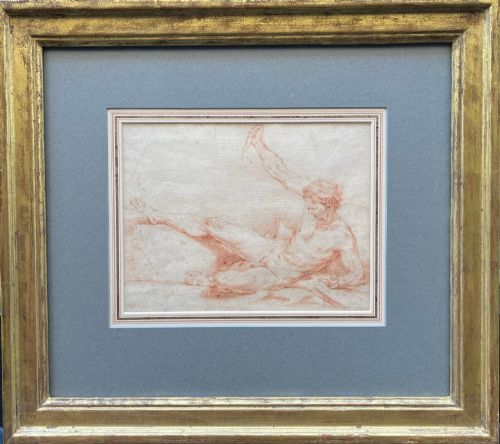
Sculptural objects dominate the selection, appearing alongside framed academic drawings and period prints. These works reflect the rigorous training methods of nineteenth-century art academies where studying the male form was central.
Materials and Techniques
Metal sculptures are cast in bronze using traditional methods, often finished with dark, green, or verdigris patination to mimic excavated antiquities. Marble and hard wood statues demonstrate careful hand-carving that achieves muscular definition and smooth surface transitions.
Works on paper utilise graphite, charcoal, wash, and pencil to capture tone and proportion from live models. Framed prints and drawings preserve the preparatory exercises submitted for academic competitions and Grand Prix de Rome exhibitions.
Classical Nude Male Figure Retail Price Guide 2026
Typical asking prices for classical nude male figure among the pieces listed under this phrase on Sellingantiques today, from the lower quarter to the upper quarter. They describe what is for sale here now, not the wider market.
Several bronzes depict Narcissus gazing downward, eternally admiring his own reflection in miniature.
Quality and Execution
Proportion and balance dictate the strength of a carved marble statue or a drawn life study. Masterful execution demonstrates a deep understanding of classical tension and skeletal structure, while inferior examples suffer from stiff or disproportionate limbs.
Frederic Leighton·Hamo Thornycroft·Raoul Francois Larche·Michele Amodio
The Classical Nude Male Figure Glossary
- Grand Tour
- A nineteenth-century tradition where affluent travellers acquired miniature bronzes and artworks in Italy as souvenirs of classical sites. These patinated metal figures reproduce famous Hellenistic and Roman sculptures found in continental museums.
- Neoclassical
- An artistic movement spanning the eighteenth and nineteenth centuries that revived the styles and subjects of ancient Greece and Rome. This aesthetic prioritises balanced composition, heroic nudity, and restrained emotional expression.
- Patination
- The chemical treatment or natural weathering applied to the surface of a bronze sculpture to alter its colour. Green and dark brown patinations are common on nineteenth-century souvenir bronzes to simulate ancient burial.
- Academic Realism
- A style of painting and sculpture produced under the influence of European art academies. It emphasises meticulous draughtsmanship, anatomical accuracy derived from life studies, and mythological or historical themes.
- Discophoros
- A classical sculptural type depicting a youth holding a discus, attributed to the ancient Greek sculptor Polyclitus. Numerous nineteenth-century bronze and marble iterations capture this balanced athletic pose.
Classical Nude Male Figure: Frequently Asked Questions
What is a Grand Tour bronze?
A Grand Tour bronze is a nineteenth-century souvenir cast in Italy after famous ancient sculptures. Wealthy travellers collected these reductions of figures like Narcissus and the Borghese Gladiator to display in their libraries.
These metal pieces were produced by skilled foundries in Naples, Rome, and Paris. They served as both decorative objects and tangible connections to classical antiquity.
How were academic drawings used?
Academic drawings of the male nude served as fundamental exercises for nineteenth-century art students learning anatomy and proportion. Working from live models in structured studio classes, artists honed their mastery of light, shadow, and line.
Such framed works on paper, executed in graphite, charcoal, or pencil, represent the rigorous training required before undertaking large historical paintings or sculptures.
Why are patinas important on bronzes?
Patina refers to the surface coloration applied to bronze sculptures, ranging from dark tones to vivid greens. Nineteenth-century founders used these chemical treatments to give modern casts the appearance of aged, excavated antiquities.
A well-preserved patina enhances the depth of musculature and adds character to the metalwork.
How do I identify a life study?
A life study is an artwork drawn or sculpted directly from a live model rather than from an imagination or an existing antique cast. These pieces often record specific lighting conditions, muscle tension, and individual human characteristics.
In nineteenth-century collections, they appear as detailed graphite drawings or terracotta figures bearing the marks of rigorous academic observation.