


Classical Marble Carving
These pieces of classical marble carving bring the heavy stillness of ancient sculpture and architecture directly into domestic rooms.
Classical Marble Carving
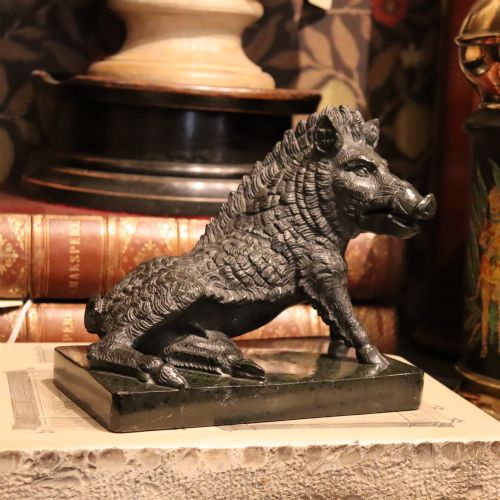
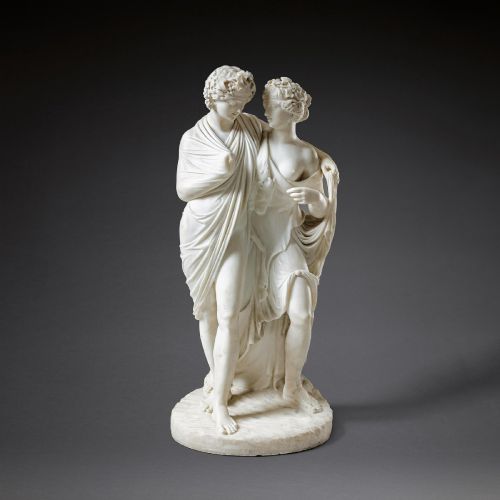
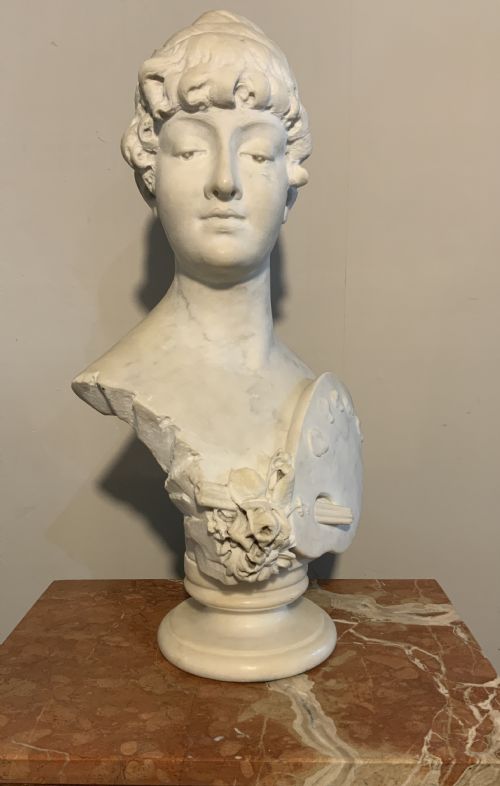
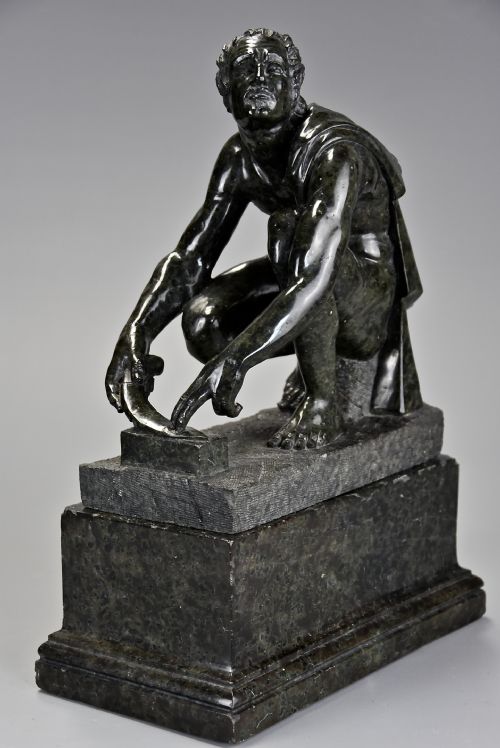
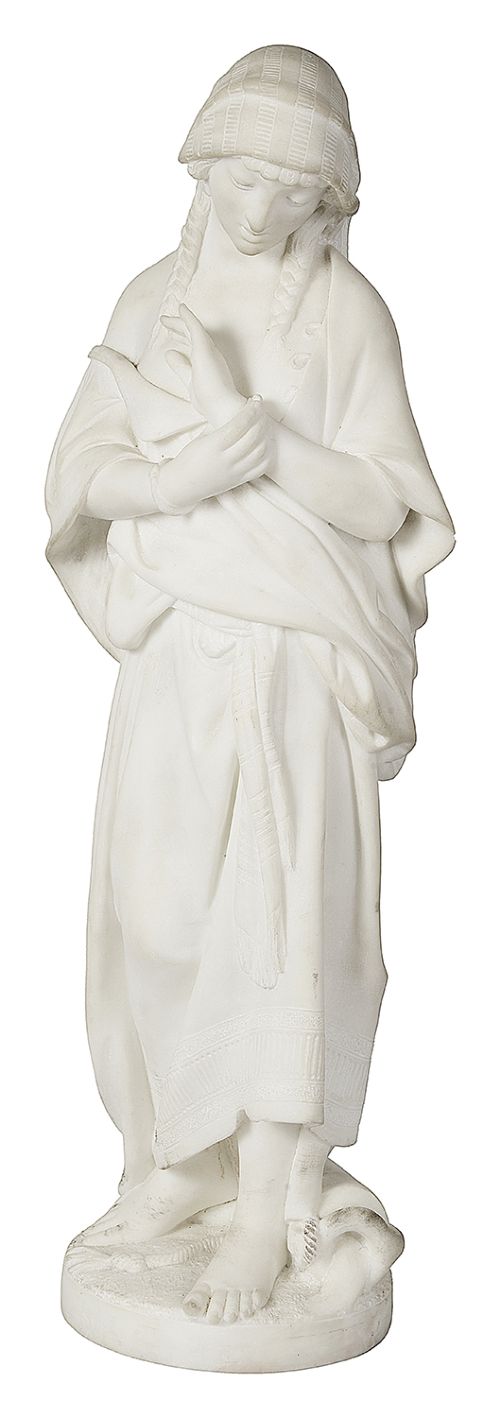
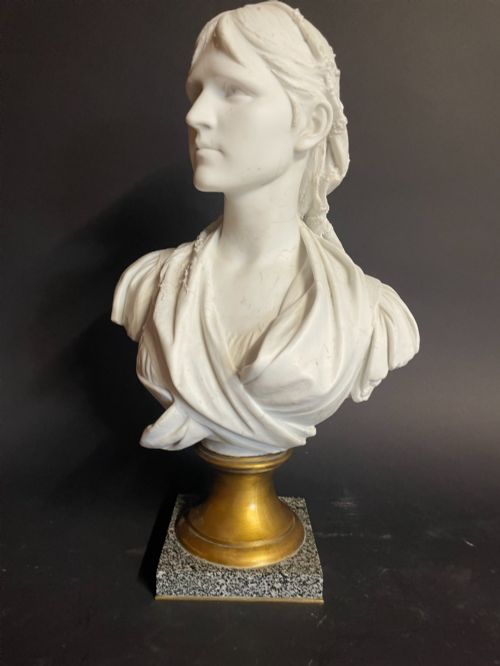
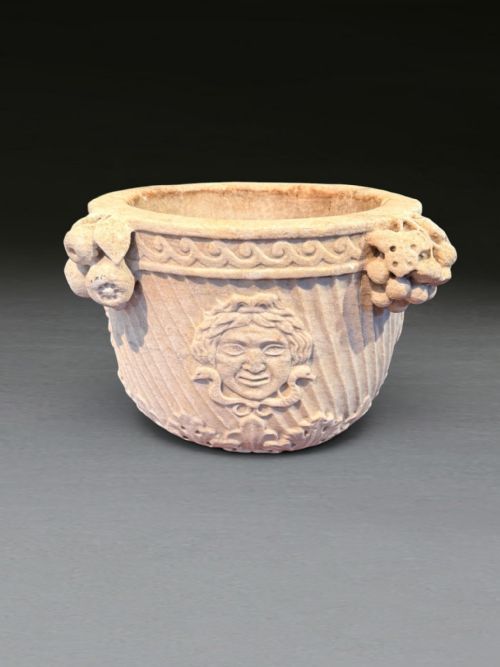
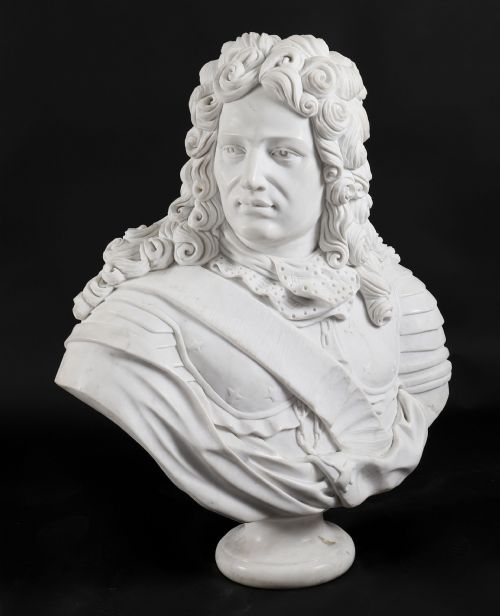
A classical marble carving embodies the enduring legacy of antiquity through sculpted figures, portrait busts, and architectural fragments. When exploring classical marble carving, buyers frequently encounter Grand Tour souvenirs, portrait busts of historical figures or mythical deities, and decorative furnishings like tazze or pedestals. These items bridge ancient aesthetic ideals with the interior tastes of the eighteenth and nineteenth centuries.
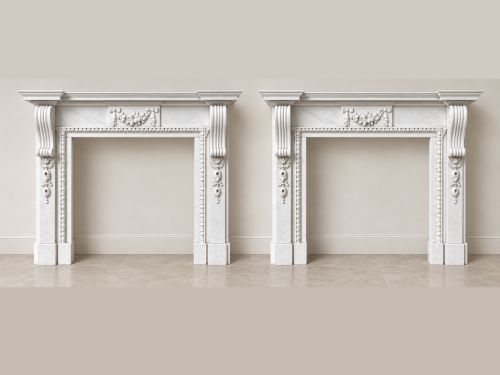
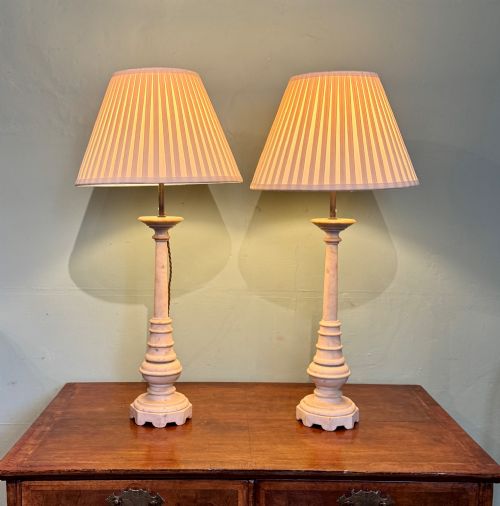
The selection ranges from monumental figures after antique prototypes to smaller alabaster and marble lamps, architectural plaques, and fireplace surrounds. Pieces originate primarily from Italian workshops, particularly Florence and Rome, alongside French and English interpretations in neoclassical and Victorian styles. The physical presence of carved stone establishes a commanding focal point within libraries, hallways, and drawing rooms.
Materials and Technique
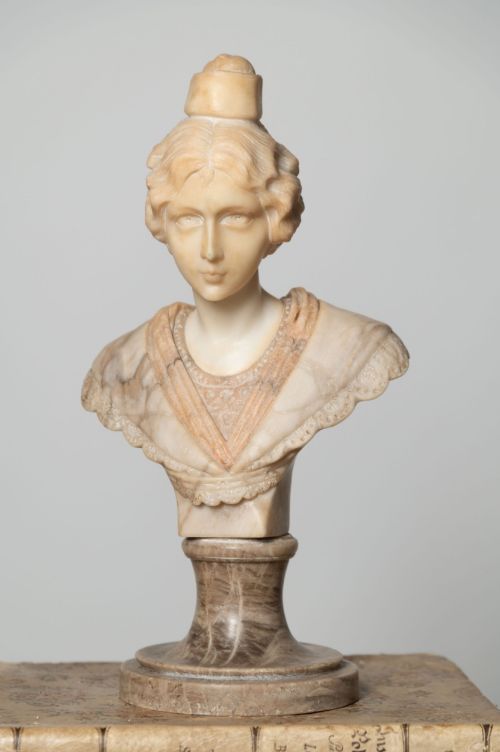
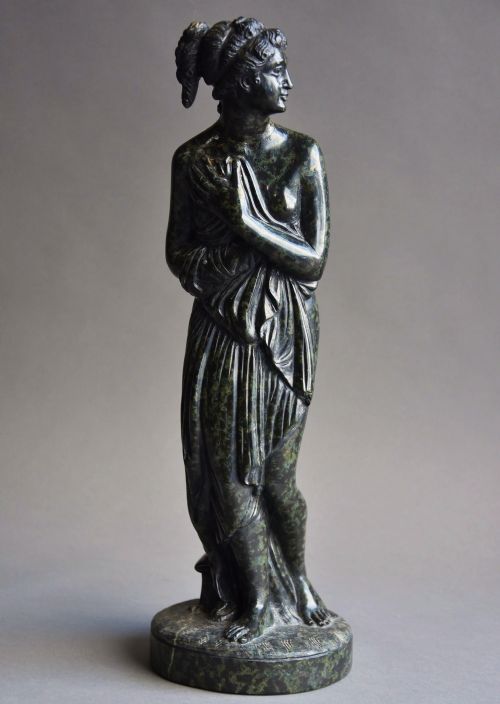
Makers utilised fine-grained Carrara marble, dense alabaster, and various coloured stones such as verdo prato and Siena marble to achieve subtle tonal gradations. Skilled sculptors employed chisels, rasps, and drills to render the soft folds of drapery, musculature, and lifelike facial expressions from heavy blocks of mineral. The resulting surfaces often received meticulous polishing to create a translucent quality reminiscent of human skin.
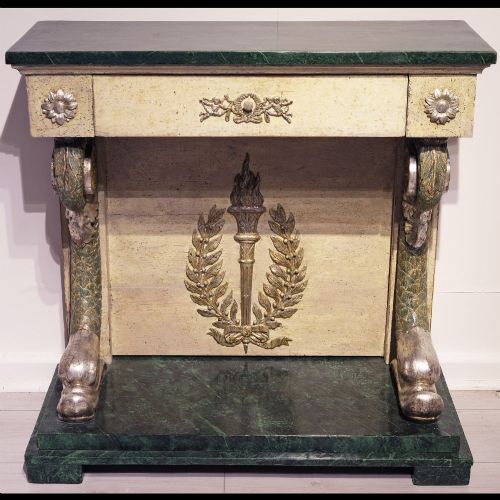
Support elements frequently incorporate secondary materials like mahogany, brass, or giltwood, particularly in console tables and lamp bases where stone meets furniture. Grand Tour models and decorative objects demonstrate precise turning, sawing, and inlay techniques alongside freehand sculptural carving. This combination of structural joinery and stone masonry ensures stability for heavy table tops and architectural ornaments.
Listings feature white marble, Carrara marble, and alabaster predominantly, alongside decorative stones like verdo prato and Siena marble.
Evaluating Execution
The distinction between ordinary and exceptional work lies in the anatomical precision of the carving, the sensitivity of the facial expression, and the crispness of the undercut details. Master sculptors captured hair, drapery, and bone structure with convincing naturalism, whereas lesser workshops produced stiff, formulaic representations with blurred contours. Signature attribution to known artists or documented studios elevates a piece significantly.
The choice and purity of the marble itself dictate much of the visual success, with uniform white statuary marble or richly figured decorative stones commanding attention. Superior pieces maintain crisp edges and unblemished surfaces that reveal the natural luminescence of the mineral. The integration of stone with auxiliary materials, such as finely cast bronze or fire-gilt mounts, further separates workshop tiers.
Carlo Albacini·Antonio Canova·Eugene Aizelin·Carrier-Belleuse·Thomas Hope
The Classical Marble Carving Glossary
- Grand Tour
- A traditional trip of Europe undertaken by upper-class young European men of sufficient means to flourish their cultural education. Objects acquired during these travels often replicated famous antique sculptures in miniature.
- Carrara Marble
- A type of white or blue-grey marble from the city of Carrara in Tuscany, widely used in sculpture and building décor since ancient times. Its fine grain made it the preferred material for nineteenth-century portrait busts.
- Neoclassical
- A Western cultural movement in the decorative arts, theatre, literature, and music that drew inspiration from the art and culture of classical antiquity. This style dominated European design throughout the late eighteenth and nineteenth centuries.
- Serpentine
- A group of green silicate minerals often used as a decorative stone in architecture and carving due to its mottled appearance. It frequently contrasts with white marble elements in table tops and architectural ornaments.
- Alabaster
- A fine-grained, translucent stone that is softer than marble, making it easier to carve into intricate lamps and small figures. It was frequently utilised during the Victorian and Edwardian periods for domestic lighting.
Classical Marble Carving: Frequently Asked Questions
Where were these carvings displayed?
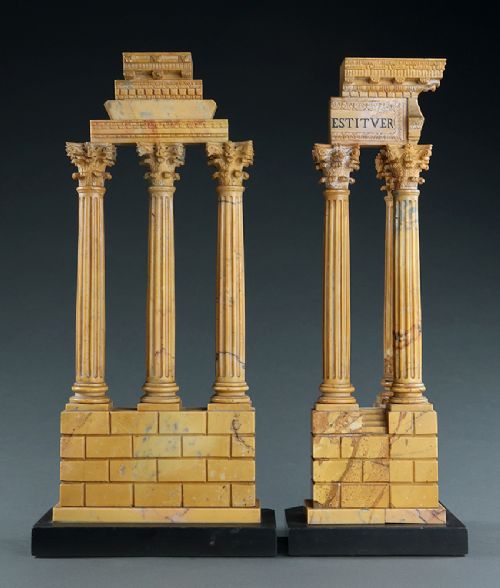
Sculptures and busts typically occupied libraries, entrance halls, and formal drawing rooms as symbols of classical learning and refined taste. Smaller decorative items like obelisks and architectural models functioned as desk ornaments or mantelpiece displays.
Console tables and pedestals provided dedicated surfaces to elevate these heavy stone objects within domestic interiors. Their placement reflected a broader European desire to domesticate the grandeur of ancient ruins and museum collections.
How do I identify Grand Tour pieces?
Grand Tour items usually reproduce famous classical sculptures housed in Italian museums, rendered at a reduced scale for easy transport home by travellers. They often feature materials typical of Italian workshops, including Carrara marble, alabaster, and various coloured decorative stones.
These pieces date predominantly from the nineteenth century, aligning with the height of European travel to Rome, Florence, and Naples. Their surfaces frequently show the careful hand-finishing characteristic of studio copies made for foreign visitors.
How should I clean marble?
Marble requires gentle dusting with a soft, dry cloth to prevent the accumulation of grit in carved crevices and undercut details. Water and harsh chemical cleaning agents should be avoided, as moisture can penetrate porous stone and cause staining.
Professional conservation advice is recommended for deeper cleaning or the removal of old wax buildups on historic surfaces. Keeping carvings away from direct heat sources also prevents thermal shock and drying of internal stone structures.
What is the difference between marble and alabaster?
Marble is a metamorphic rock formed from limestone, possessing high density, durability, and a crystalline structure that takes a sharp, enduring polish. Alabaster is a softer mineral composed of gypsum or calcite, which allows for greater translucency when carved thin.
Because of its softness, alabaster is easily scratched and more susceptible to moisture damage than marble. This property made alabaster particularly popular for Victorian table lamps where light could diffuse through the translucent stone walls.