
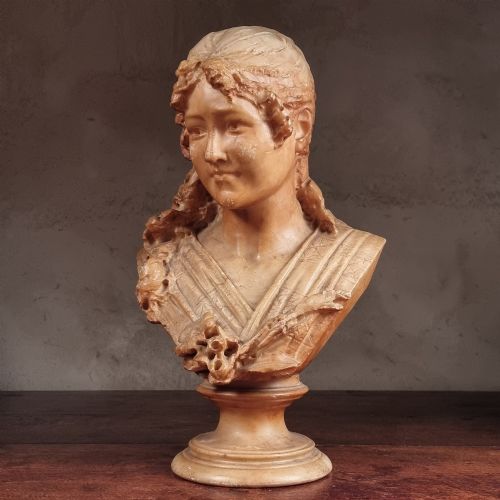


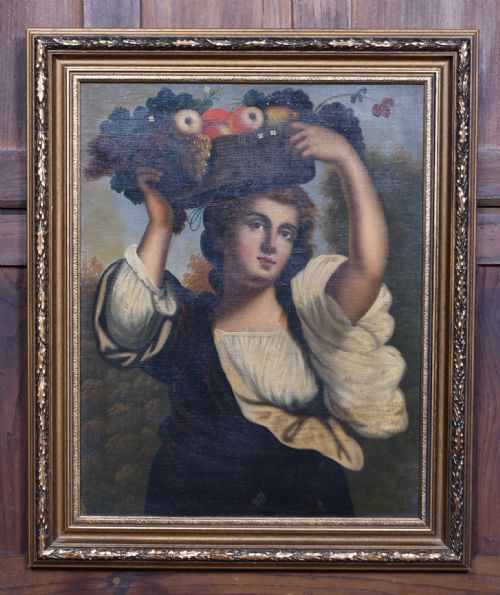


Classical Maiden Portrait
These classical maiden portrait works capture idealised figures in sculpture and painting, offering enduring elegance for your interior.
Classical Maiden Portrait
A classical maiden portrait encompasses carved busts, cast metal sculptures, and oil paintings depicting female figures in antique or allegorical dress. These works draw heavily on historical motifs, capturing serene expressions and elaborate hair styling.
You will most frequently encounter nineteenth-century sculptural pieces carved from alabaster, marble, or cast in bronze and terracotta. Busts dominate the selection, often presented on contrasting stone plinths.
Victorian interpretations sit alongside continental European examples, spanning styles from strict neoclassical revival through to flowing art nouveau designs. Framed pictures and paintings occasionally appear to broaden the visual range.
Materials and construction methods
Sculptors utilised natural stones such as white marble, Carrara marble, and alabaster, shaping them with chisels and polishing the surfaces to achieve smooth skin tones. Bases often incorporate contrasting green vert de mer marble or simpler wooden mounts.
Metalworkers employed bronze casting and bronzed terracotta techniques to create durable figures with nuanced patinas. Paint and print methods include oil on canvas and specialised framed crystoleum pictures.
Makers integrated mixed media components, pairing carved stone elements with giltwood framing or specialised cast iron foundations to achieve structural stability.
The material palette spans alabaster, marble, terracotta, bronze, paper, glass, and giltwood across nineteenth-century Victorian pieces.
Distinctions in craftsmanship and finish
Material selection divides the range significantly, with solid Carrara marble and heavy cast bronze commanding greater presence than lighter terracotta or moulded compositions. The choice of base stone also signals the ambition of the piece.
Signed works attributed to documented continental sculptors carry distinct artistic weight compared to unsigned studio pieces of the same period.
Hans Müller·Emmanuel Villanis·Auguste Moreau·Augustus Jules Bouvier·Goldscheider
The Classical Maiden Portrait Glossary
- Alabaster
- A soft, fine-grained stone used extensively for nineteenth-century portrait busts due to its translucent quality. It polishes to a smooth finish that resembles human skin.
- Carrara Marble
- A high-grade white or blue-grey marble sourced from Italy, prized by classical sculptors for its uniform grain and durability. It forms the basis of many detailed nineteenth-century carvings.
- Terracotta
- Fired clay utilised for sculptural modelling before being painted, glazed, or given a metallic bronze finish. It allows for expressive handling by the artist.
- Crystoleum
- A Victorian technique where a concave glass painting is coloured by hand and placed behind another glass sheet for protection. This creates a luminous, layered picture.
- Vert de Mer
- A dark green decorative marble often used for sculptural plinths and column bases. It provides a striking visual contrast against white alabaster or marble portrait subjects.
Classical Maiden Portrait: Frequently Asked Questions
What periods do these portraits cover?
The available selection concentrates primarily on the nineteenth century, including specific dates across the eighteen-eighties and eighteen-nineties alongside broader Victorian classifications.
Maker signatures and material choices frequently help narrow down the exact decade of creation.
How were these busts displayed originally?
Sculptural busts were typically placed on heavy mantelpieces, library tables, or dedicated pedestals within nineteenth-century drawing rooms and studies.
Framed paintings and crystoleums hung upon interior walls, often grouped with other academic or pastoral artworks.
Are these works solid marble or plaster?
The evidence records genuine natural materials including solid alabaster, Carrara marble, and cast metals such as bronze and iron.
Composition materials like terracotta also appear, offering different textural qualities compared to carved stone.
What is an allegory in these sculptures?
Certain portrait subjects represent abstract concepts such as the seasons, exemplified by depictions of summer through specific floral or seasonal attributes.
Artists used these thematic titles to elevate simple portraiture into recognised artistic allegories.