





Classical Horse Sculpture
These classical horse sculpture pieces bring classical antiquity and nineteenth-century foundry skill into a room, offering bronze and marble representations of iconic equine subjects.
Classical Horse Sculpture
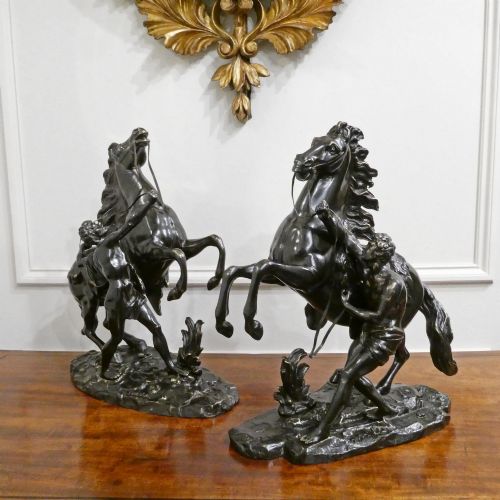
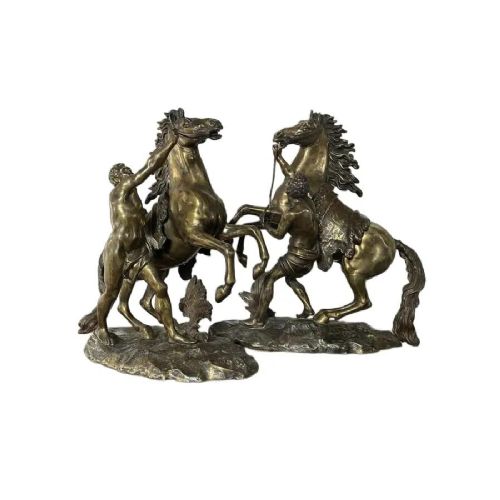
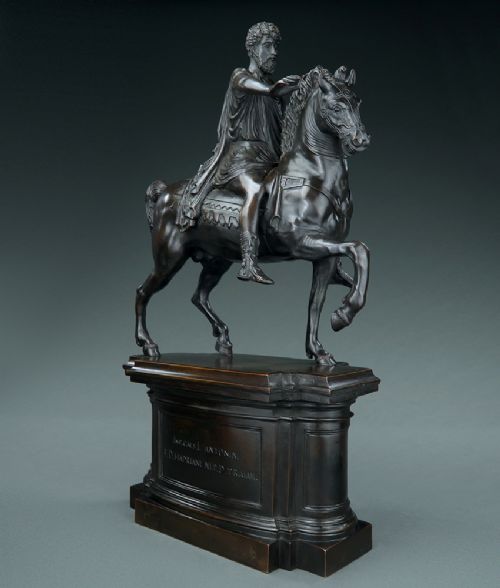
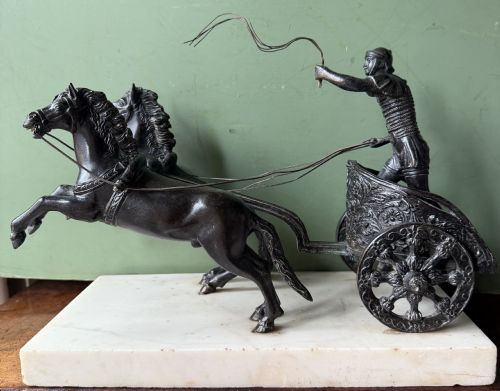
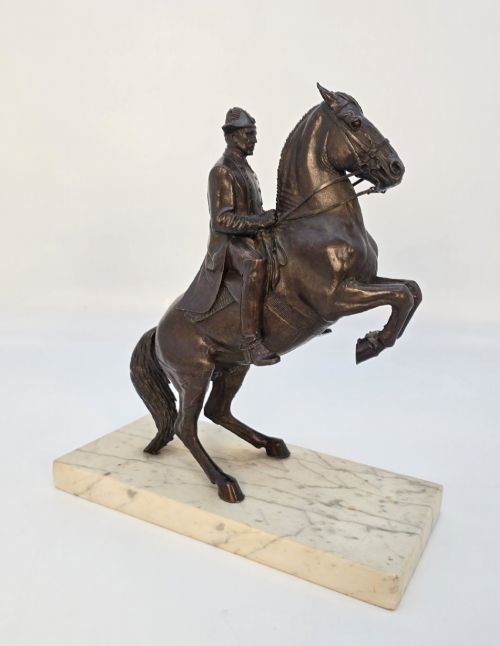
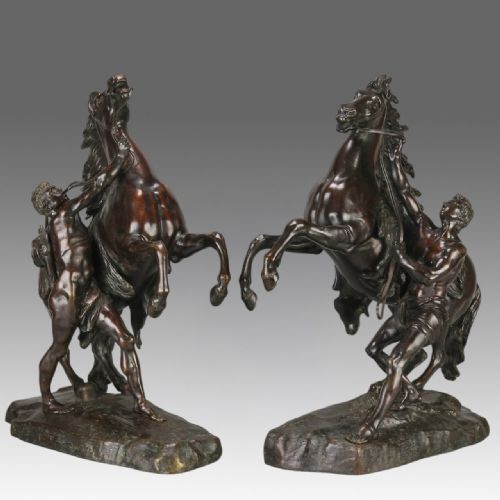
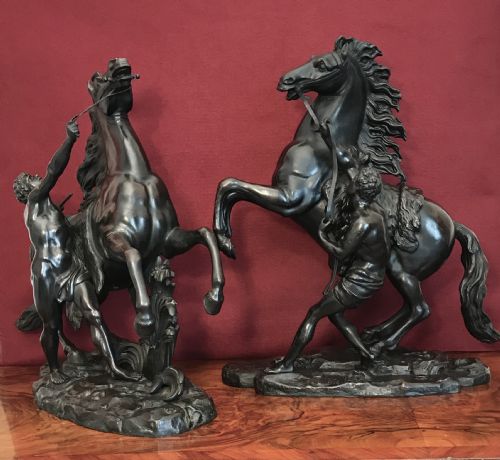
A classical horse sculpture typically takes the form of French bronze Marly horses after Coustou, Grand Tour equestrian statues, or relief plaques originating from the nineteenth century and earlier decades. Buyers seeking these works will frequently encounter figures mounted upon marble plinths, pairs depicting handlers, and depictions of historical riders such as Marcus Aurelius.
The selections span French Neoclassical, Academic Realism, and Grand Tour styles, capturing equine form and human musculature through enduring bronze, gilt-bronze, and marble dust. These sculptures function as tabletop studies or decorative centerpieces that reflect classical European sculptural traditions.
How they were made
Foundries utilised traditional bronze casting methods to produce detailed equine models, often finishing the metal with a dark patina or applying gilt-bronze and ormolu highlights. Artisans also worked with carved wood, plaster, and moulded marble dust to create both freestanding statues and wall plaques.
Many bronzes were cast after famous monumental works, requiring skilled chasers to refine the surface details of mane, harness, and musculature by hand after the metal cooled.
Classical Horse Sculpture Retail Price Guide 2026
Typical asking prices for classical horse sculpture among the pieces listed under this phrase on Sellingantiques today, from the lower quarter to the upper quarter. They describe what is for sale here now, not the wider market.
Listings feature periods from the Victorian era and the nineteenth century alongside mid-twentieth-century pieces, spanning materials such as bronze, marble, and plaster.
What varies in quality
Quality in a classical horse sculpture rests upon the crispness of the casting and the sensitivity of the hand-chasing applied to the metal or marble dust surface. Finer examples retain sharp musculature, distinct facial expressions, and well-defined harness details without the blurring often found in later or secondary castings.
The choice of base materials also distinguishes the pieces, with solid white marble plinths and heavy dark patinas offering greater substance and stability compared to lighter plaster or composite alternatives.
Coustou·Charles Crozatier·Verrocchio
The Classical Horse Sculpture Glossary
- Marly Horses
- Large sculptural groups depicting rearing horses restrained by grooms, originally commissioned for the Château de Marly and frequently replicated in bronze during the nineteenth century. These pairs remain among the most recognizable subjects in classical equine sculpture.
- Grand Tour
- A traditional trip of Europe undertaken by upper-class young men in the eighteenth and nineteenth centuries, resulting in the acquisition of small-scale bronze souvenirs such as equestrian statues. These souvenir bronzes often replicated famous public monuments.
- Ormolu
- Finely ground high-carat gold applied to a bronze base using a mercury amalgamation process, popular in French decorative arts. It provides a bright, durable golden finish distinct from standard gilding.
- Relief
- Sculptural elements where the figures project from a flat background rather than existing in the round. Examples include marble dust wall plaques depicting Hellenistic horse riders.
Classical Horse Sculpture: Frequently Asked Questions
What are Marly horses?
Marly horses are sculptural representations of rearing horses and their handlers, originally created by Guillaume Coustou for the French royal residence at Marly. Nineteenth-century founders frequently cast reduced bronze versions of these iconic figures.
These pairs became popular decorative items for libraries and studies, appreciated for their dynamic composition and classical symmetry.
What is a Grand Tour bronze?
A Grand Tour bronze is a small-scale replica of a classical monument or sculpture, purchased by travellers touring Europe during the nineteenth century. Subjects included ancient Roman statues and Renaissance equestrian monuments.
These souvenir pieces allowed collectors to bring museum-scale masterworks into domestic interiors as tabletop decor.
How do I care for a bronze sculpture?
Bronze sculptures require minimal maintenance, typically needing only a gentle dusting with a soft, dry cloth to prevent particulate buildup. Avoiding harsh chemical cleaners preserves the integrity of the original dark patina or gilt surface.
Occasional light waxing with microcrystalline wax can protect the metal from atmospheric moisture in interior settings.
What materials are used besides bronze?
While bronze is the primary metal seen in these sculptures, makers also utilised marble, wood, plaster, and marble dust. Marble frequently serves as a sturdy base plinth for bronze equestrian studies.
Composite materials like marble dust allowed workshops to cast relief plaques with the tactile qualities of carved stone.