


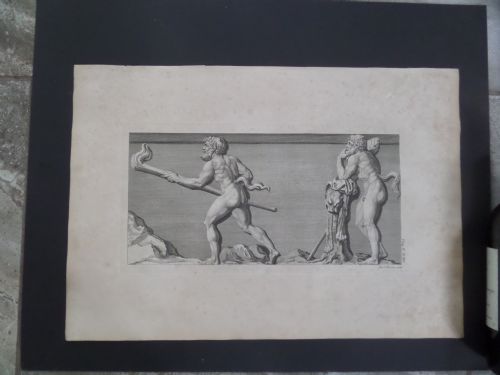


Classical Greek Relief Print
These eighteenth-century engravings capture classical greek relief print subjects with academic precision, offering collectors a direct link to neoclassical recording of ancient monuments and mythological figures.
Classical Greek Relief Print
A classical greek relief print in this selection consists entirely of eighteenth-century engravings originating from major archaeological surveys and architectural studies. The predominant form is the large plate depicting mythological figures, gods, satyrs, and architectural details from Athens.
Most examples derive from foundational publications such as the antiquities of Athens, recording ancient friezes and relief sculptures. Buyers encounter works produced by notable architectural engravers who documented classical sites for British and European subscribers.
How They Were Made
These works are produced as copperplate engravings on handmade paper using dark printing ink. The process requires skilled hands to incise fine lines into metal plates before transferring the image under high press pressure.
Engravers such as James Basire and Edward Rooker executed these plates to replicate low relief sculpture and architectural masonry with exacting neoclassical linear clarity.
All listings on this page share a single century of origin and are printed on paper using ink within the neoclassical style.
What Varies in Quality
Quality in these sheets rests upon the crispness of the plate impression and the preservation of the paper margins. Early strikes from freshly cut copper show sharp definition in the musculature of figures and the fine cross-hatching of architectural backgrounds.
Condition factors include sheet tone, potential foxing within the blank margins, and the completeness of the original platemark. Strong impressions retain deep blacks and clear tonal gradations that weaker, later printings lose.
James Basire·Edward Rooker
The Classical Greek Relief Print Glossary
- Engraving
- A printmaking technique where an artist cuts lines directly into a metal plate with a sharp steel tool called a burin. The resulting incisions hold the ink for transfer to paper under pressure.
- Platemark
- The indented impression left in the paper by the edges of the copper plate during the printing process. Its presence confirms the traditional intaglio method used to create the sheet.
- Neoclassical
- The dominant artistic style of the eighteenth century that revived the forms, motifs, and proportions of classical Greece and Rome. It emphasises severe lines, symmetry, and archaeological accuracy.
- Relief
- Sculptural artwork where elements project from a flat background surface. The eighteenth-century prints on this page record such carved stone panels and architectural friezes.
Classical Greek Relief Print: Frequently Asked Questions
What period do these prints date from?
Every piece recorded in these listings dates to the eighteenth century. They were produced during a period of intense scholarly and artistic interest in the ruins of Greece.
Publishers commissioned expert draughtsmen and engravers to travel to Athens and record surviving architecture and sculptural reliefs for contemporary intellectuals.
Who engraved these classical subjects?
The works available are primarily by prominent British printmakers of the Georgian era, most notably James Basire and Edward Rooker. These craftsmen worked closely with antiquarians to translate field drawings into precise copperplate engravings.
Their plates served as illustrations for monumental architectural folios that documented the physical remains of classical antiquity.
How should I frame an antique engraving?
Framing requires archival materials to protect the delicate eighteenth-century paper and ink from environmental degradation. Acid-free mounts and backing boards prevent discoloration and acid transfer over time.
Keep the original platemark visible within the window of the mount rather than covering the paper edges with the frame rebate.
What subjects appear most often?
The dominant subjects include mythological figures, satyrs, wind deities such as Boreas and Zephyros, and architectural fragments from Athens. These depict stone friezes and relief sculptures recorded directly from ancient sites.
Such images reflect the neoclassical taste for academic subjects drawn from classical mythology and archaeology.