
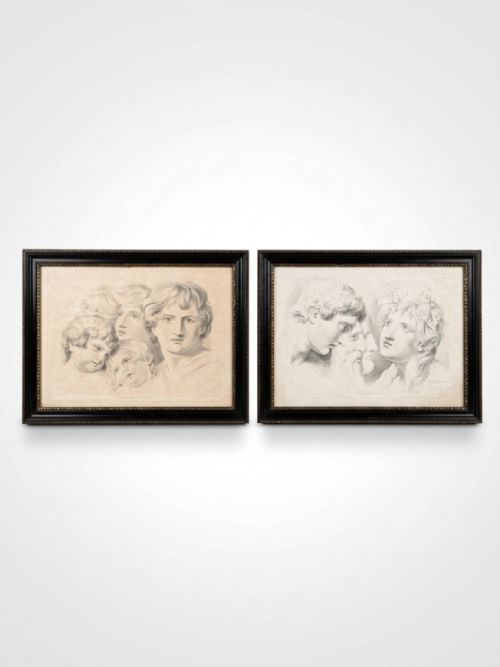


Grand Tour Etching Print
These grand tour etching print pieces capture classical antiquity and architecture, offering collectors windows into eighteenth and nineteenth century travels.
Grand Tour Etching Print
A grand tour etching print depicts classical architecture, Roman statues, and ancient ruins recorded by travellers abroad. These works record the sights of Italy and Greece, capturing monuments from Rome, Athens, and the Vatican loggie.
You will most frequently encounter eighteenth century and nineteenth century examples on paper, often framed in wood or gilt wood with glass. Architectural prints and sets of coloured engravings dominate the available forms, ranging from single sheets to matched sets of four.
The subjects span historical sites, mythological figures, and archaeological discoveries such as the antiquities of Herculaneum and Athens. Neoclassical style defines these pieces, reflecting the aesthetic tastes of collectors undertaking the grand tour.
How they were made
Maker processes rely on ink transferred from engraved metal plates onto quality paper sheets. Many examples incorporate watercolour or hand colouring applied over the printed lines to enhance architectural details and classical scenes.
Finished works find protection behind glass within wooden frames, frequently finished with gold leaf or gilt wood. This framing preserves the delicate paper and ink surfaces from atmospheric damage and handling.
Travellers brought home rolled paper monuments in their luggage, ensuring classical Rome survived in British drawing rooms.
What varies in quality
Quality rests in the crispness of the line work and the fidelity of the architectural draughtsmanship. Works produced by skilled printmakers display precise detail in sculptural reliefs and stone masonry.
The presence of early hand colouring or period framing adds to the visual depth of the piece. Completeness in multi-part series, such as sets of four architectural scenes, elevates the character of the grouping.
Francesco Piranesi·Pierre Buillon·Henri Chatillon·Giovanni Ottaviani·Edward Rooker
The Grand Tour Etching Print Glossary
- Grand Tour
- A traditional journey through Europe undertaken by upper-class European young men of means as a educational trip. The prints collected served as tangible records of these travels.
- Etching
- A printmaking process where lines are bitten into a metal plate with acid before ink is applied. This technique allows for fine, flowing details in architectural representations.
- Engraving
- A method of cutting design lines directly into a metal plate using a sharp tool called a burin. The resulting impressions yield sharp and precise graphic lines.
- Neoclassical
- A Western cultural movement drawing inspiration from the classical art and culture of ancient Greece and Rome. This aesthetic guides the composition of grand tour imagery.
- Gilt Wood
- Wood decorated with gold leaf or gold paint applied to the surface. It provides traditional framing for period artwork.
Grand Tour Etching Print: Frequently Asked Questions
What is a grand tour etching print?
These works are period paper prints depicting classical ruins, statues, and architectural scenes purchased by travellers abroad.
They serve as historical records of eighteenth and nineteenth century archaeological interest and neoclassical taste.
How were these prints originally displayed?
Travellers often bound their purchased prints into large volumes or portfolio books upon returning home. Alternatively, many were framed behind glass in wood or gilt wood for wall display.
Framed examples protect the delicate paper from light and handling while showcasing the intricate line work.
How do I identify an eighteenth century print?
Look closely at the paper stock, ink coloration, and plate marks left by the printing press edges. Eighteenth century examples often exhibit heavier laid paper watermarks and distinct plate impressions.
Subject matter focusing on excavations like Herculaneum or Athens also points toward this earlier period of production.
Are these prints usually found in sets?
Many architectural subjects and decorative series were published and collected as matched sets of four. Complete sets depict sequential views of Roman or Vatican loggie decorations.
Single sheets also appear frequently, representing standalone monuments like the Arc de Triomphe or specific statues.
How should I care for framed paper prints?
Keep framed pieces away from direct sunlight to prevent the ink and any watercolour additions from fading over time. Stable room humidity protects the paper stock from warping or foxing.
Ensure the glass remains sealed to prevent dust and moisture accumulation inside the frame.