


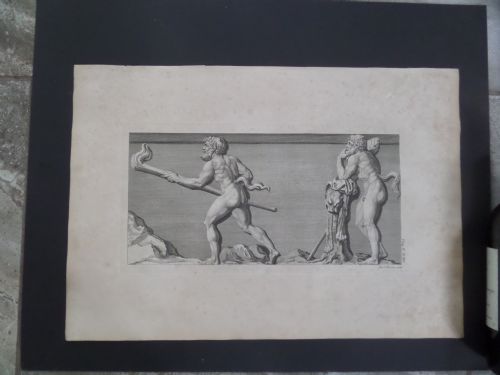


Antique Greek Relief Engraving
These antique greek relief engraving examples are eighteenth century neoclassical prints on paper capturing classical architecture and mythological figures.
Antique Greek Relief Engraving
When you search for antique greek relief engraving, you are looking at eighteenth century prints that record classical Greek architecture, mythical paintings, and ancient deities. These works draw directly from the antiquities of Athens, capturing subjects like Greek gods, winged figures, and satyrs in detailed ink on paper.
The pieces you are most likely to meet on this page belong entirely to the eighteenth century, presenting neoclassical interpretations of classical Greek sculpture and monuments. They function as fine art prints and architectural engravings, designed to bring classical scholarship and visual culture into eighteenth century interiors.
Materials and methods
These works are produced as paper prints utilising ink to transfer fine lines and tonal details from engraved plates. The physical medium relies on high quality laid or wove paper that receives the black ink impressions under heavy press pressure.
The technique involves master engravers incising lines into metal plates to capture complex architectural elevations, architectural details, and sculptural reliefs. This intaglio process allows for the precise rendering of classical drapery, musculature, and architectural stone surfaces.
Several seventeenth and eighteenth century gods managed to keep their wings entirely unruffled despite the printing press.
Assessing quality
Quality in these neoclassical prints rests upon the crispness of the ink impression and the clarity of the engraved lines. Finer examples retain deep, sharp contrasts where every architectural moulding and mythological detail remains distinct.
Condition of the paper surface and the generosity of the surrounding margins also define the caliber of a piece. Well preserved sheets without excessive toning or foxing present the original draughtsmanship to best effect.
James Basire·Edward Rooker
The Antique Greek Relief Engraving Glossary
- Engraving
- A printmaking process where an artist cuts lines directly into a metal plate using a burin. The resulting grooves hold the ink that transfers to paper under pressure.
- Neoclassical
- A Western cultural movement drawing inspiration from the art and culture of classical antiquity. It dominates the aesthetic of eighteenth century architectural and sculptural prints.
- Intaglio
- A family of printmaking techniques where the image is incised into a surface, and the incised line or sunken area holds the ink. Engraving and etching are primary examples of this method.
- Antiquities
- The ancient civilisations of the Mediterranean, particularly classical Greece and Rome, whose material remains served as the primary subject for eighteenth century artists and scholars.
Antique Greek Relief Engraving: Frequently Asked Questions
What subjects appear in these prints?
The subjects focus on Greek gods, winged deities, satyrs, and architectural monuments from Athens. They record ancient sculpture and mythical paintings documented by eighteenth century scholars.
These compositions reflect the period's intense academic interest in classical Greek art, presenting deities and architectural elevations with scholarly precision.
How old are these engravings?
Every piece seen here originates from the eighteenth century. They coincide with the publication of major archaeological surveys documenting classical ruins.
This specific period of production gives the works their distinctive neoclassical aesthetic, tying them to the age of Enlightenment exploration.
How were they originally displayed?
In the eighteenth century, these large prints were typically bound into scholarly folios and architectural volumes documenting Athenian antiquities. Wealthy collectors later framed individual plates for study and display in libraries and drawing rooms.
Framing preserved the paper sheets while allowing the detailed engravings of classical architecture and mythology to be viewed as fine art.
What materials make up each piece?
The physical works consist entirely of dark ink applied to paper supports. The paper is typically handmade rag stock suited to taking deep intaglio impressions.
These durable materials have survived centuries when kept away from excessive light and damp conditions.