




Classical Gold Pier Mirror
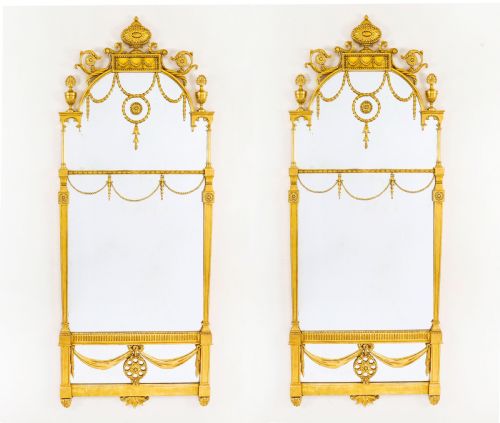
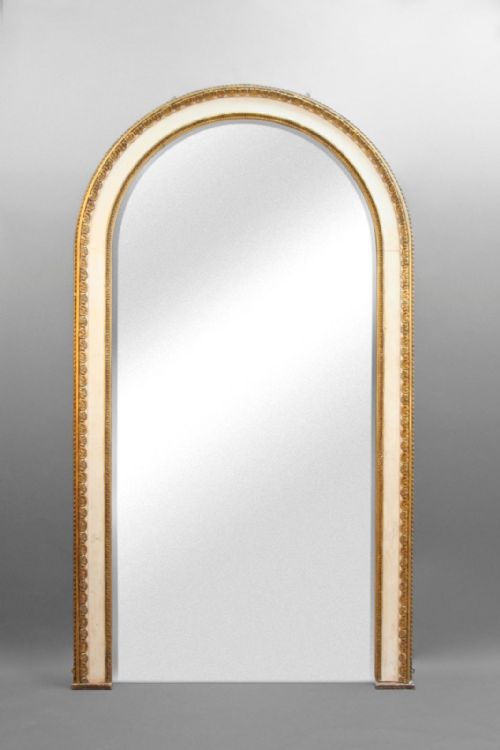
A classical gold pier mirror brings light and neoclassical design to a room, hung traditionally between windows.
Classical Gold Pier Mirror
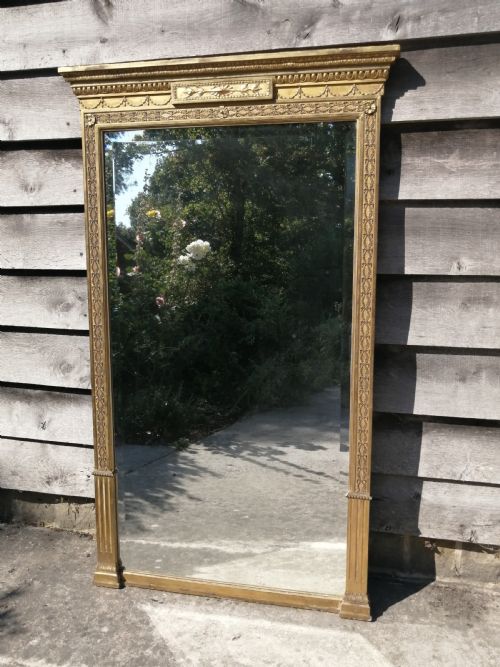
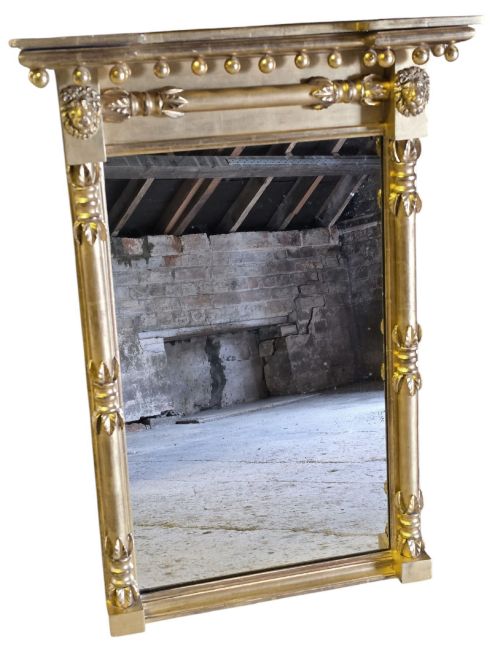
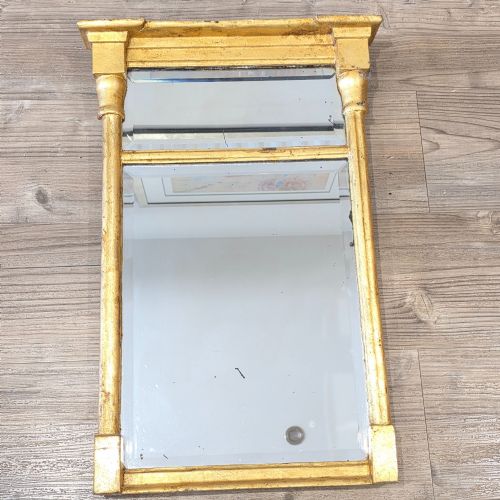
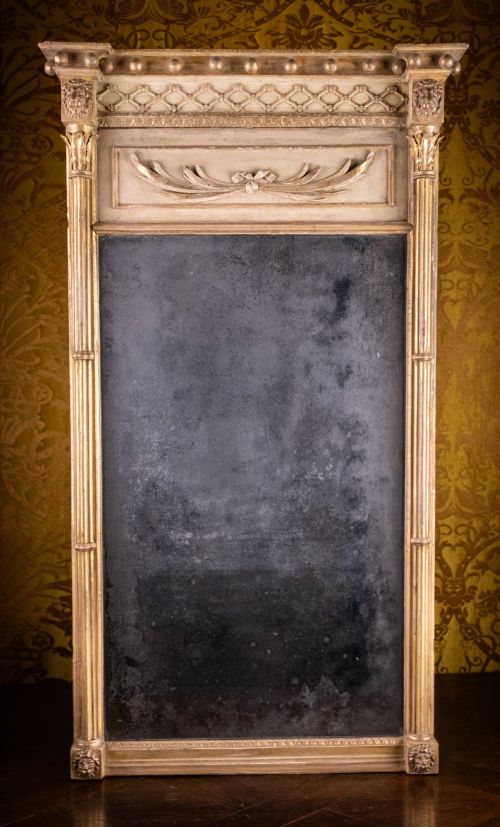
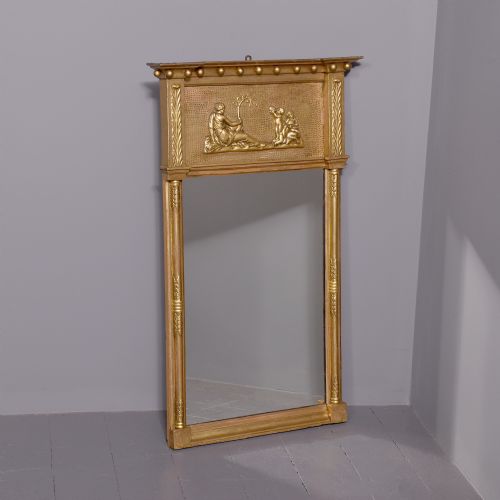
A classical gold pier mirror sits between windows or above console tables, designed to reflect light deep into period rooms. The pieces gathered here belong predominantly to the Regency, Georgian, and nineteenth-century periods, showing Neoclassical, French Empire, and George III stylistic influences.
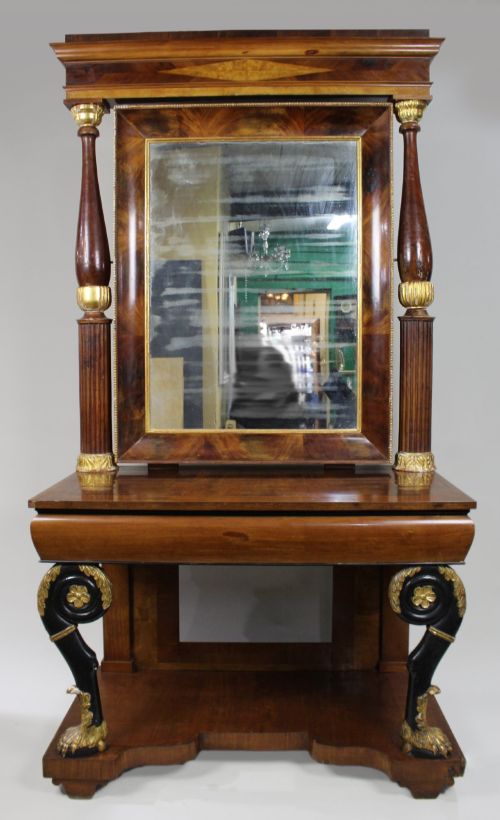
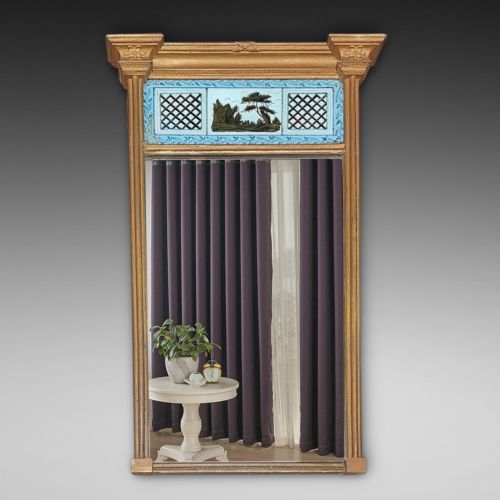
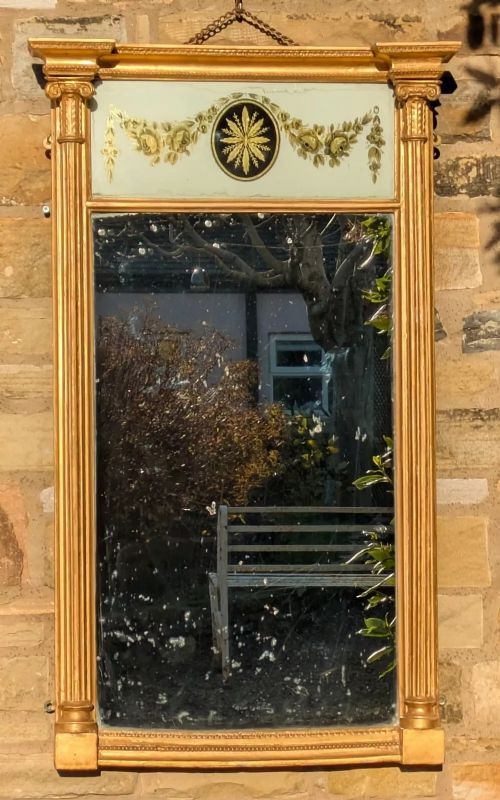
Most examples take the form of tall wall mirrors or pier glasses, often incorporating verre églomisé panels, painted top sections, or carved details such as lion masks. Formats range from intimate wall-hanging plates to large-scale decorative statements paired with matching console tables.
Materials and construction
Carved wooden frames form the structural core, utilising materials such as mahogany and giltwood alongside applied gesso and composition details. Guilders applied thin layers of gold leaf over prepared grounds, creating the luminous surfaces characteristic of the period.
Mirrors utilise original mirror plate and glass, frequently accompanied by specialised upper panels featuring reverse-painted verre églomisé techniques or canvas inserts. Timber backboards hold the glass securely within moulded frames built to withstand generations of domestic use.
Materials recorded across the selection include giltwood, gesso, mahogany, composition, verre églomisé, and original mirror plate.
Distinguishing quality across examples
The precision of hand-carved ornament distinguishes superior frames, where crisp acanthus leaves, reeding, and lion masks retain sharp definition beneath the gilding. Secondary timber selection and the retention of original mercury glass or untouched mirror plates indicate higher levels of workshop craftsmanship.
Integration of the upper decorative panel dictates visual balance, particularly in trumeau configurations where painted scenes or verre églomisé sections meet the main glass. Cohesion between the gilding, the joinery, and the proportions determines the overall standing of an individual mirror.
The Classical Gold Pier Mirror Glossary
- Pier glass
- A tall mirror designed specifically to hang on the narrow wall space between two windows.
- Verre églomisé
- A cold decoration technique where designs are painted and gilded on the reverse side of glass panels.
- Giltwood
- Timber that has been coated with thin leaves of gold metal over a prepared gesso layer.
- Trumeau
- A decorative wall mirror featuring an upper painted or carved panel integrated into the wooden frame.
- Composition
- A moulded mixture of whiting, resin, and oil pressed into ornament to imitate hand carving.
Classical Gold Pier Mirror: Frequently Asked Questions
Where should I hang a pier mirror?
These mirrors were historically placed on the narrow pier wall between two windows to maximise daylight within a room.
Today, they work effectively above console tables, mantelpieces, or as standalone vertical focal points in hallways and reception rooms.
What is verre églomisé?
Verre églomisé is a traditional process involving the application of gold leaf and hand-painted details to the reverse side of a glass panel.
This technique creates a deep, reflective border or upper tablet that contrasts with the clear mirror plate below.
How do I identify a Regency mirror?
Regency mirrors frequently display classical motifs inspired by ancient Greece and Rome, including reeded pilasters, ball-bearing friezes, and convex or upright rectangular plates.
They often incorporate ebonised details alongside giltwood surfaces to create strong visual contrast.
Are the mirror plates original?
Many surviving examples retain their original mirror glass, which often exhibits subtle foxing, minor silvering loss, and handcrafted distortions.
Original plates contribute historical character and demonstrate the age of the piece compared to modern replacement glass.