




Classical Giltwood Wall Mirror
A classical giltwood wall mirror brings a rich golden presence and a sense of architectural space into a room.
Classical Giltwood Wall Mirror
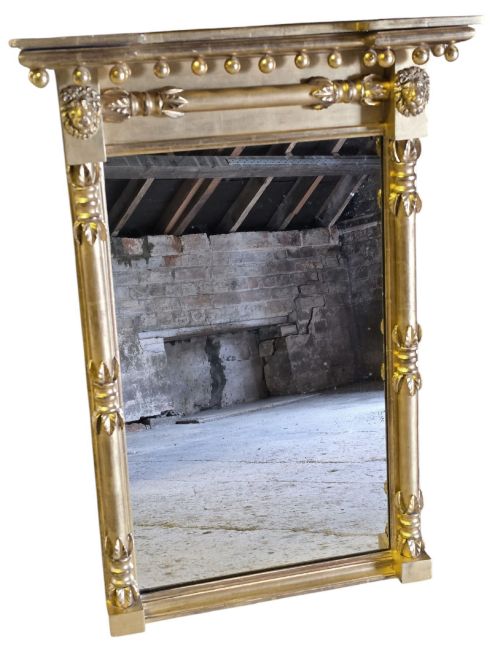
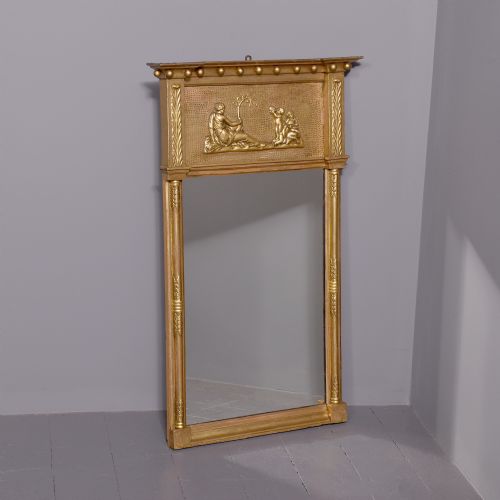
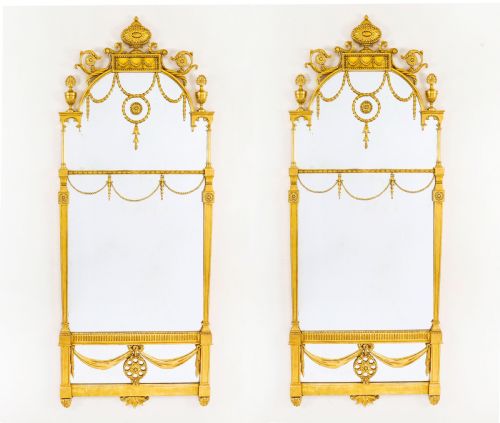
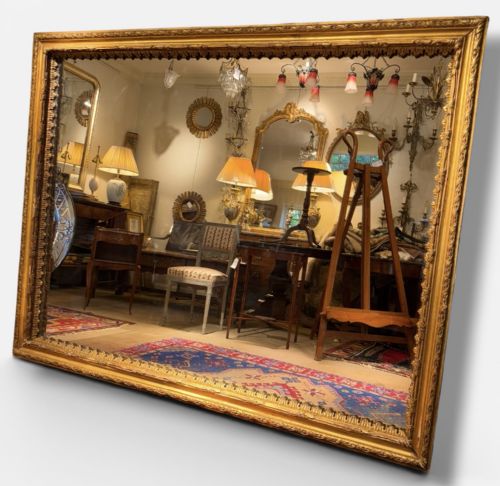
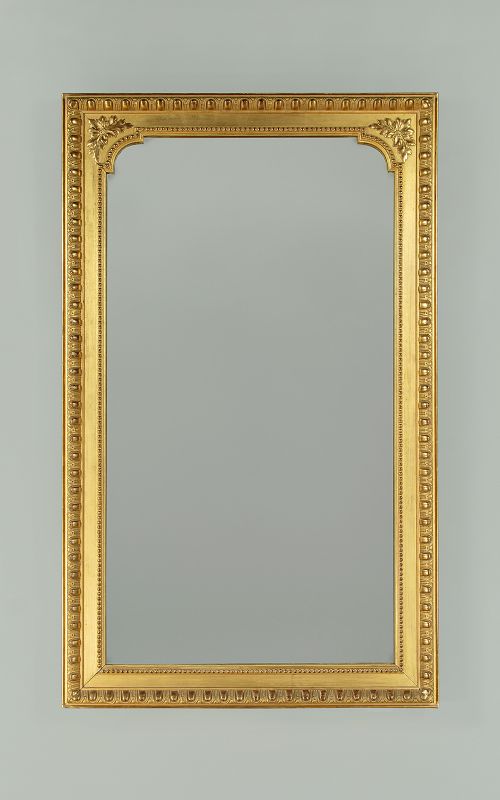
A classical giltwood wall mirror is typically encountered as a pier glass, overmantel, or trumeau form dating primarily from the nineteenth century. These pieces reflect the Regency, Georgian, and Victorian eras, carrying stylistic revivals from Adam designs to French chateau aesthetics.
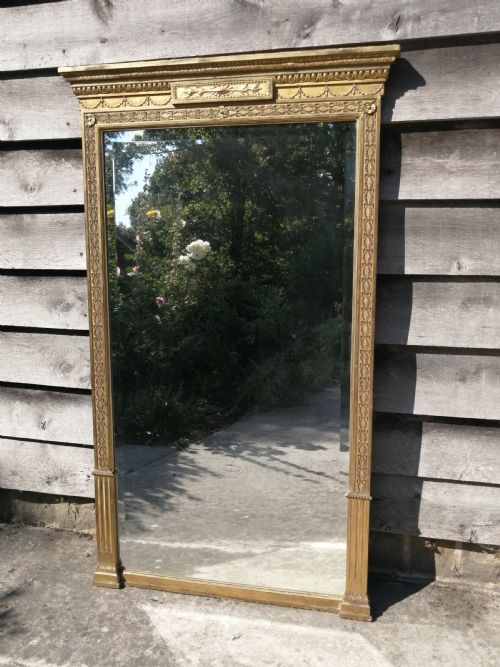
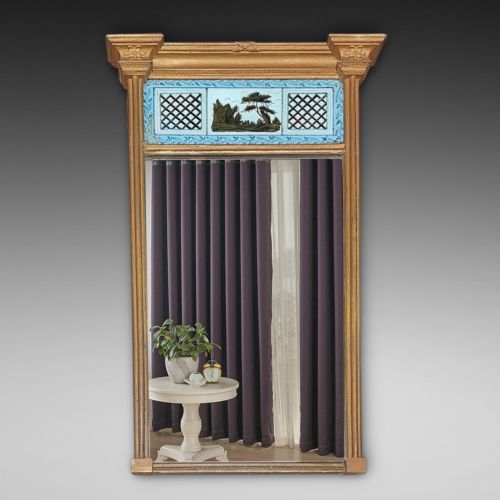
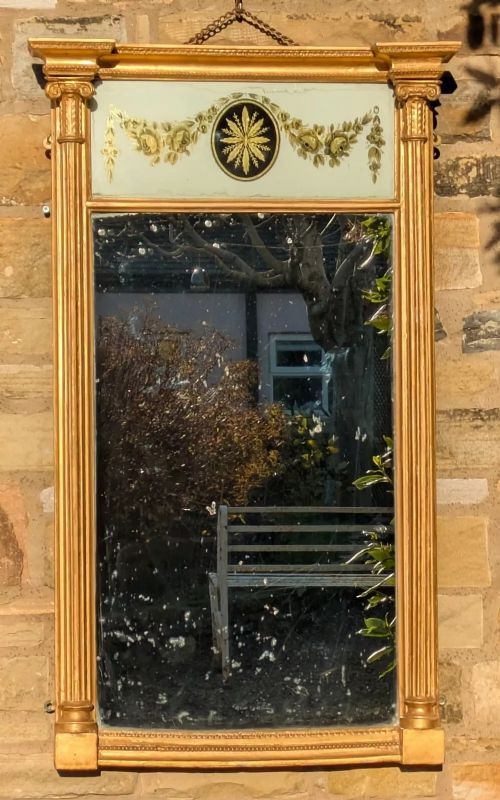
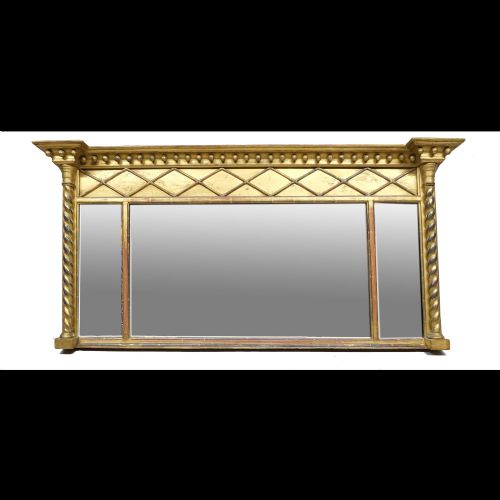
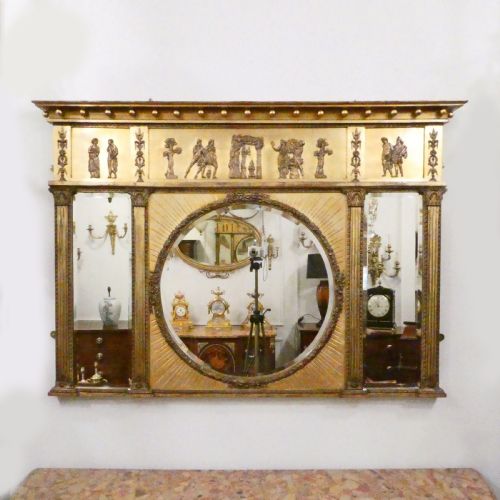
The inventory centres on large wall-mounted formats designed to hang above mantelpieces or between windows to amplify natural light. Forms range from rectangular overmantels with triple plates to tall pier mirrors finished with verre eglomise panels.
How They Were Made
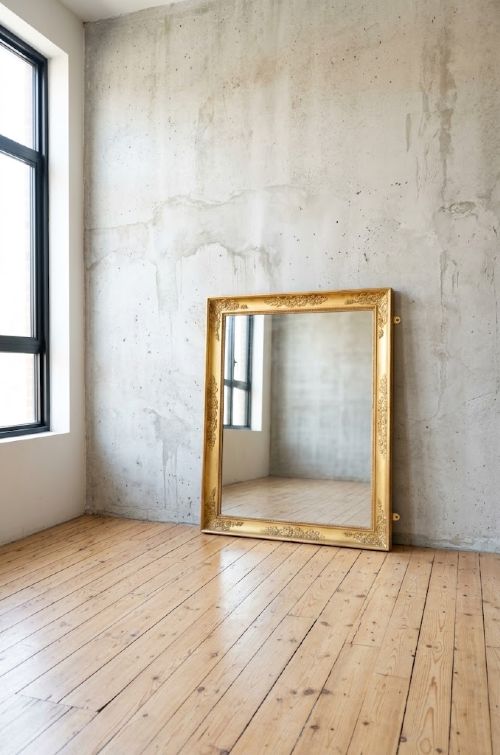
Carved wood frames provide the foundational structure, frequently enhanced with moulded gesso and composition details to build up intricate classical motifs. Artisans then applied thin sheets of gold leaf over a prepared bole to achieve the characteristic metallic sheen.
Mirrored plates within these frames vary from original silvered glass to period replacements, sometimes accompanied by decorative painted panels on canvas or glass.
Listings feature eighteenth-century Georgian origins through to Edwardian interpretations, spanning neoclassical, Victorian, and French chateau styles.
What Varies in Quality
The depth and crispness of the carved ornamentation separate standard decorative frames from superior examples executed by skilled hands. Relief work that retains sharp botanical, mythological, or neoclassical motifs demonstrates higher craftsmanship than softened composition mouldings.
The integrity of the original mercury or silvered glass plate and the consistency of the gold leaf application further distinguish finer pieces across the selection.
The Classical Giltwood Wall Mirror Glossary
- Giltwood
- Timber that has been coated with thin leaves of gold. This surface treatment gives antique mirrors their warm, reflective metallic character.
- Gesso
- A plaster-like mixture applied to wood frames to create a smooth base for gilding. It allows artisans to carve or press intricate relief decorations.
- Verre Eglomise
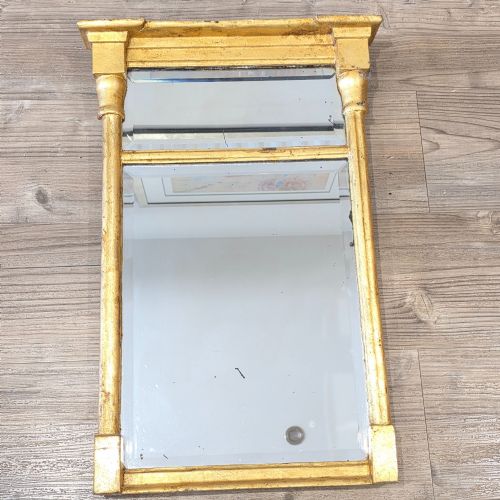
- A cold decoration technique where silver or gold leaf is applied to glass and then etched. It frequently appears in the upper panels of Regency pier mirrors.
- Overmantel Mirror
- A wide looking glass designed specifically to hang above a fireplace mantel. These pieces often feature horizontal triple plates to span the width of the hearth.
- Trumeau Mirror
- A wall mirror incorporating a painted or carved panel above the glass. Originating in French interior design, these pieces function as decorative architectural panels.
Classical Giltwood Wall Mirror: Frequently Asked Questions
Where should I hang a large overmantel mirror?
These mirrors traditionally anchor the space directly above a fireplace mantelpiece, where their wide proportions reflect light across the room.
Alternatively, positioning them on a main living room wall creates an architectural focal point that visually expands the surrounding floor space.
How do I identify a Regency period mirror?
Regency pieces often display classical architectural motifs such as reeded columns, ball-stud frames, and eglomise panels. Makers of this era frequently incorporated convex or triple-plate formats designed to maximise interior illumination.
Examining the construction methods and the backing boards helps confirm the nineteenth-century origin of the piece.
Are original mirror plates common?
Many surviving pieces retain their original glass, which displays subtle foxing, minor speckling, and gentle distortions characteristic of early manufacturing methods. These aged characteristics contribute to the authentic visual depth of the object.
Replacements occur where historical damage necessitated a new plate to maintain the functional use of the looking glass.
How do I clean a giltwood frame?
Dusting requires a very soft, dry brush or feather duster to protect the delicate gold leaf layer from abrasion. Moisture and chemical cleaning agents must be avoided entirely to prevent lifting the gesso and gilding.
Professional restoration is recommended if the surface accumulates stubborn grime that resists gentle dry cleaning.