




Classical Garden Pedestals
Classical garden pedestals hold urns, busts and statues in the landscape, bringing architectural form and dignity to outdoor spaces.
Classical Garden Pedestals
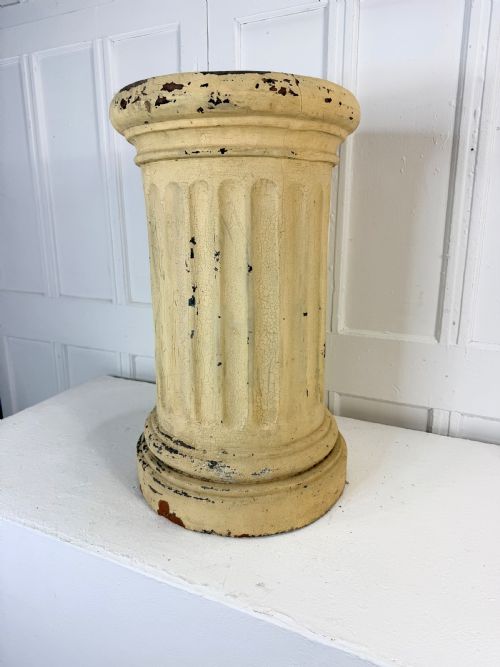
When you search for classical garden pedestals, you meet structural columns, plinths and bases designed to elevate garden ornaments. These pieces originate from periods spanning the Georgian, Regency and Victorian eras through to the mid-twentieth century.
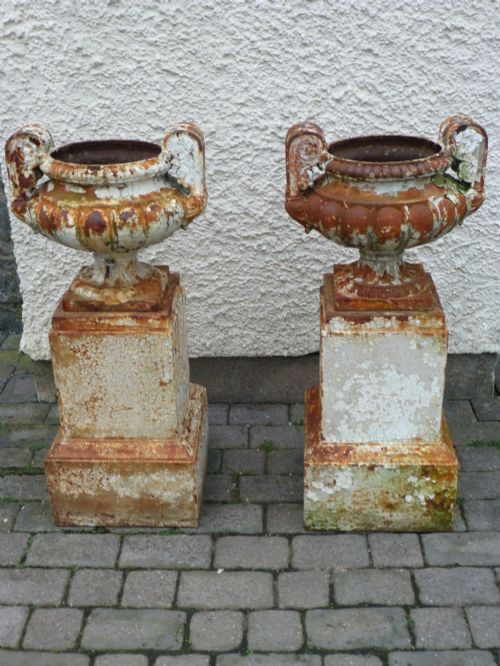
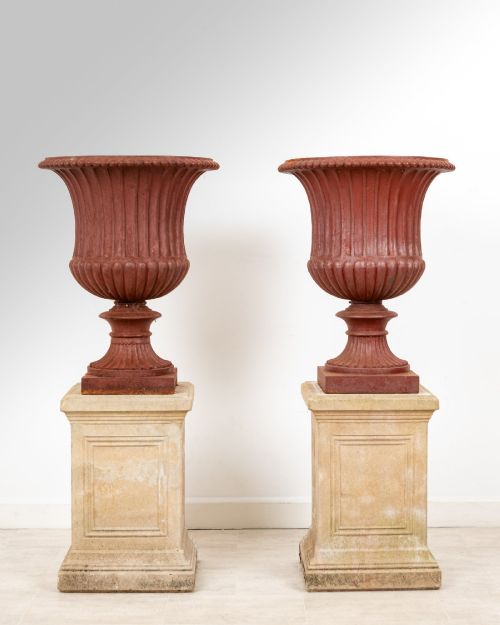
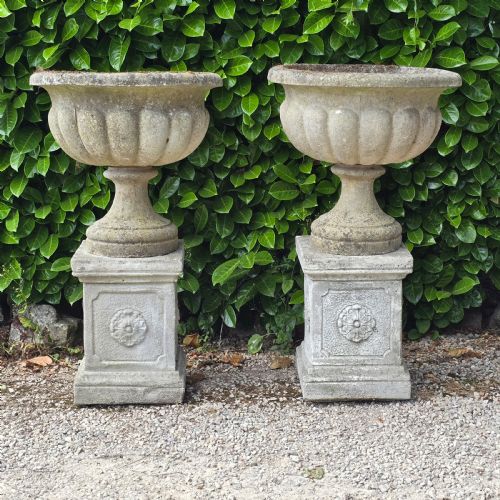
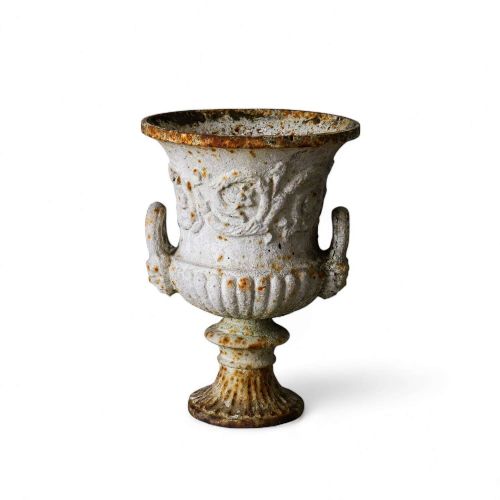
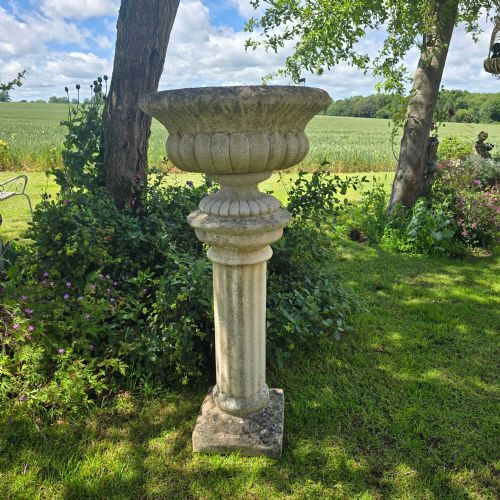
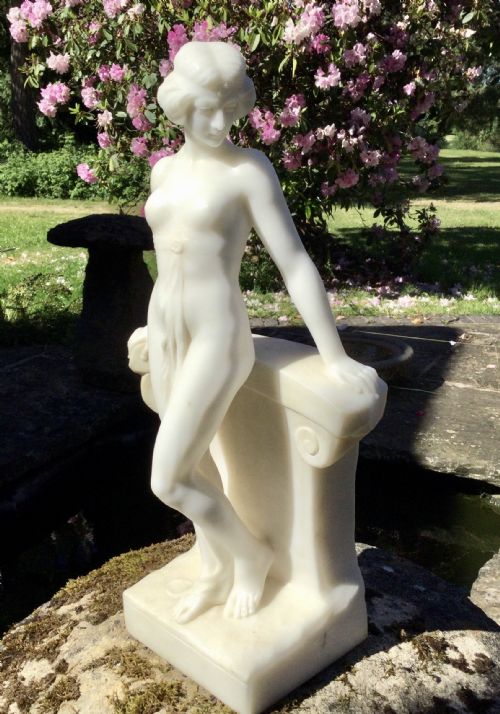
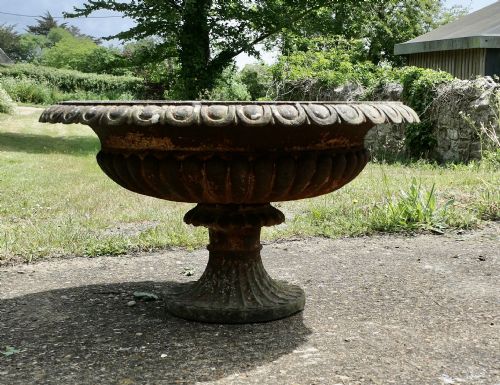
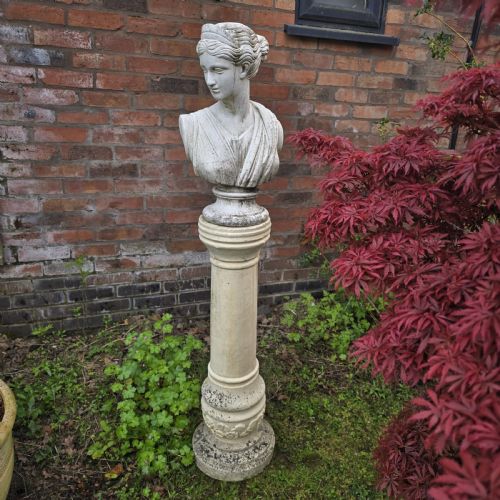
The selections on this page pair pedestals with campana urns, statues and busts. Many pieces combine a stone or cast iron display surface with a matching architectural plinth.
Makers and foundries such as Falkirk Carron, Coalbrookdale, Andrew Handyside and Lipscombe & Co produced significant examples in cast iron and terracotta. You also find limestone, marble, reconstituted stone and standard stone constructions.
Evaluating Quality and Presence
Proportion and material integrity determine the lasting presence of a pedestal or column. Heavy cast iron and dense Italian marble hold their structural form and surface patination better than softer composite stones over centuries.
The presence of an original foundry mark or a matched plinth elevates a piece significantly. Pairs of urns or columns that retain their original bases offer superior visual balance in a garden setting.
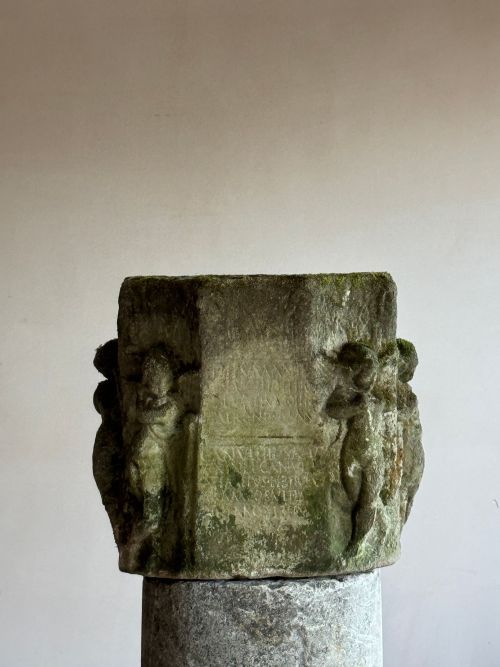
Several pieces feature stony-faced classical figures holding lamps or standing quietly by as bird baths.
Falkirk Carron foundry·Coalbrookdale·Andrew Handyside·Lipscombe & Co
The Classical Garden Pedestals Glossary
- Campana urn
- A bell-shaped garden vessel with an everted rim and a pedestal foot. These classical forms appeared frequently in nineteenth-century ironwork and terracotta.
- Plinth
- A heavy flat-topped base or block supporting a statue, urn or column. Plinths raise garden ornaments to improve their sightlines outdoors.
- Terracotta
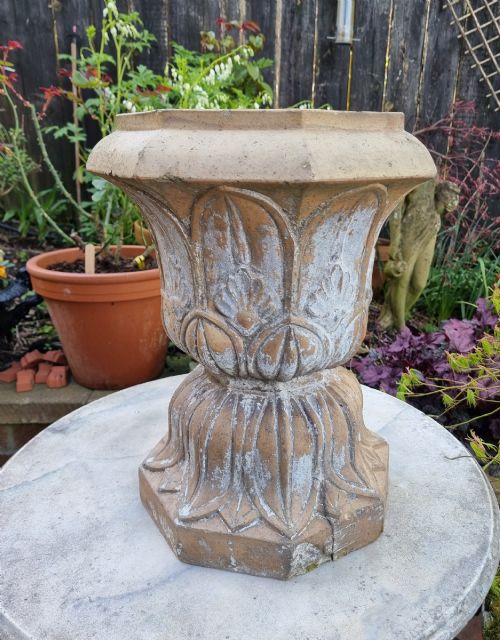
- Fired clay used for garden urns, display columns and jardiniere vessels. This porous material weathers gradually in outdoor settings.
- Armillary sphere
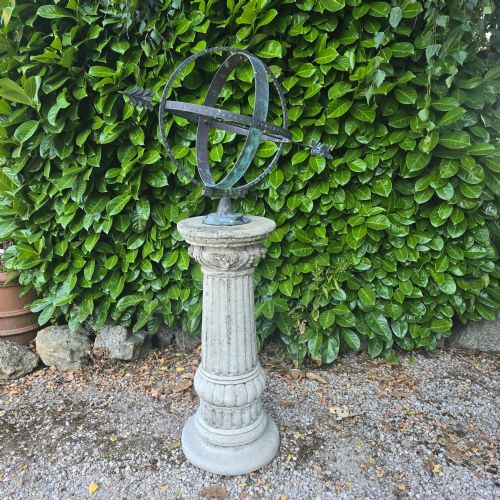
- An outdoor sundial formed from interlocking metal rings representing celestial circles. These scientific instruments often mount directly onto stone pedestals.
- Gadrooned
- Decorated with a series of convex, rounded curves or fluting, typically around the rim of an urn. This ornamental carving reflects classical architectural styles.
Classical Garden Pedestals: Frequently Asked Questions
What is a classical garden pedestal?
A classical garden pedestal is an architectural column, plinth or base designed to elevate urns, statues and busts. These supports add height and formal structure to outdoor garden designs.
They appear in materials such as cast iron, stone, limestone, terracotta and reconstituted stone. Many date from the nineteenth and early twentieth centuries.
How do I place them in a garden?
Position pedestals along garden pathways, at the ends of formal vistas, or as central focal points on lawns and terraces. Placing an urn, bust or sundial on top creates height and draws the eye upward.
Ensure the ground beneath the base is level and firm to support the weight of heavy stone or cast iron pieces safely.
How do I care for cast iron urns?
Cast iron urns and pedestals benefit from periodic inspection and application of protective coatings to manage rust. Allowing weathered patinas to develop naturally adds character without harming the metal.
Keep drainage holes clear so water does not collect and freeze inside the urn during colder months.
How do I identify Victorian pieces?
Victorian garden pedestals and urns often feature neoclassical revival styling, heavy cast iron construction, and crisp decorative details like acanthus leaves. Foundry marks and patent stamps frequently appear on metal components.
Stonework from this era typically shows genuine weathering, lichen growth, and patination consistent with long exposure to the elements.